The Fascinating Evolutionary Reason Dogs Tilt Their Heads When We Speak to Them
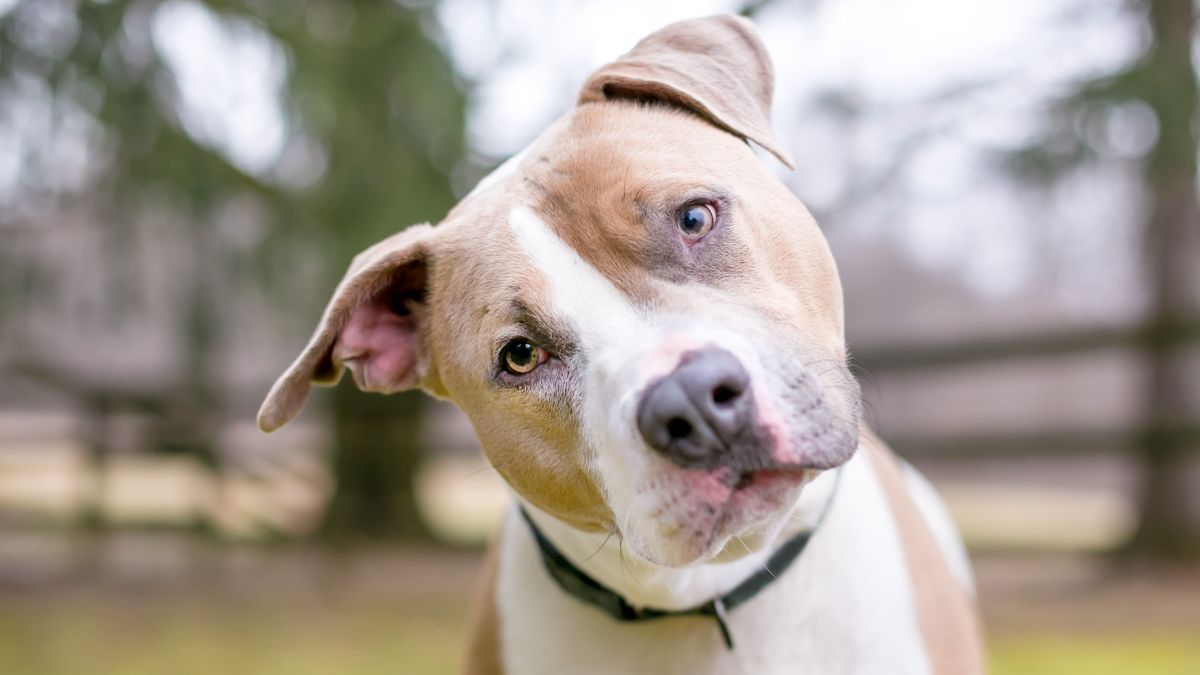
Dogs have shaped their lives around humans for an extraordinary stretch of time. Scientists estimate that dogs have lived alongside people for somewhere between 20,000 and 30,000 years, long enough to develop behavioral and cognitive traits that reflect a deep sensitivity to human presence and communication. Among those traits, few have inspired more affection or more genuine scientific curiosity than the head tilt, that sideways lean a dog performs with such apparent attentiveness the moment a person begins to speak.
Part of the explanation starts with the body. When a dog turns their head to one side, they adjust the position of their ears to better locate where a sound is coming from, since the shape and position of their ear flaps can block or muffle sounds arriving from certain angles. There is a visual dimension as well. A dog’s muzzle can obstruct part of their view of a person’s face, particularly the mouth region, which carries so much of human emotional expression, and tilting the head compensates for that obstruction.
The more compelling discovery, however, goes beyond anatomy. Researchers at the Eötvös Loránd University in Budapest began investigating the behavior after noticing it repeatedly during language experiments with a remarkable group of dogs. Their study, published in the journal Animal Cognition, found that so-called gifted word learner dogs tilted their heads in response to their owners naming familiar objects 43 percent of the time, compared to just 2 percent for typical dogs.
That striking gap pointed to something happening inside the dog’s mind rather than simply in their ears. Researchers concluded that because these dogs genuinely recognized the names of their toys, the head tilt appeared to be the dog’s response to something it considered meaningful and important. Writing in Scientific American, lead researcher Dr. Andrea Sommese drew a parallel with humans, suggesting the gesture may reflect the same internal moment that occurs when a person tilts their own head while mentally forming a memory or image.
More recent science has added a neurological layer to this picture. A 2025 study involving 103 dogs across seven breed groups found that dogs were more likely to tilt their heads to the right, and that neutered male dogs tilted more frequently than spayed females. The rightward bias aligns with left-hemisphere language processing, and the sex difference mirrors a pattern seen in humans, where males tend to engage one hemisphere more dominantly while females draw on both more equally.
The behavior is not universal, and researchers are careful about its full meaning. Only around 40 of the 103 dogs in the 2025 study tilted in response to language, and the gesture was also observed when dogs were startled by unexpected stimuli, leaving open the question of whether this is truly about language or something broader involving attention and novelty. What seems increasingly clear is that the tilt is far more than a charming instinct. It appears to be a visible signal of the extraordinary attentiveness dogs have spent tens of thousands of years developing toward the species they have chosen to live beside.
If your own dog is a devoted head-tilter, we would love to hear which words or phrases reliably earn that sideways look, and whether you think they truly understand what those words mean.