
What Science Is Discovering About How Dogs Shape Children’s Developing Brains From the Inside Out
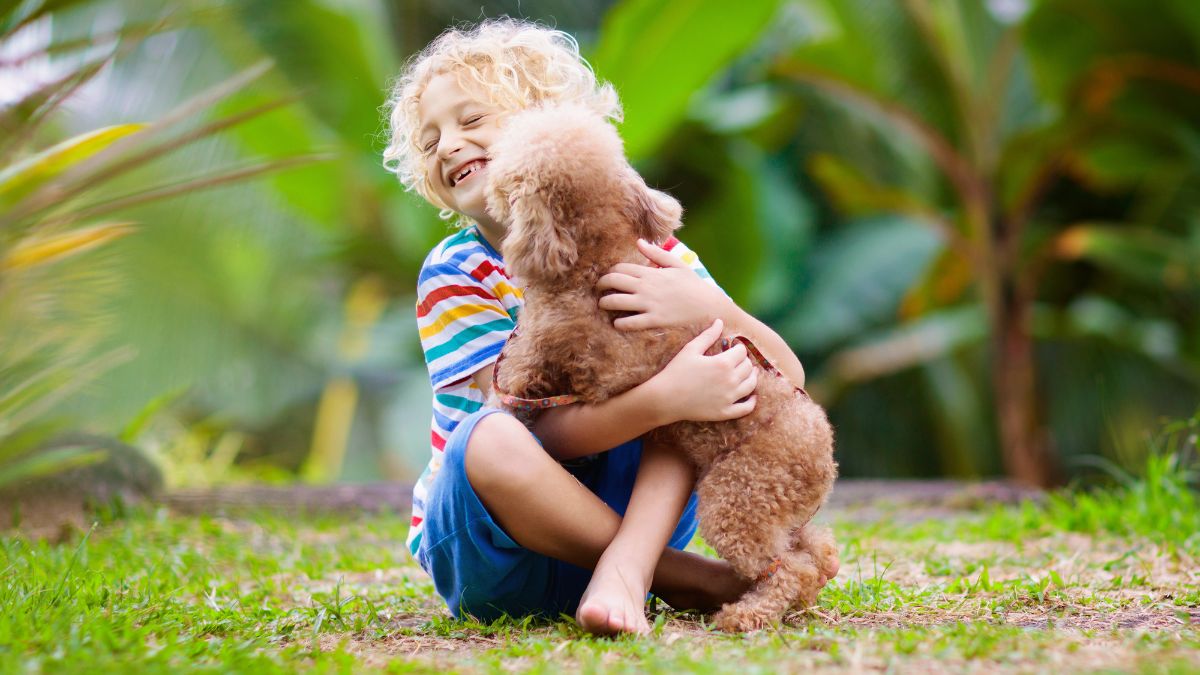
For most families, a child curled up with the family dog feels like one of the most natural arrangements in the world. There is a comfort to that bond so instinctive that few people pause to ask what it might actually be doing to the child’s developing neurology.
The years of childhood represent one of the most sensitive windows in human brain development, a period when the architecture of emotion, stress response, and social cognition is still being sculpted by lived experience. Researchers studying the biological effects of human-animal interaction have increasingly turned their attention to this developmental window, and what they are finding goes considerably beyond the warmth most people associate with pet ownership.
A study funded by the National Institutes of Health, published in Psychoneuroendocrinology, found that interacting with dogs led to higher oxytocin levels in children compared to solitary play with toys. The researchers, working out of the University of Arizona, simultaneously measured oxytocin in both the children and their dogs during play sessions, producing what they described as the first evidence of affiliative dog interactions raising oxytocin concentrations in children. Oxytocin, the neuropeptide tied to social bonding and emotional regulation, is not simply a mood modifier in passing. Its release is known to stimulate social interaction, increase positive self-perception, and decrease depressive symptoms over time.
The physical traces of dog companionship reach further into brain anatomy. A study published in PLOS One used functional near-infrared spectroscopy to measure prefrontal cortex activity during interaction with real dogs versus stuffed animals, finding that live dogs produced significantly greater neural activation in that region. The prefrontal cortex houses executive functions such as emotional regulation, impulse control, working memory, and reasoning, and even slight increases in the stress hormone cortisol are associated with a noticeable decrease in how well those functions operate. A childhood spent in the calming company of a dog may, in effect, be training one of the most consequential regions of the human brain during the years it is most open to that influence.
The stress-buffering evidence is among the most striking in the field. A controlled study testing 101 children aged seven to twelve using the Trier Social Stress Test found that children with their pet dog present during the stressor showed a significantly lower rise in perceived stress than those whose parent was present or who faced the stressor entirely alone. Research has also shown that cortisol levels in children with insecure attachment fell after interacting with pet dogs, a reduction that was not observed following interactions with friendly humans or toy dogs.
These neurological and hormonal effects appear to translate directly into measurable differences in anxiety rates. A study of 643 children between four and ten years old, published in Preventing Chronic Disease, found that only 12% of children with pet dogs at home met the clinical cutoff for anxiety, compared to 21% of children without dogs. The finding held across a validated screening tool covering general anxiety, separation anxiety, and social phobia, and the difference was statistically significant.
Interactions with companion animals have also been found to enhance empathy, sense of responsibility, social standing among peers, and cognitive skills including analogy and reasoning in children. Research involving dogs in classroom settings found that children in those classes scored higher on measures of field independence compared to control classes, a capacity considered a foundational prerequisite for genuine sensitivity to the emotions of others.
The science is still maturing, and researchers acknowledge that family environment, temperament, and socioeconomic factors shape these outcomes in ways that are not yet fully mapped. What the evidence increasingly points toward is a bond that works quietly beneath the surface of ordinary daily life, reshaping the stress response, the social brain, and the emotional nervous system in ways that may echo long past childhood. If you grew up alongside a dog, we would love to hear in the comments whether you feel that relationship left a lasting mark on how you handle stress or connect with the people around you.