The Hidden Philippine Paradise That Inspired Alex Garland to Write ‘The Beach’
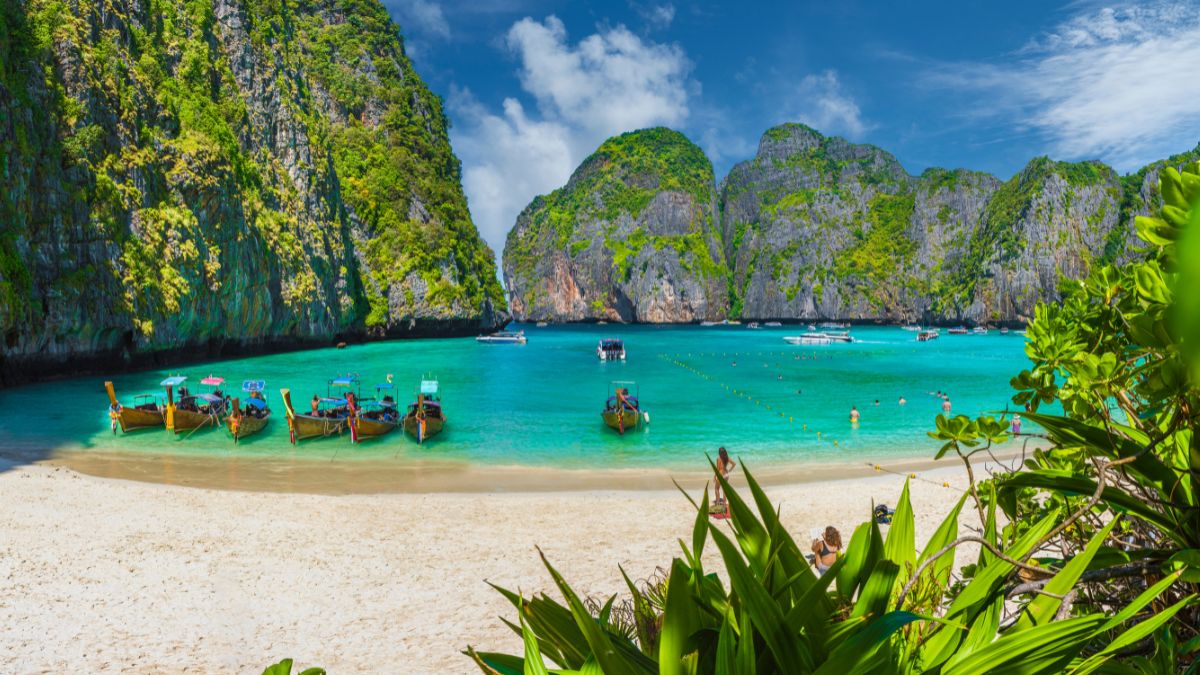
Most people who have seen the movie ‘The Beach’ starring Leonardo DiCaprio automatically picture Thailand when they think of the story’s sun-soaked, secretive tropical setting. The film, released in 2000, turned Maya Bay on the Thai island of Phi Phi Leh into one of the most recognizable stretches of sand on the planet. Thousands of backpackers flooded the region in search of their own version of that cinematic paradise, hoping to stumble upon something raw and untouched. What very few of them realized, though, is that the true spark behind the story didn’t come from Thailand at all.
Author Alex Garland has revealed in interviews that it was Palawan in the Philippines that left the deepest mark on him during his travels through Asia before he wrote the novel. He described it as a place that stayed with him long after he left, and when you look at the landscape, it’s easy to understand why. The towering limestone cliffs around El Nido, the hidden coves, and the almost impossibly turquoise lagoons all carry exactly the kind of atmosphere that pulses through the pages of his book. There’s a wildness to Palawan that feels like it belongs in fiction, even though it’s completely real.
Back in the late 1990s, when Garland was making his way through the region, Palawan was still largely off the beaten path. There were no sprawling beach bars, no crowds of tourists jostling for the same photograph, and no resort infrastructure drowning out the natural scenery. It was the kind of place that felt genuinely undiscovered, the sort of destination that a traveler might guard like a secret and only whisper about to people they trusted. That energy, that sense of stumbling onto something the rest of the world hadn’t yet claimed, is precisely what Garland captured so vividly in his writing.
The irony is that Thailand ended up receiving all the fame while the Philippines quietly kept its mystery. When the film adaptation brought global attention to Maya Bay, the Phi Phi islands were transformed almost overnight into a symbol of tropical escapism and bucket-list travel. The surge in visitors was so dramatic that Thai authorities eventually had to close Maya Bay entirely for several years to allow the damaged ecosystem to recover. Meanwhile, Palawan continued on at its own pace, drawing a quieter crowd of travelers who were looking for something a little more genuine and a little less posed.
Today, Palawan is increasingly recognized as one of the most beautiful destinations in all of Asia, and its reputation has grown steadily as more people discover what Garland saw in it decades ago. El Nido and Coron attract adventurous travelers who want island-hopping, dramatic scenery, and encounters with nature that feel personal rather than packaged. Yet even now, Palawan retains something of that original spirit that made it so compelling in the first place. It hasn’t been entirely smoothed over by mass tourism, and that’s a quality that’s genuinely hard to find anymore.
What makes the story of ‘The Beach’ and its real-life inspiration so fascinating is the reminder that the best travel writing, and the best fiction, often grows out of places that resist easy categorization. Garland himself has suggested that the feeling he was chasing wasn’t really about a specific geography at all. The hidden paradise in the novel is as much a state of mind as it is a physical location, a longing for something untouched that exists in the imagination of every traveler who has ever stood somewhere beautiful and hoped no one else would ever find it. Palawan just happened to be the place that made that feeling real for him.
If you’ve ever dreamed of finding your own version of a secret paradise, or if Palawan or ‘The Beach’ holds a special place for you, share your thoughts in the comments.