
Man Claims Space Travel Is Distinctly Christian After Artemis II Broadcast
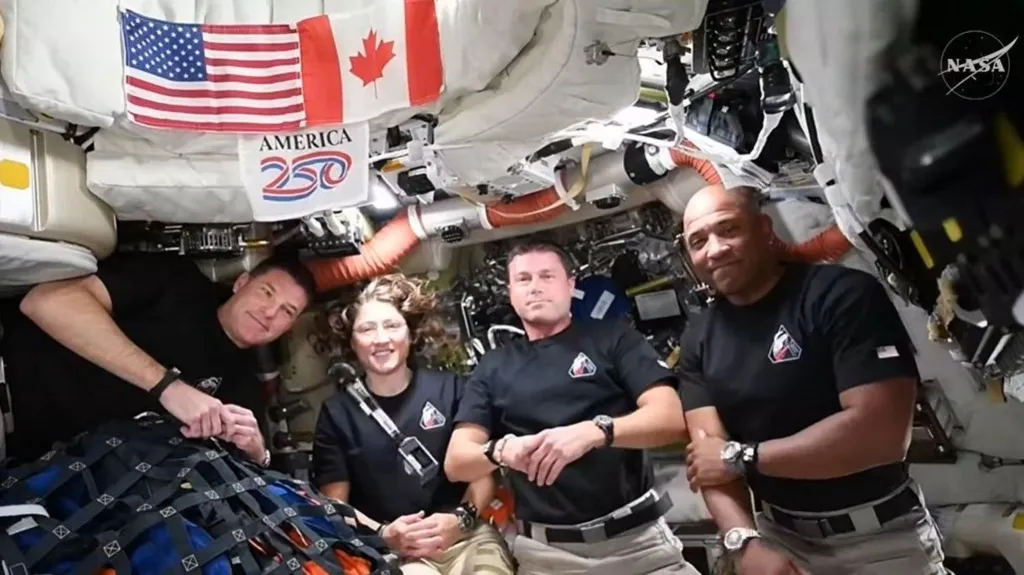
A recent social media post stirred up quite a debate after an astronaut on the Artemis II mission shared a heartfelt Easter message from deep space. The crew launched their ten day journey around the moon on April first to gather valuable data and images while paving the way for future lunar landings. They traveled farther from Earth than any humans before them circling our satellite in the Orion spacecraft. What started as a simple reflection on creation quickly turned into a viral discussion about faith and exploration.
Marcus Pittman posted a clip of pilot Victor Glover delivering the message and suggested that atheists disliked how distinctly Christian space travel seemed. He pointed to historical moments such as the Apollo eight crew reading from Genesis while orbiting the moon taking communion on the lunar surface and even bringing Bibles to the International Space Station. Pittman added that with Artemis II the tradition felt stronger than ever. His words however drew sharp pushback from many online who saw the claim as overly narrow.
Glover a committed Christian spoke warmly during a CBS News interview just before Easter. He described gazing at the beauty of creation from afar and viewing Earth as one unified place no matter where people lived or what they believed. The astronaut emphasized that our planet serves as a special oasis in the vast emptiness of the universe created as a home for humanity. He encouraged everyone believers and non believers alike to remember their shared humanity and work together through challenges.
Critics quickly highlighted that space exploration has never belonged to any single faith. Astronauts from diverse backgrounds have ventured beyond our atmosphere including the first Muslim in space the first Jewish astronaut who read from a Torah scroll and the first Hindu and Buddhist astronauts who carried their own traditions. One commenter noted that every major religion as well as atheists and agnostics have participated in space missions and even held personal ceremonies there. Others reminded readers that early space pioneers like Yuri Gagarin came from the Soviet Union where religion played a different public role.
Atheists really hate how distinctly Christian space travel is.
— Marcus Pittman (@ImKingGinger) April 5, 2026
Astronauts read Genesis orbiting the moon (Apollo 8)
Took communion on the lunar surface (Aldrin)
Psalms from the moon (Irwin)
Bibles to the ISS (Glover)
Now Artemis II
We are so back
pic.twitter.com/qofrqF5mUn
The backlash revealed a broader conversation about mixing personal beliefs with scientific achievement. Some pointed out that religious institutions once resisted certain scientific ideas yet humans still reached the moon through ingenuity and collaboration. Others appreciated Glover sharing his perspective without forcing it on the audience stressing that his inclusive tone celebrated all cultures. The Artemis II mission itself focused on technical milestones like testing systems for eventual crewed lunar landings rather than any religious agenda.
Throughout history faith has inspired many explorers yet the drive to understand the cosmos unites people across all worldviews. From ancient stargazers to modern engineers the quest pushes boundaries with tools built on evidence and curiosity. Glover himself framed his words as a personal reflection meant to uplift rather than divide highlighting how distance from Earth can make us appreciate our home even more. The incident shows how quickly personal expressions can spark wider debates in our connected world.
Space travel continues to remind us of both our smallness in the universe and our potential for greatness together. What do you think about faith appearing in these cosmic moments share your thoughts in the comments.