Instagram Screenshot

This Is What Working Out With 4 Golden Retrievers Actually Looks Like

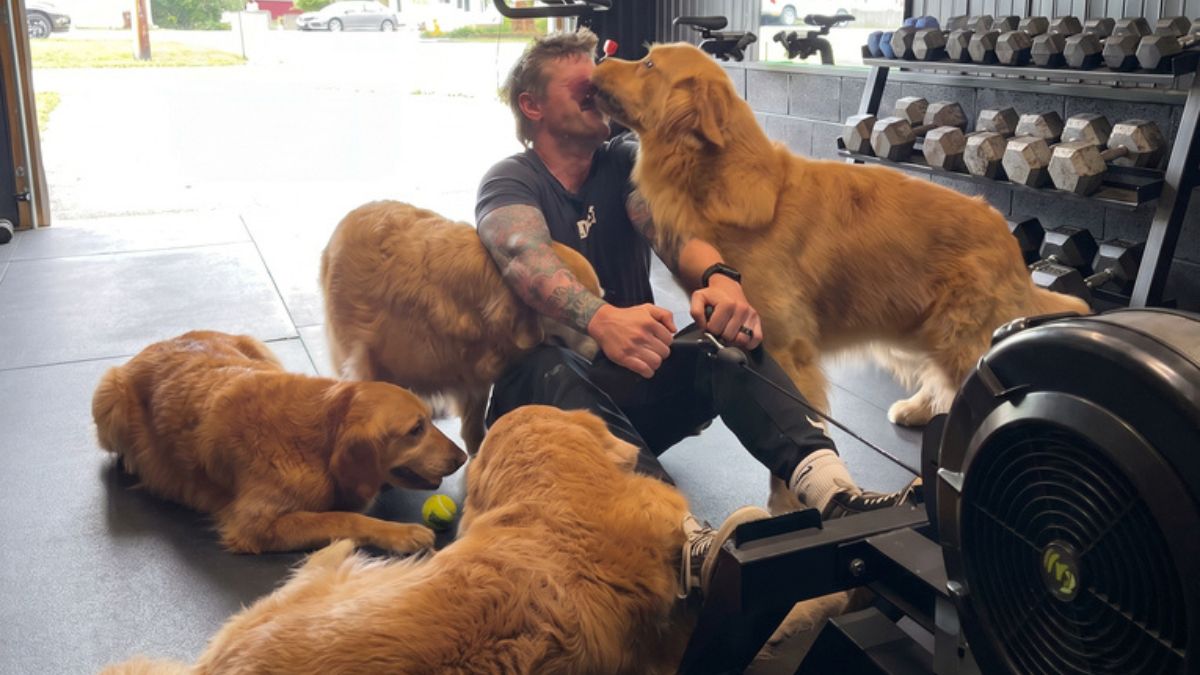
Anyone who has ever owned a dog knows that getting anything done while they are around is more of a dream than a reality. Instagram user @hdbrosriley decided to put this to the test in the most ambitious way possible, attempting a full workout session with not one, not two, but four golden retrievers by his side. He kicked things off with genuine confidence, announcing his plan to push through a complete training session alongside his dogs just to see how it would all play out. Spoiler alert: it did not go according to plan, and honestly, nobody expected it to.

The moment he hit the floor to start exercising, all four dogs interpreted it as the most exciting invitation they had ever received. Two of them immediately pressed their heads against his face and neck, showering him with affection while he tried to keep a straight face through the chaos. When he attempted to use the rowing machine, one of the dogs launched itself directly at his face, while the others crowded around the base of the equipment and cut his range of motion down to almost nothing. A squeaky tennis ball made a brief appearance on the bench, momentarily distracting one of the dogs, but the rest stayed fully committed to their mission of making exercise impossible.

Things only escalated from there, because the retrievers managed to pull off his hat and then set their sights on his shirt. He still tried to push through and even got close enough to plant a kiss on three of the dogs before attempting a round of push-ups, which, as you can imagine, went about as well as everything else. The video caption said it best with “POV: your workout partners have no boundaries,” which is about as accurate a description as you could hope for. The whole thing ended with zero uninterrupted reps completed and one very happy, very overwhelmed dog dad.

Viewers watching the clip were completely charmed by every second of it. One commenter joked about wanting to sign up for that gym immediately, while another quipped that “personal space” is apparently just the space the dogs personally want to occupy. A third viewer pointed out that the wildest one of the bunch was almost certainly the youngest, which tracks perfectly with golden retriever energy at any age. The comments section turned into a place where everyone could bond over the very relatable experience of trying to be productive while their pets had other plans.

At the end of the day, working out alongside four golden retrievers might burn exactly zero calories in the traditional sense, but it more than makes up for it in pure, unfiltered joy. There is something genuinely heartwarming about watching a person give up on a fitness goal and fully surrender to being loved on by a pile of enthusiastic dogs. Golden retrievers have always had a reputation for being some of the most affectionate and people-obsessed dogs on the planet, and this video is basically a feature-length documentary on why that reputation is completely earned. Sometimes the best workout is the laughter you get along the way.

If you have ever tried to get something done with your pet around and completely failed, share your story in the comments.
Similar Posts

  • This Genius Corgi Puppy Just Found The Ultimate Hack For Gym Day

    The internet has found its new spirit animal in the form of a very clever Corgi puppy. A recent video circulating on social media captures a group of dogs during their daily workout routine in what looks like a dedicated canine fitness center. While most of the pups are putting in the hard work on…

  • Grandma Sings to Calm Her Fearful Labrador During Fireworks

    A heartwarming video has captured the internet’s attention showing an elderly woman using her voice to soothe a nervous Labrador retriever named Maria. The dog becomes visibly upset whenever fireworks explode nearby and finds comfort only in her grandmother’s gentle singing and petting. Family members affectionately call the woman Grandmeow and the clip comes from…

  • 5 ways Vacation Routines Stress your Pet: Psychology Science most owners Miss

    Vacations are exciting for humans, but for pets, they can feel confusing, stressful, and even scary. Many animals rely on routine to feel safe, so small travel changes can trigger anxiety in ways owners do not expect. The science is simple: pets read patterns, smells, and body language, not calendars. These five overlooked vacation habits can raise stress fast, even in calm pets, and knowing them helps you prevent problems before they start. A few small adjustments can make travel days easier for everyone.
    1. Packing Early Signals “Something Is Wrong” to Your Pet
    When you start pulling out suitcases, your pet often notices before you do. Many animals link luggage with separation, which can trigger anticipatory anxiety. Dogs and cats are experts at pattern recognition, so even quiet packing can create stress because it predicts a major change. Some pets respond by pacing, whining, hiding, or becoming clingy. Others may stop eating or start acting unusually alert. Psychology research on animal behavior shows that uncertainty is often more stressful than the event itself. Packing in smaller steps, keeping normal routines, and adding calm activities can reduce the buildup of anxiety.
    2. Your Mood and Body Language Change More Than You Realize
    Vacation prep usually comes with stress, rushing, and distraction. Pets notice that shift immediately because they rely heavily on your tone, facial expression, and energy. Even if you are excited, the fast movement, shorter patience, and unusual household noise can signal danger to an animal’s brain. This is especially true for anxious dogs and sensitive cats. Behavioral science shows that animals can mirror human stress through increased vigilance and restlessness. A pet may start shadowing you, refusing naps, or becoming reactive. Slowing down, using a calm voice, and keeping playtime normal can make a big difference.
    3. Skipped Walks, Late Meals, and Broken Timing Disrupt Safety Signals
    Many owners think pets will adjust easily to vacation timing changes, but routine is a major source of security for most animals. Meals, walks, and bedtime create predictable anchors that tell a pet their world is stable. When those anchors shift, stress rises, especially in dogs who depend on consistent potty breaks and activity. Cats can also become unsettled when feeding schedules change, which may lead to hiding, vocalizing, or litter box issues. Studies on animal stress show that predictable patterns lower cortisol over time. Even on travel days, keeping timing as close as possible helps pets stay calmer.
    4. New Smells and Spaces Can Trigger Overload, Not Curiosity
    People often assume pets will be excited by a new place, but unfamiliar environments can overwhelm them. Animals process the world through scent and sound, so hotels, rentals, or relatives’ homes can feel like sensory overload. New cleaning products, unfamiliar pets, strange floors, and different noises can raise stress quickly. Dogs may become hyper-alert, bark more, or refuse to settle. Cats may hide for hours or stop eating. Animal behavior research shows that novelty is not always enriching, especially when the pet has no control. Bringing familiar bedding, toys, and maintaining a quiet corner helps reduce that overload.
    5. Handing Them Off to a Sitter Without a Transition Creates Separation Shock
    Even if you trust your sitter, your pet may not. A sudden handoff can feel like abandonment to an animal that does not understand travel plans. Dogs may respond with barking, destructive behavior, or loss of appetite. Cats may become withdrawn, refuse interaction, or show stress through litter changes. Psychology studies on attachment show that animals form strong bonds and feel distress when those bonds are disrupted without a predictable transition. A short meet-and-greet, a trial visit, or a practice overnight can reduce stress dramatically. Familiar scents, written routines, and consistent feeding also help the sitter maintain stability.