Meet the Fur-Free Dogs With Thousands of Years of History Behind Their Bare Skin
There is something undeniably magnetic about a dog that makes you do a double take. Hairless dog breeds have that effect on almost everyone, drawing curious glances and outstretched hands wherever they wander. Far from being a modern curiosity, these bare-skinned companions have shared their lives with humans across continents and centuries, each breed carrying its own remarkable story.
The lack of hair in these breeds is the result of a genetic mutation officially classified as canine ectodermal dysplasia, a trait that passes reliably between generations and allows breeders to produce hairless dogs with consistency. According to Doctor of Veterinary Medicine Elizabeth R. Drake, an associate professor at the University of Tennessee, the mutation also affects how other bodily structures develop, which is why some hairless breeds also have missing or abnormally shaped teeth. Scientific research has mapped this mutation to the FOXI3 gene, a transcription factor specifically expressed during the development of hair and teeth.
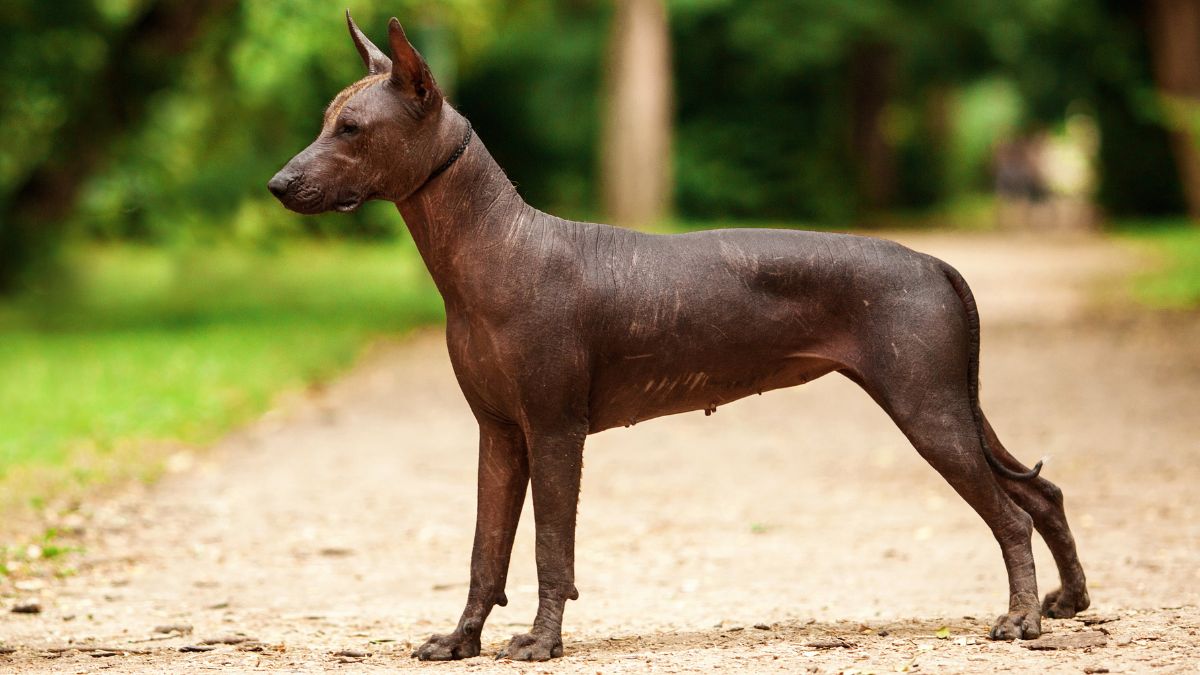
Among the most ancient examples is the Xoloitzcuintli, a breed whose roots stretch back more than three thousand years. Revered by the Aztecs for their perceived healing powers, Xolos were believed to ward off evil spirits, though they were also cherished as deeply loyal and affectionate companions. Also called the Mexican Hairless Dog, the breed lived alongside Mayan, Colima, and Aztec peoples and is today recognized as the official dog of Mexico. A close cultural cousin, the Peruvian Inca Orchid, shares a similarly storied past. Its earliest appearance in Moche pottery dates to 750 AD, and the Chimu people considered these dogs good luck, even using their warmth as a treatment for arthritis and respiratory conditions.
The Chinese Crested is perhaps the most recognizable of the hairless world, famous for its silky tufts of hair on the head, tail, and paws. This friendly little lap dog is loaded with personality and gets along well with everyone from young children to seniors and even cats. Both the hairless and coated varieties are considered a good choice for people with allergies, though no dog is entirely hypoallergenic. Rounding out the group is the American Hairless Terrier, a breed with a more recent origin story. The breed’s history dates back to the 1970s, when a completely hairless puppy was born into a litter of Rat Terriers. As the only hairless breed native to the United States, the American Hairless Terrier combines the energy and curiosity of a terrier with a truly one-of-a-kind appearance.
Owning any of these breeds comes with a care routine that goes well beyond the usual brush and bath. Without the natural barrier of fur, UV rays reach the skin directly, increasing the risk of burns, irritation, and long-term damage if sun protection is not part of the daily routine. Their smooth skin can also be prone to sunburn, making indoor time and dog-safe sunblock strongly recommended for owners in sunny climates. In colder months, a cozy wardrobe is less a fashion statement and more a practical necessity for keeping these pups comfortable.
What hairless breeds lack in fur they more than make up for in character, loyalty, and an almost uncanny ability to bond with the humans lucky enough to share their lives. Their expressive faces and distinctive personalities draw attention wherever they go, and beyond their looks, these breeds have histories and traits that make them genuinely fascinating companions. If you have ever met one of these striking dogs or share your home with a hairless breed of your own, we would love to hear about your experience with them in the comments below.