
Here’s Why You Never See Baby Pigeons
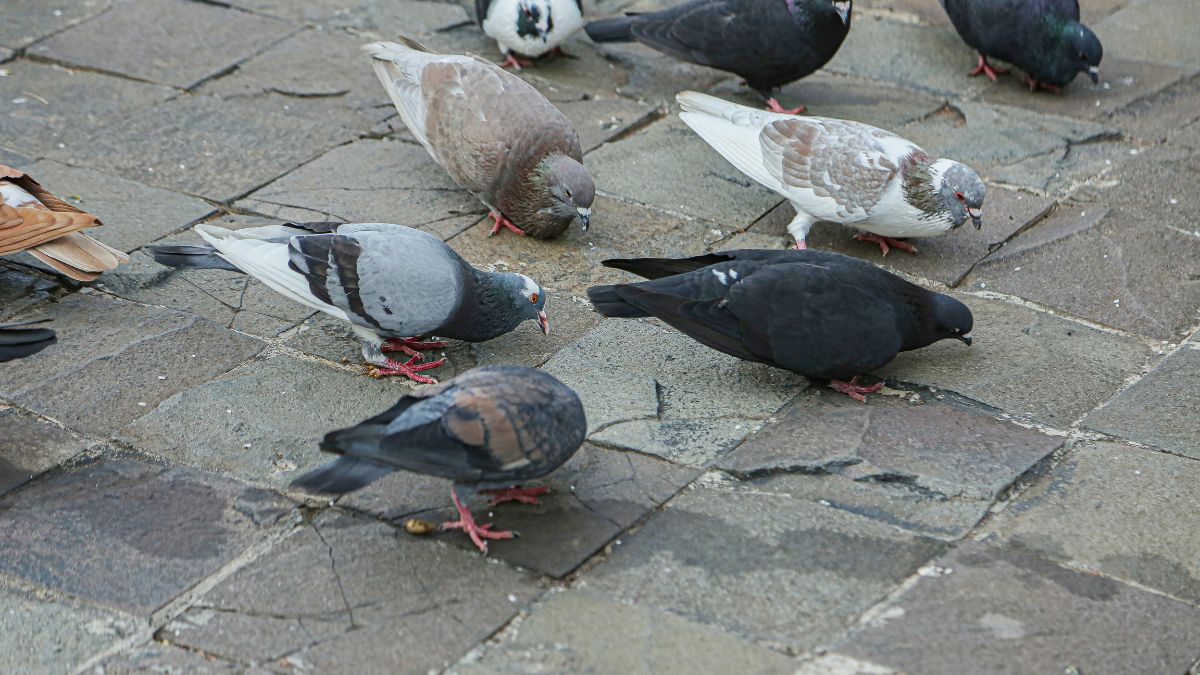
It is a common sight in almost every major city across the globe. You can find pigeons congregating in parks, waiting for crumbs outside cafes, or lining the edges of historic rooftops. Yet, if you stop to look at them, you will notice something quite peculiar about these feathered residents. Every single one of them appears to be a fully grown adult bird.
This observation has led to a long-running joke on the internet and even some elaborate conspiracy theories. Some people jokingly suggest that birds are not actually biological creatures but are instead sophisticated surveillance drones. According to this logic, we never see babies because they are simply assembled in factories as adults. While these ideas are clearly meant for entertainment, they highlight a genuine biological mystery that many people wonder about.
The reality of why we never see baby pigeons is grounded in their evolutionary history and their specific nesting habits. To understand the absence of pigeon chicks, we have to look back at their wild ancestors. The pigeons we see in our cities today are descendants of the wild rock dove. These birds originally lived in rugged environments like rocky cliffs and deep sea caves.
Because their ancestors evolved to live on high ledges, modern urban pigeons seek out similar structures in our built environments. In a city, a concrete bridge or a high window ledge serves as a perfect substitute for a limestone cliff. These locations are naturally tucked away and very difficult for humans to see into from the ground. Pigeons are masters at finding the most inaccessible nooks and crannies of our architecture.
Unlike many other bird species that might nest in trees or bushes at eye level, pigeons prefer to be high up. This instinct protects their young from ground-based predators like cats or foxes. It also means that unless you are a professional window cleaner or a construction worker, you are unlikely to stumble upon a nest. The babies are safely tucked away in these high-altitude fortresses until they are ready to face the world.
Another reason for their invisibility is the duration of their development period within the nest. Most songbirds leave the nest when they are still relatively small and clearly identifiable as juveniles. Pigeons, however, are much more reluctant to leave their childhood homes. They remain in the nest for an unusually long time, often between twenty-five and forty-five days.
By the time a young pigeon finally decides to take its first flight, it is essentially a fully grown bird. It has reached its adult size and has developed a full set of feathers that look very similar to those of its parents. This means that when you see a bird that has just left the nest, it blends right in with the rest of the flock. To the untrained eye, there is no obvious physical difference between the newcomer and the veterans.
During their time in the hidden nest, these birds go through a significant physical transformation. When they first hatch, pigeon chicks are actually quite strange-looking, covered in thin yellow down with large, bulbous beaks. They are often described as being so ugly that they are cute, but you would never know it from looking at the street. They spend those first several weeks growing rapidly and shedding their prehistoric appearance.
One of the most fascinating aspects of their growth is how they are fed by their parents. Both male and female pigeons produce a substance known as crop milk, which is rich in protein and fat. This highly nutritious diet allows the chicks to gain weight and strength at an incredible pace. By the time they stop receiving this milk, they are strong enough to fly and forage on their own.
If you look very closely at a flock, you might actually be able to spot the teenagers among the adults. Young pigeons usually lack the bright, iridescent green and purple feathers around their necks that adults display. Their eyes are often a duller brownish color rather than the bright orange or red seen in older birds. Additionally, the base of their beak, known as the cere, is often a greyish-pink instead of the stark white color found on adults.
Once you know what to look for, the mystery begins to fade into simple biological efficiency. Pigeons have simply mastered the art of urban survival by keeping their vulnerable stages hidden from view. They utilize our skyscrapers and apartment blocks as if they were the mountain ranges of their ancestors. This allows them to thrive in the heart of our most crowded environments while maintaining their privacy.
The next time you walk through a plaza filled with pigeons, remember that the babies are there, just hidden from sight. They are tucked away in the shadows of the rafters and the high corners of old cathedrals. It is a testament to their adaptability that they can live so close to us while keeping their family lives a total secret. Nature always has a logical explanation, even for the strangest urban myths.
Do you have any interesting stories about finding a hidden bird nest in an unexpected place, or do you have your own theory about these city dwellers? Share your thoughts in the comments.