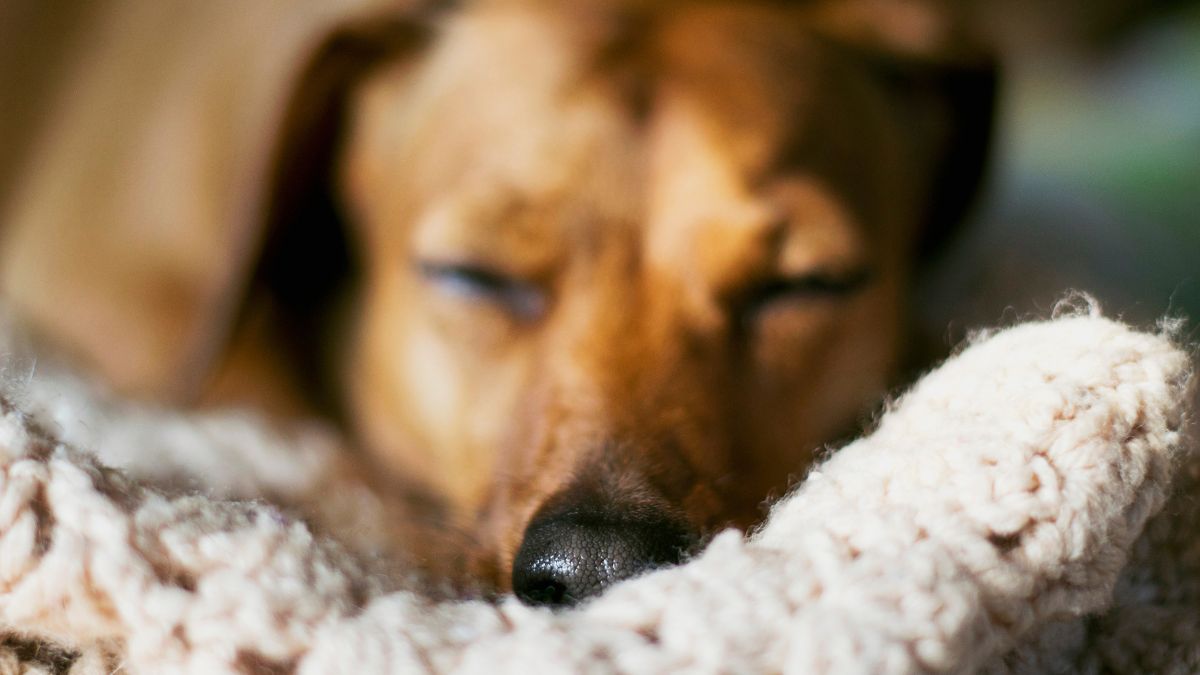
The Real Meaning Behind That Tiny Sigh Your Dog Makes Right Before Falling Asleep
There is something quietly remarkable about sharing a home with a dog. They follow you from room to room, read the mood of a space before you do, and communicate in ways that go well beyond barking. Among their subtler signals, one in particular tends to catch dog owners off guard, that slow, soft exhale that drifts out just as your dog is drifting off to sleep.
Sighing is a common noise many dogs make on the regular, and it happens most often right before they go to sleep or lie down. For years, people have interpreted this sound through a human lens, assuming it reflects tiredness or even mild frustration after a busy day. The reality, as veterinarians and animal behaviorists have come to understand it, is considerably more tender than that.
Contentment is one of the biggest reasons dogs sigh, especially if they sigh while resting or before lying down. According to veterinarian Rhiannon Koehler, DVM, MPH, “your dog’s laying down, just kinda resting and you hear them sigh, that’s usually going to be just that nice sign of contentment.” In other words, that quiet exhale is not your dog lamenting the day. It is your dog telling you, in the only language available to them, that everything feels exactly right.
The American Kennel Club offers a useful key for reading these moments more precisely. When the sigh is combined with half-closed eyes, it communicates pleasure. With fully open eyes, it communicates disappointment, as though the dog is saying they guess you are not going to play with them. A drowsy, heavy-lidded exhale, then, is among the clearest expressions of ease a dog can offer. Psychologist and researcher Dr. Stanley Coren describes the dog sigh as a simple emotional signal that terminates an action, much like the period at the end of a sentence.
But the sigh is more than emotional punctuation. It also performs a quiet biological function that mammals have carried for millions of years. During sleep and claustrophobic states, people and animals generate what are called physiological sighs, double inhalations followed by exhalations. Dr. Linda Simon, a member of the British Royal College of Veterinary Surgeons, explains that sighing is when a dog releases a long breath out, and it is thought to reinflate any alveoli which have collapsed. These tiny air sacs in the lungs can deflate under stress or during long periods of shallow breathing, and the sigh essentially resets the whole system, clearing carbon dioxide and restoring balance.
This sighing occurs naturally in all mammals when their oxygen levels are low, even during sleep, and research has shown it can relieve stress, decrease resting heart rate, and improve sleep and mood. So when your dog settles into their bed and lets out that long exhale, their body is doing exactly what it was designed to do, moving from a state of activity and alertness toward something deeper and more restorative.
Certified animal trainer Brett Reynolds puts it simply: when a senior dog stretches out, finds the perfect sleeping position, and sighs, that is an expression of contentment, and even puppies express happiness with similar sighs and low moans. The sound crosses age, breed, and background. It is one of the most universal things a dog can say.
What makes the bedtime sigh especially meaningful is the relationship it reflects. When a dog sighs while lying down near their person, it can be a way of saying they are happy you are there too. Safety, warmth, and companionship converge in that single breath. Have you ever paused to really listen to your dog’s bedtime sigh, and did it change the way you see the bond between you?