Why Punishing a Fearful Dog Will Almost Always Make the Behavioral Problem Worse
There is a particular kind of helplessness that comes over a dog owner the moment their usually sweet companion freezes, growls, or snaps at something that seems harmless. The instinct that follows is almost universal, a sharp correction meant to stop the behavior in its tracks before it happens again. It feels logical in the moment, even responsible.
What gets lost in that instinct is what the dog is actually trying to say. Growling, barking, lunging, and even freezing in place are normal social behaviors dogs use to communicate their emotional state, and all of them function as distance increasing strategies meant to make a perceived threat go away. A dog showing these signals is not being defiant, it is reporting genuine distress in the only language it has.
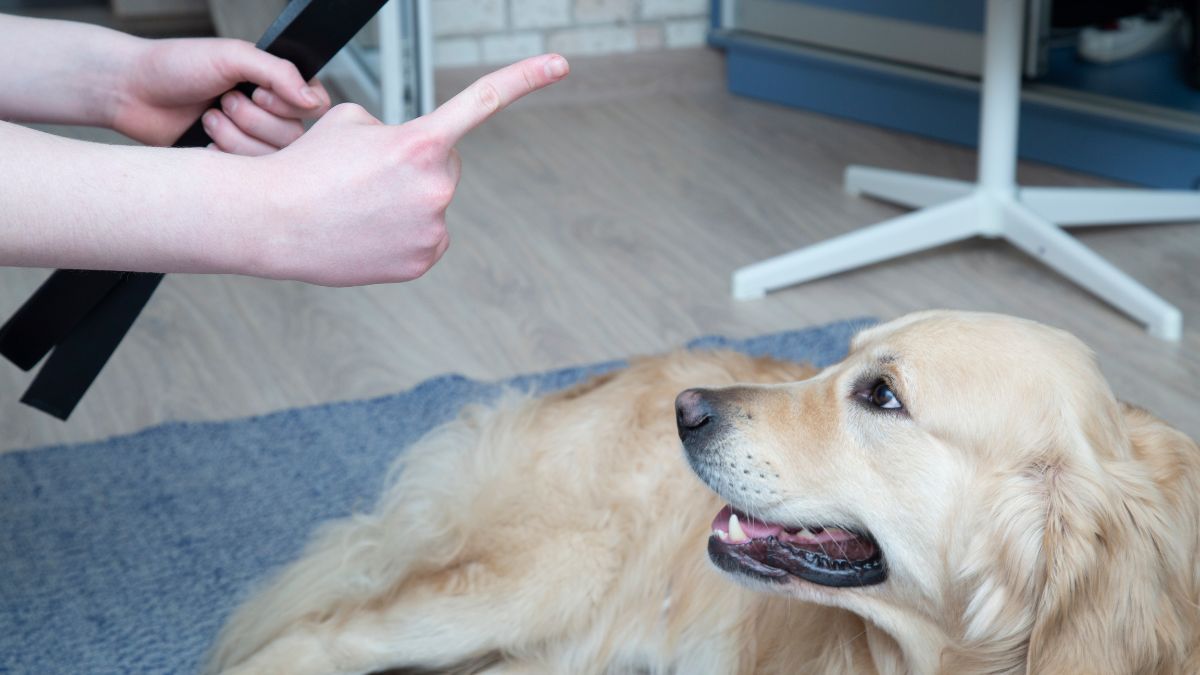
That is precisely where punishment becomes counterproductive rather than corrective. Numerous studies have found that positive punishment and confrontational training techniques are more likely to produce fear, avoidance, and increased aggression, while dogs trained with rewards instead show fewer behavior problems and less fear overall. Animals do not process punishment after the fact the way people might assume, and yelling, swatting, shocking, or yanking the leash will typically only make a fearful dog more afraid rather than less.
The mechanism behind this backfire effect is more troubling than most owners realize. A dog being punished often fails to connect the correction to its own behavior and instead connects it to the person or environment nearby, learning that people are unpredictable and that training itself is something to fear. It is also possible to punish away the early warning signals like growling, and while the underlying fear or discomfort never actually changes, the dog has effectively lost its way of communicating that discomfort, which is part of why some dogs are later described as biting out of nowhere.
Left unaddressed, this pattern tends to spiral rather than settle. Punishment worsens fear aggression specifically because it makes the dog more fearful and scared, which in turn makes it more likely to lash out, creating a vicious cycle of escalation that experts say should be avoided entirely. The use of punishment can slow learning, increase fear based aggression, and create damaging associations with the very owner trying to help, ultimately weakening the human animal bond rather than strengthening it.
Veterinary behaviorists generally point owners toward a very different approach. A veterinary exam is often the recommended first step, since hidden pain is thought to be behind a meaningful share of behavior problems, and addressing any underlying medical issue can improve things significantly on its own. From there, the better path forward usually involves walking a dog calmly away from whatever triggered the growl, noting what led up to it, and building positive associations with that trigger over time rather than confronting it head on.
A scared dog is not asking to be punished into silence, it is asking for the scary thing to make sense or simply go away. Understanding that distinction changes everything about how the next growl, freeze, or flinch gets handled. Has your own dog ever shown you a fear response that, looking back, was trying to tell you something you missed at the time?