
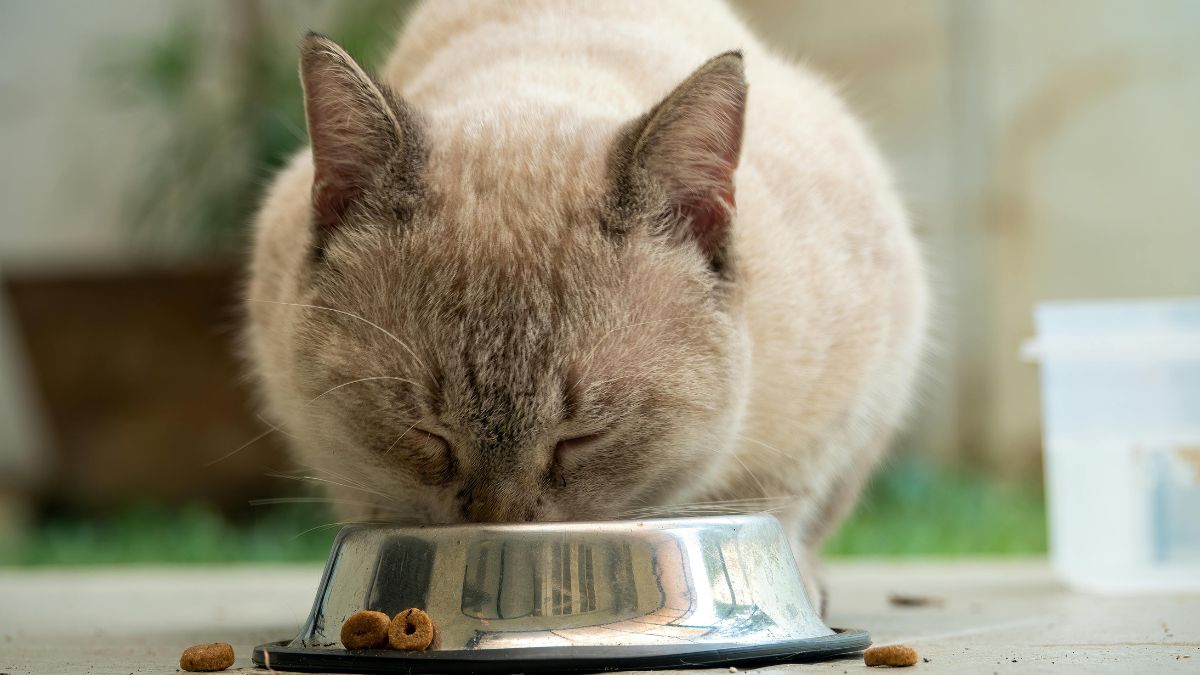
Why Cats Never Finish All the Food in Their Bowl
Many cat owners know the familiar scene all too well. You fill the bowl with fresh food out of love and care, and your feline friend strolls over for a few quick bites before wandering off. The bowl still looks almost full, yet by the next morning it has somehow emptied itself completely. A recent scientific study provides a clear answer to this puzzling habit and shows it has little to do with picky eating.
The real issue lies with scent rather than hunger or fullness. Researchers discovered that a cat’s appetite is heavily driven by smell. In controlled experiments, cats that had gone without food for up to sixteen hours still ate progressively less from the same meal offered repeatedly. Their interest faded not because their stomachs were satisfied but because they grew accustomed to the unchanging aroma. As soon as a new food or even just a different scent appeared, their enthusiasm returned almost instantly and they consumed more.
This process is known as olfactory habituation. Cats desensitize rapidly to familiar odors, which lowers their drive to keep eating. Introducing a novel smell triggers dishabituation, sparking renewed motivation that operates independently of actual hunger levels. Scientists noted that cats even grew excited about foods they had previously ignored simply because the new scent broke the monotony. The study, published in the journal Physiology and Behavior, highlights how smell plays a central role in feline feeding motivation according to lead researcher Masao Miyazaki from Iwate University.
Such behavior reflects the evolutionary background of cats as solitary hunters. Unlike dogs, which descend from pack animals that gorge when food is available, cats evolved to hunt small prey multiple times throughout the day. Eating in short bursts helps them avoid depleting all resources at once and prepares them for the next uncertain hunt. What appears as fussiness is actually an instinctive self-regulation system that ensures steady energy without waste. Domestic cats retain these wild traits even when meals arrive reliably in a bowl.
People experience something surprisingly similar. Humans quickly tire of the same meal day after day and crave variety, though our trigger is more about taste than pure scent. The parallel shows that cats are not spoiled or difficult. Their actions stem from deep biological wiring that mirrors aspects of our own preferences in many ways.
Understanding this mechanism can help owners make mealtime more appealing. Rotating between a few different foods or adding safe scent variety might encourage more consistent eating without overfeeding. Small adjustments like warming food slightly or serving smaller portions more often can also align better with natural instincts.
Cats continue to surprise us with behaviors rooted in their ancient past. Their selective approach to food reveals a sophisticated sensory world that keeps them healthy and engaged.
What surprising eating habits have you noticed in your own cat, and how do you handle them in the comments.