What Your Dog Dreams About When Their Paws Start Twitching in Their Sleep
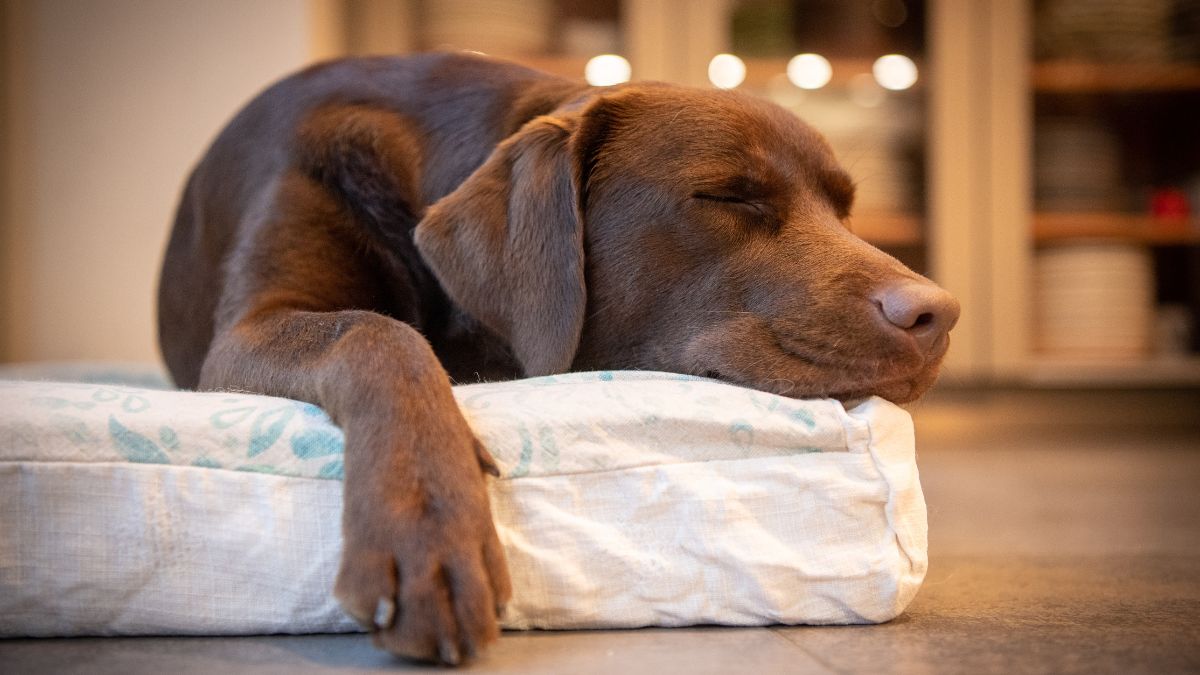
There is something quietly magical about watching a dog sleep. One moment they are curled into a perfect comma of calm breathing, and the next a paw begins to twitch, a lip trembles, and four legs start paddling against nothing visible. The spectacle is both adorable and deeply curious, prompting the same question in millions of households every single day.
Dogs spend about half their day sleeping, and for puppies, senior dogs, and larger breeds, time spent sleeping can take up even more of their day. Long before anyone had scientific tools to investigate the sleeping canine mind, owners were already forming their own theories about those restless paws, most of them involving squirrels. As it turns out, the science is both more nuanced and more wonderful than that.
The answer begins with a sleep stage that dogs and humans share in striking detail. Dogs and people move through remarkably similar sleep cycles, including periods of drowsiness, slow-wave sleep, and REM, or rapid eye movement, sleep, and EEG studies have shown that dogs’ brain waves during REM sleep closely resemble those recorded in humans. About 20 minutes after a dog falls asleep, their first dream begins, breathing becomes shallow and irregular, muscle twitches appear, and the eyes may move behind closed eyelids as the dog appears to look at dream images as if they were real.
The question of what fills those dreams was illuminated by a revealing line of research involving a structure in the brainstem called the pons, which is responsible for temporarily suppressing large muscle movement during sleep. When scientists removed or inactivated the part of the brain that suppresses the acting out of dreams in dogs, the animals began to move around even though electrical recordings confirmed they were still fast asleep, executing the actions they were performing in their dreams. A dreaming Pointer would immediately start searching for game and go on point, a sleeping Springer Spaniel would flush an imaginary bird, while a dreaming Doberman Pinscher would pick a fight with a dream burglar.
Stanley Coren, professor emeritus of psychology at the University of British Columbia and a leading authority on canine cognition, told Inverse that dogs tend to dream about fairly ordinary, daily activities, much as humans replay the routines and events of their waking hours. What your dog does during the day, researchers believe, is precisely what their dreaming mind returns to at night.
Not every dog dreams at the same rhythm or the same length. Small dogs have shorter but more frequent dreams, cycling through a new one roughly every ten minutes, while larger breeds dream less often but for longer stretches that can last five to ten minutes at a time. Puppies and older dogs also tend to twitch and move more during sleep, because the pons is underdeveloped in puppies and becomes less efficient in senior dogs, allowing more physical movement to leak through during REM.
So the next time those paws start twitching, science suggests your dog is almost certainly mid-adventure, replaying a walk, a chase, or a favorite game from earlier in the day. They are not troubled or lost. They are simply living their best moments twice over. What does your dog look like when they dream, and have you ever caught them acting out something you could actually recognize from their day?