The Maldives’ Famous Coral Aquarium Is Slowly Turning Into a Wasteland
The Maldives has long been the kind of place people dream about — turquoise water, white sand beaches, and overwater bungalows that seem almost too perfect to be real. But beneath that postcard surface, something deeply alarming is happening. Diving expeditions carried out in January 2026 at the northern Ari Atoll, one of the most beloved diving destinations in the world, revealed scenes that left researchers breathless. The once vibrant coral reefs that made this place legendary are turning into ghostly white graveyards.
Coral bleaching is the process behind this transformation, and it is as brutal as it sounds. When ocean temperatures rise beyond what corals can handle, they expel the symbiotic algae living in their tissues, the very algae that give them color and keep them alive. What remains is a pale white skeleton. If the heat stress does not let up in time, the coral dies completely, and the reef becomes a barren wasteland that no longer supports the rich marine life it once did.
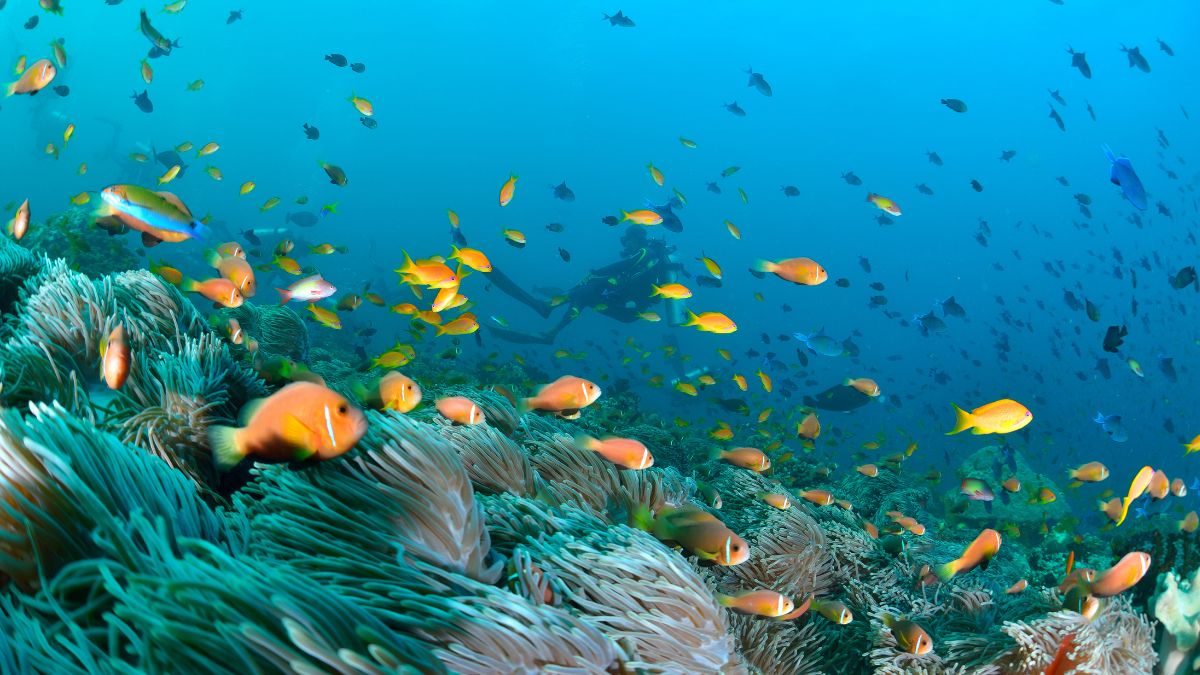
What makes the situation at the northern Ari Atoll especially heartbreaking is the eerie contrast visitors now encounter underwater. Famous spots like the “Fishtank,” named for its incredible density of marine life, still attract sea turtles, moray eels, and large schools of fish. But those animals are now swimming through skeletal white coral structures, looking almost like ghosts haunting the ruins of something beautiful. The most vulnerable species are branching Acropora corals, which are critical for building reef structures but are also the first to collapse under thermal stress.
This is not happening in isolation. The Maldives is caught up in the fourth global coral bleaching event that began in 2023, widely considered one of the most severe ever recorded. Ocean temperatures worldwide are hitting record highs, pushing coral ecosystems well past their limits. Scientists have warned that corals in warm-water regions have already crossed a tipping point at roughly 1.2 degrees Celsius of global warming, a threshold the world has already surpassed.
Climate change is not the only force at work here, though. Decades of research show that local human pressures make reefs far less resilient and much slower to recover. Mass tourism, which accounts for nearly a third of the Maldives’ entire economy and drew close to two million visitors in 2023, brings construction, pollution, and physical damage to reef systems. Dredging and land reclamation projects, particularly in the central atolls, stir up sediment that smothers what coral remains. Reefs located far from resorts and populated islands are recovering at noticeably higher rates, which tells a very clear story about what is driving the decline.
The stakes here go far beyond ecology. More than 80 percent of the Maldives’ islands sit less than three feet above sea level, making healthy coral reefs the country’s most essential line of defense. Those reefs absorb up to 97 percent of wave energy, shielding fragile coastlines from erosion and flooding. Without them, the islands become dangerously exposed to stronger storms and rising seas. President Ibrahim Mohamed Solih has spoken plainly about what this means for his country’s future, warning that if the current trajectory is not reversed, the Maldives could cease to exist before the end of this century.
The economic consequences run just as deep. Both tourism and fishing, the two foundations of the Maldivian economy, depend entirely on healthy reefs to survive. Losing that natural capital does not just threaten wildlife; it threatens the livelihoods of an entire population. Local efforts are being made to reduce nearby pollution and give remaining corals a fighting chance, but experts are clear that without swift and serious global action on emissions, those efforts can only do so much. The images coming out of the Ari Atoll are not just a local warning. They are a signal to the entire planet that the cost of inaction is already being paid.
If this story made you think about the future of our oceans and the places we love to travel to, share your thoughts in the comments.