TikTok

Friendly Labrador Sends Delivery Driver Running in Hilarious Viral Video

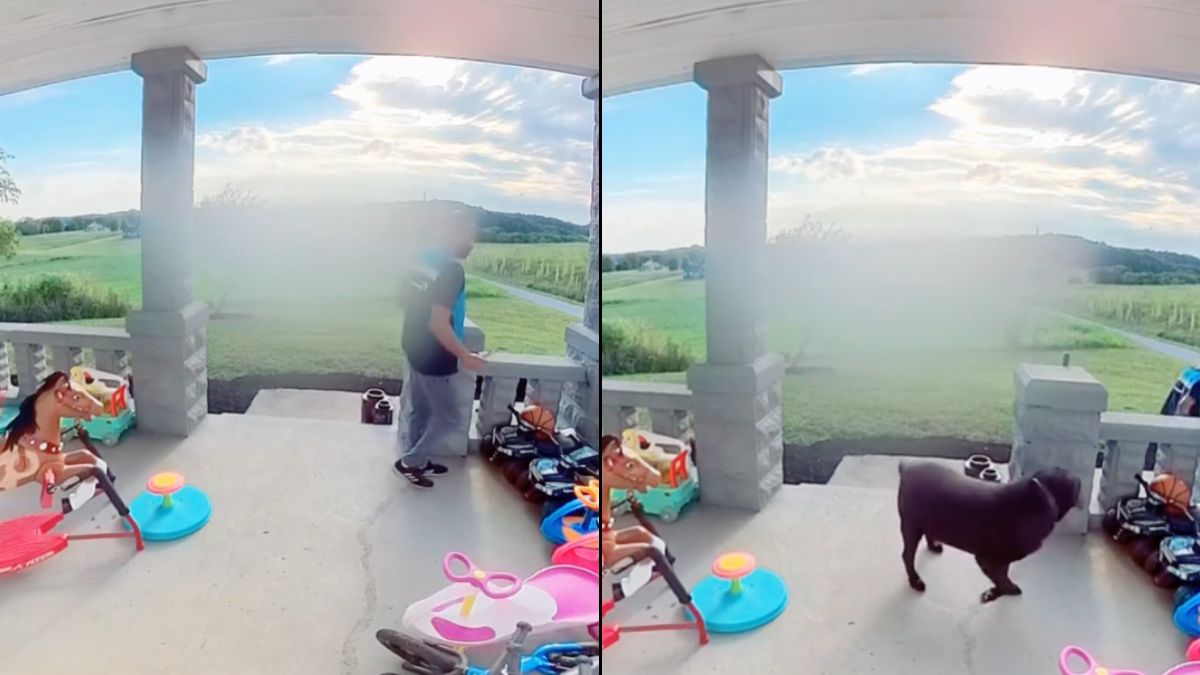
A routine package drop-off recently turned into an internet sensation after a doorbell camera captured a dramatic encounter between an Amazon driver and a very enthusiastic dog. The footage shows a delivery person approaching a home with a package in hand, unaware that a resident was waiting to greet him.

As the driver reached the porch, a large Labrador named Sampson made his presence known with a series of loud barks. Instead of finishing the delivery calmly, the driver was overcome with panic at the sight of the approaching dog.

In a split-second decision, the worker decided that the best way to handle the situation was to make a quick exit. He didn’t just turn and walk away; he actually jumped off the side of the porch railing to escape the area.

He kept his eyes locked on the dog the entire time, ensuring there was plenty of distance between them. Sampson, however, seemed more confused than aggressive as he watched the man scramble toward his delivery truck.

While the driver clearly felt he was in a dangerous situation, the truth behind the dog’s behavior was far more innocent. Sampson has a bit of a reputation in the neighborhood for being a friendly soul who simply loves attention.

The dog’s owner, Clendenning, explained that Sampson has been somewhat spoiled by other delivery professionals in the past. Drivers from UPS and FedEx have frequently brought treats for the Labrador during their daily rounds.

Because of this history, Sampson has learned to associate delivery vehicles and uniforms with the arrival of snacks. He wasn’t barking to scare the driver away, but rather to announce his presence in hopes of receiving a gift.

When the Amazon driver appeared, the dog likely assumed that another friend had arrived with a special delivery just for him. He was essentially checking to see if his usual treat service was about to be provided.

The misunderstanding resulted in a comical scene where the driver was fleeing for his life while the dog was just looking for a cookie. Once the video was shared on TikTok, it quickly garnered thousands of views and comments from amused spectators.

@carladavidclendenning Our Amazon delivery guy just risked it ALL today! 😭 Man jumped off the side of the porch like he was escaping a bear attack…Meanwhile, the “threat” was my old, chunky farm lab who gets winded walking to the food bowl. Sir… he was coming to greet you, not eat you. 💀🐶 #hil#hilariousg#dogsoftiktokb#labsoftiktokr#farmdogd#olddog ♬ The Final Countdown – Europe

Many viewers pointed out the irony of being terrified by a Labrador, a breed famous for its gentle and social nature. One user joked that the dog was simply checking to see if his own personal order had finally arrived.

Another commenter suggested that Sampson would probably leave a one-star review for the service he received that day. They joked that the dog was likely offended that the driver didn’t even stop to offer a single pat on the head.

Some people felt a bit of sympathy for the driver, noting that any large, barking dog can be intimidating if you don’t know their personality. However, the sight of a grown man leaping over a porch to avoid a “chubby” dog was too much for most to handle.

The video serves as a funny reminder of how differently humans and animals can interpret the exact same interaction. To the driver, it was a close call with a guard dog, but to Sampson, it was a missed opportunity for a snack.

Tell us what you would do if a barking Labrador greeted you at the door in the comments.
Similar Posts

  • An Older Rescue Dog Met Her New Puppy Best Friend and the Internet Is Completely in Love

    There is something undeniably heartwarming about watching an older dog meet a brand-new puppy for the very first time, and one pet owner from Brisbane captured exactly that kind of magic on video. The clip features Margo, a senior rescue dog who was adopted in 2024, coming face to face with Betty, a young Staffordshire…

  • Rescue Organization Saved an 11-Year-Old Chihuahua Whose Owners Wanted Him Put Down for Their New Dog

    Some stories are hard to read, and this is one of them. An elderly Chihuahua named Peep found himself at a shelter with a heartbreaking request attached to his file: his owners wanted him euthanized simply because he did not get along with a new dog they had brought home. He had no recorded health…

  • 5 ways Vacation Routines Stress your Pet: Psychology Science most owners Miss

    Vacations are exciting for humans, but for pets, they can feel confusing, stressful, and even scary. Many animals rely on routine to feel safe, so small travel changes can trigger anxiety in ways owners do not expect. The science is simple: pets read patterns, smells, and body language, not calendars. These five overlooked vacation habits can raise stress fast, even in calm pets, and knowing them helps you prevent problems before they start. A few small adjustments can make travel days easier for everyone.
    1. Packing Early Signals “Something Is Wrong” to Your Pet
    When you start pulling out suitcases, your pet often notices before you do. Many animals link luggage with separation, which can trigger anticipatory anxiety. Dogs and cats are experts at pattern recognition, so even quiet packing can create stress because it predicts a major change. Some pets respond by pacing, whining, hiding, or becoming clingy. Others may stop eating or start acting unusually alert. Psychology research on animal behavior shows that uncertainty is often more stressful than the event itself. Packing in smaller steps, keeping normal routines, and adding calm activities can reduce the buildup of anxiety.
    2. Your Mood and Body Language Change More Than You Realize
    Vacation prep usually comes with stress, rushing, and distraction. Pets notice that shift immediately because they rely heavily on your tone, facial expression, and energy. Even if you are excited, the fast movement, shorter patience, and unusual household noise can signal danger to an animal’s brain. This is especially true for anxious dogs and sensitive cats. Behavioral science shows that animals can mirror human stress through increased vigilance and restlessness. A pet may start shadowing you, refusing naps, or becoming reactive. Slowing down, using a calm voice, and keeping playtime normal can make a big difference.
    3. Skipped Walks, Late Meals, and Broken Timing Disrupt Safety Signals
    Many owners think pets will adjust easily to vacation timing changes, but routine is a major source of security for most animals. Meals, walks, and bedtime create predictable anchors that tell a pet their world is stable. When those anchors shift, stress rises, especially in dogs who depend on consistent potty breaks and activity. Cats can also become unsettled when feeding schedules change, which may lead to hiding, vocalizing, or litter box issues. Studies on animal stress show that predictable patterns lower cortisol over time. Even on travel days, keeping timing as close as possible helps pets stay calmer.
    4. New Smells and Spaces Can Trigger Overload, Not Curiosity
    People often assume pets will be excited by a new place, but unfamiliar environments can overwhelm them. Animals process the world through scent and sound, so hotels, rentals, or relatives’ homes can feel like sensory overload. New cleaning products, unfamiliar pets, strange floors, and different noises can raise stress quickly. Dogs may become hyper-alert, bark more, or refuse to settle. Cats may hide for hours or stop eating. Animal behavior research shows that novelty is not always enriching, especially when the pet has no control. Bringing familiar bedding, toys, and maintaining a quiet corner helps reduce that overload.
    5. Handing Them Off to a Sitter Without a Transition Creates Separation Shock
    Even if you trust your sitter, your pet may not. A sudden handoff can feel like abandonment to an animal that does not understand travel plans. Dogs may respond with barking, destructive behavior, or loss of appetite. Cats may become withdrawn, refuse interaction, or show stress through litter changes. Psychology studies on attachment show that animals form strong bonds and feel distress when those bonds are disrupted without a predictable transition. A short meet-and-greet, a trial visit, or a practice overnight can reduce stress dramatically. Familiar scents, written routines, and consistent feeding also help the sitter maintain stability.