A Golden Retriever and a Baby in a Tent Won Over the Whole Internet

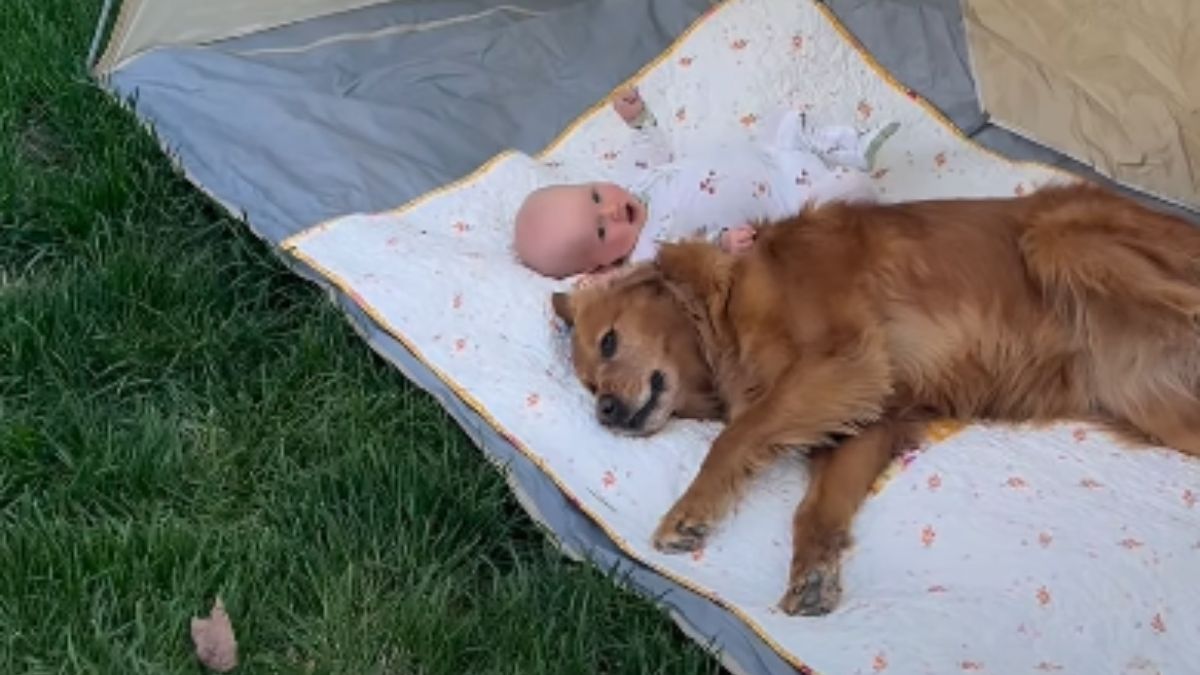
Sometimes the internet delivers exactly the kind of wholesome content that makes your day instantly better. A video of a golden retriever named Billy and a little baby sharing a cozy moment inside a small tent has been making the rounds on Instagram, and it is genuinely hard to watch without smiling.

In the clip, Billy is stretched out on his back, completely at ease, with his paws in the air like he owns the place. The baby, clearly thrilled to have such a fluffy companion nearby, reaches out a tiny hand toward the dog, and Billy responds with a gentle lick that made viewers everywhere lose it a little.

The caption posted alongside the video perfectly sums up the vibe, saying they were staying out of the sun and soaking up every single second together. It is the kind of laid-back summer afternoon that sounds almost too sweet to be real, yet there it is, playing out in a backyard tent.

What made this video spread so quickly is not just how adorable it looks on the surface. It is the energy between them, that easy, unforced comfort that animals and babies seem to share without any effort at all. There is no performance happening, just two beings genuinely happy to be in each other’s company.

Viewers flooded the comments with reactions, with many pointing out that this pair is clearly going to grow up as the best of friends. People noted how calm and gentle Billy is, and how naturally the baby leaned into that softness, completely trusting and completely unbothered by the world outside that little tent.

Golden retrievers have long had a reputation for being exceptionally patient and loving around children, and Billy seems like a textbook example of everything great about the breed. That combination of playful energy and soft temperament makes them one of the most popular family dogs in the country for a reason.

There is also something worth appreciating about the simplicity of the moment. No toys, no elaborate setup, just a dog, a baby, and a bit of shade on a warm day. The caption nailed it by framing it as soaking up every second, because that is exactly what it looks like they are doing.

Videos like this serve as a good reminder of why so many families choose to raise children alongside pets from the very beginning. The bond that forms early tends to run deep, and watching it start in real time is something genuinely special.

If you have a favorite moment between a pet and a little one in your life, share it in the comments.

Similar Posts

  • A Cat Refused to Recognize Her Dog Friend After His Grooming Appointment and the Reaction Is Hilarious

    Some friendships can apparently be undone by a fresh trim. A Himalayan cat named Coco had what seemed to be a perfectly comfortable life alongside her canine companion, that is until the dog came home from the groomer looking and smelling like a completely different animal. The moment she laid eyes on him, something in…

  • 5 ways Vacation Routines Stress your Pet: Psychology Science most owners Miss

    Vacations are exciting for humans, but for pets, they can feel confusing, stressful, and even scary. Many animals rely on routine to feel safe, so small travel changes can trigger anxiety in ways owners do not expect. The science is simple: pets read patterns, smells, and body language, not calendars. These five overlooked vacation habits can raise stress fast, even in calm pets, and knowing them helps you prevent problems before they start. A few small adjustments can make travel days easier for everyone.
    1. Packing Early Signals “Something Is Wrong” to Your Pet
    When you start pulling out suitcases, your pet often notices before you do. Many animals link luggage with separation, which can trigger anticipatory anxiety. Dogs and cats are experts at pattern recognition, so even quiet packing can create stress because it predicts a major change. Some pets respond by pacing, whining, hiding, or becoming clingy. Others may stop eating or start acting unusually alert. Psychology research on animal behavior shows that uncertainty is often more stressful than the event itself. Packing in smaller steps, keeping normal routines, and adding calm activities can reduce the buildup of anxiety.
    2. Your Mood and Body Language Change More Than You Realize
    Vacation prep usually comes with stress, rushing, and distraction. Pets notice that shift immediately because they rely heavily on your tone, facial expression, and energy. Even if you are excited, the fast movement, shorter patience, and unusual household noise can signal danger to an animal’s brain. This is especially true for anxious dogs and sensitive cats. Behavioral science shows that animals can mirror human stress through increased vigilance and restlessness. A pet may start shadowing you, refusing naps, or becoming reactive. Slowing down, using a calm voice, and keeping playtime normal can make a big difference.
    3. Skipped Walks, Late Meals, and Broken Timing Disrupt Safety Signals
    Many owners think pets will adjust easily to vacation timing changes, but routine is a major source of security for most animals. Meals, walks, and bedtime create predictable anchors that tell a pet their world is stable. When those anchors shift, stress rises, especially in dogs who depend on consistent potty breaks and activity. Cats can also become unsettled when feeding schedules change, which may lead to hiding, vocalizing, or litter box issues. Studies on animal stress show that predictable patterns lower cortisol over time. Even on travel days, keeping timing as close as possible helps pets stay calmer.
    4. New Smells and Spaces Can Trigger Overload, Not Curiosity
    People often assume pets will be excited by a new place, but unfamiliar environments can overwhelm them. Animals process the world through scent and sound, so hotels, rentals, or relatives’ homes can feel like sensory overload. New cleaning products, unfamiliar pets, strange floors, and different noises can raise stress quickly. Dogs may become hyper-alert, bark more, or refuse to settle. Cats may hide for hours or stop eating. Animal behavior research shows that novelty is not always enriching, especially when the pet has no control. Bringing familiar bedding, toys, and maintaining a quiet corner helps reduce that overload.
    5. Handing Them Off to a Sitter Without a Transition Creates Separation Shock
    Even if you trust your sitter, your pet may not. A sudden handoff can feel like abandonment to an animal that does not understand travel plans. Dogs may respond with barking, destructive behavior, or loss of appetite. Cats may become withdrawn, refuse interaction, or show stress through litter changes. Psychology studies on attachment show that animals form strong bonds and feel distress when those bonds are disrupted without a predictable transition. A short meet-and-greet, a trial visit, or a practice overnight can reduce stress dramatically. Familiar scents, written routines, and consistent feeding also help the sitter maintain stability.

  • Terrifying Moment Rampaging Bear Charges at Car in Japan Attack Hotspot

    A heart stopping video has captured a massive bear charging straight at a vehicle on a horse ranch in northern Japan. The animal slammed its powerful paws into the car bonnet with a loud thud while the driver quickly reversed to get away. Deep scratches and dents marked the metal surface afterward leaving a clear…

  • A Border Collie Named Chili Adopted a Rescued Kitten and Their Friendship Melted Thousands Online

    Some stories come along that make you stop scrolling and just feel something. The unlikely bond between a border collie named Chili and a tiny rescued kitten named Mimi is exactly that kind of story. Posted to Instagram by their owner, the video captured a friendship so tender and unexpected that it quickly moved thousands…