The Toys That Actually Work Your Dog’s Brain, According to Vets
Dogs are curious, adaptable, and surprisingly complex animals whose minds need just as much exercise as their bodies. Most owners think about walks, fetch, and the occasional treat, but the mental space between those routines matters far more than many people realize. Without opportunities for mental stimulation, dogs can grow bored and restless, and bored dogs will likely seek out their own sources of entertainment, which could result in unwanted destructive behavior.
The connection between boredom and behavioral problems is well understood by veterinary professionals, with experts noting that many of the bad behaviors dogs develop come directly from a lack of proper mental and physical stimulation. The right kind of toy, introduced consistently into a dog’s routine, can address both. Unlike traditional toys that focus solely on physical activity or chewing, enrichment toys usually incorporate an element of surprise that keeps dogs guessing and stimulates their cognitive abilities and instincts.
Puzzle toys are among the most effective brain-boosting options available. Dr. Carly Fox, senior veterinarian with the emergency and critical care service at the Schwarzman Animal Medical Center in New York City, has observed that daily use of puzzle toys can help stimulate a dog’s mind by challenging them to solve problems, strengthening cognitive abilities including memory and patience. Dr. Antonio DeMarco, chief medical and mentorship officer at GoodVets, told HuffPost that mental stimulation is just as important as physical exercise for dogs, and that enrichment toys serve as a practical solution for both the brain and unwanted behaviors.
Snuffle mats work on a similar principle but tap into something even more primal. These fabric-covered foraging pads hide treats among folds and pockets, encouraging dogs to use their nose to locate them, and a 2022 study found that the areas of a dog’s brain responsible for sight and smell are directly connected, suggesting that scent-led activities engage the brain at a deeper neurological level. The foraging behavior a snuffle mat triggers also releases dopamine, the brain’s feel-good hormone, leaving dogs feeling satisfied and successful after each session.
Treat-dispensing and slow-feeder toys add another layer of cognitive challenge, requiring dogs to problem-solve in order to access their food. Toys that feature hidden compartments, interesting textures, erratic movement, or shape-shifting designs activate different parts of the brain in ways that a simple ball cannot match. Treat-dispensing toys that require focus and effort can also redirect anxious energy away from stress and into productive, calming play.
For owners who want to engage more directly, rope toys offer their own form of enrichment. A simple knotted rope that allows for tug-of-war play increases the bond between dog and owner while also creating opportunities for behavioral and cognitive exercises. Senior dogs especially benefit from a varied toy rotation, as canine cognitive dysfunction affects an estimated 28 percent of dogs between the ages of eleven and twelve, rising to 68 percent by age sixteen, and mental stimulation has been shown to help slow its progression.
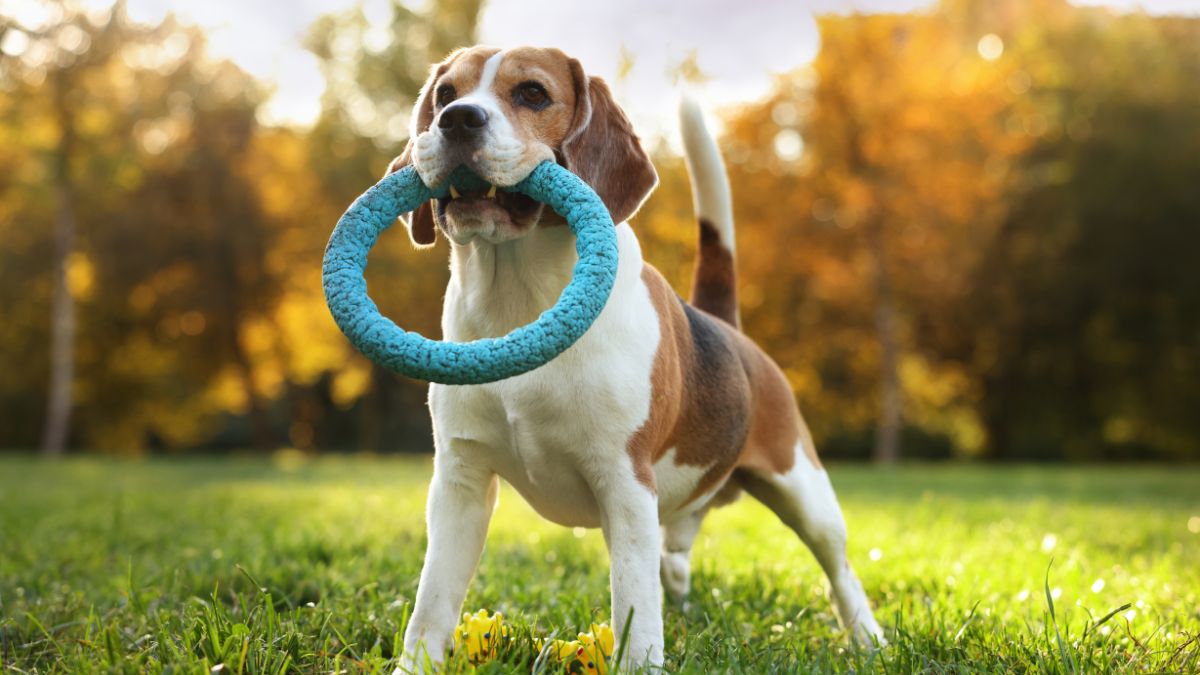
The enrichment toys that make the biggest difference are those that provide mental and physical exercise together, keeping dogs from getting bored while discouraging the unwanted behaviors owners most want to avoid. Whether it’s a puzzle feeder packed with kibble, a snuffle mat tucked into a corner, or a frozen stuffed chew toy waiting in the freezer, the options are more accessible than most people expect.
If your dog has a favorite brain toy that’s genuinely changed their behavior or daily mood, we’d love to hear which one made the difference for them.