
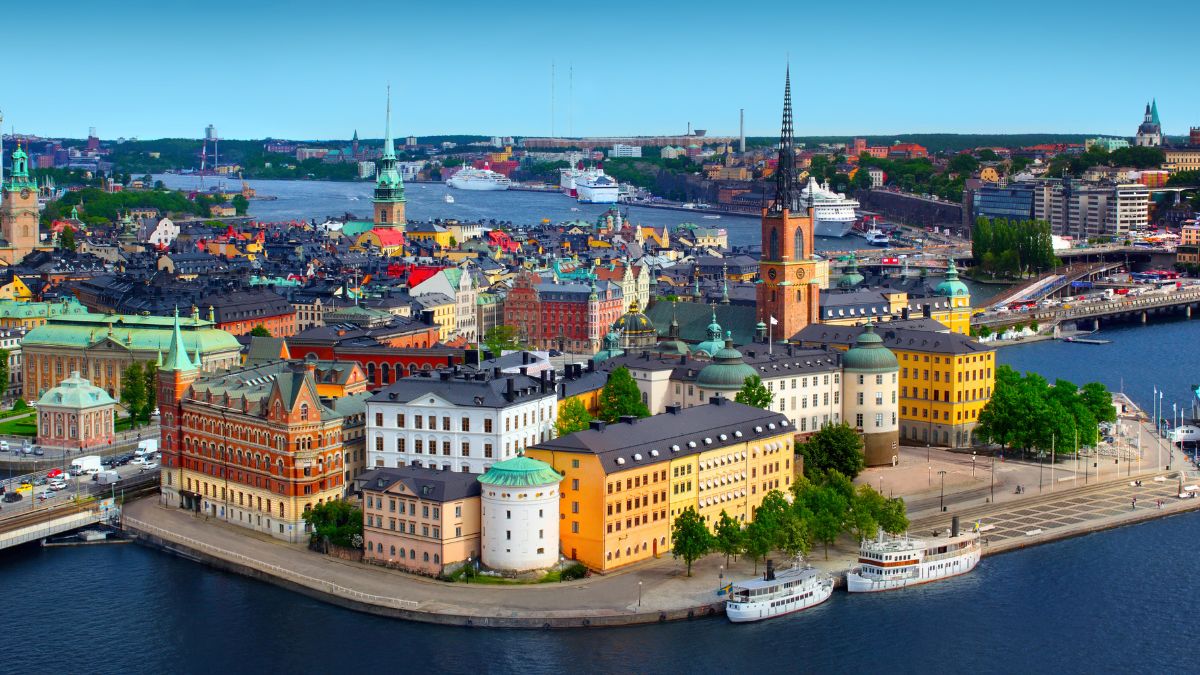
A City Built Across 14 Islands That People Call the “Venice of the North”
Stockholm is one of those rare European capitals that genuinely earns all the praise thrown its way. The Swedish capital is spread across 14 islands, all connected by a network of bridges, which gives the city a uniquely fragmented yet harmonious feel that you really can’t find anywhere else on the continent. It is also one of the greenest urban areas in Europe, where parks, waterways, and forests weave themselves into the everyday fabric of city life. This combination of preserved nature and vibrant modern living is exactly what draws so many travelers to Sweden’s capital year after year.
The city manages to offer something for almost every type of traveler, from history lovers to architecture fans. Gamla Stan, Stockholm’s old town, is one of the best-preserved medieval city centers in all of Europe, full of winding cobblestone streets and colorful buildings that feel frozen in another era. For those interested in royal history, the Stockholm Palace is one of the largest working royal palaces in the world and remains an impressive landmark right in the heart of the city. Museum enthusiasts will find plenty to keep them busy as well, with the Vasa Museum standing out as a particularly remarkable attraction, housing a nearly intact 17th-century warship that was raised from the harbor floor after more than three centuries underwater.
One of the more unexpected highlights of visiting Stockholm is its metro system. Rather than being just a way to get around, the Stockholm subway is widely regarded as one of the longest art galleries in the world, with over 90 of its stations decorated with sculptures, mosaics, paintings, and installations by various artists. It turns an ordinary commute into something genuinely worth experiencing, and many visitors make a point of riding the metro specifically to see the art. It is the kind of thoughtful urban detail that says a lot about how Stockholmers value beauty in everyday spaces.
That said, visitors should go in with realistic expectations about the practical side of things. Stockholm is an expensive city, and the cost of food, accommodation, and activities can add up quickly compared to other European destinations. Cash is essentially useless there since nearly everything runs on card payments, so arriving with a wallet full of bills won’t do you much good. The weather also changes dramatically depending on the season, swinging from extremely short winter days with very little sunlight to summer nights where it barely gets dark at all, which can be disorienting if you’re not prepared for it.
The outdoor side of Stockholm is genuinely wonderful when the weather cooperates. Djurgården is a large island park close to the city center that offers walking paths, open green spaces, and a peaceful escape from the busier parts of town. Stockholm’s food scene is also worth exploring, with traditional Swedish meatballs remaining a beloved staple that you’ll find on menus across the city. Despite the price tag that comes with visiting, Stockholm consistently ranks among the most satisfying destinations in Europe precisely because it manages to balance urban energy with natural calm in a way that few other cities can pull off.
If Stockholm is on your travel radar or you’ve already had the chance to visit, share what you think about it in the comments.