
The Dead Sea Is Vanishing and Taking Everything With It: “This Is a Living Catastrophe”
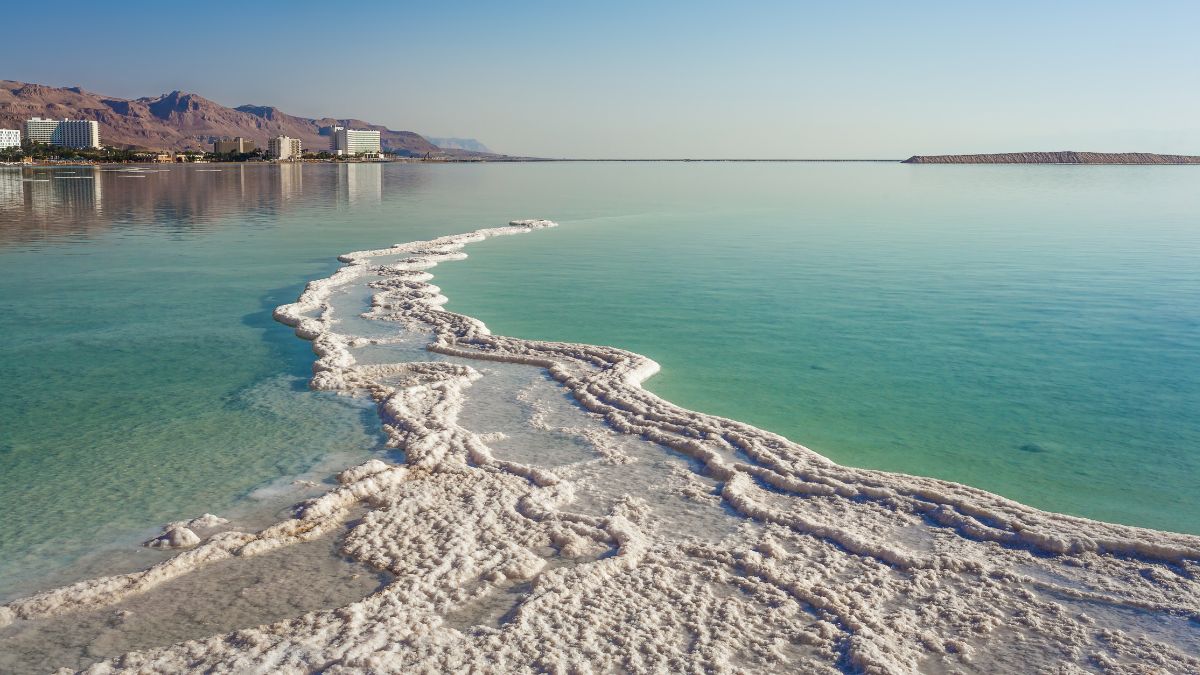
One of the most extraordinary natural wonders on Earth is disappearing at a pace that is frankly alarming. The Dead Sea, nestled between Israel and Jordan at the lowest point on the planet, has long captivated travelers with its thick, mineral-rich waters that make floating effortless and its legendary therapeutic mud. But the shoreline is retreating faster than ever, dropping more than three feet every single year, leaving behind a scarred, salt-crusted wasteland that grows more haunting with each passing season. What was once considered an eternal landmark is turning into a symbol of what happens when human ambition outpaces environmental responsibility.
The transformation is dramatic enough that returning visitors can barely recognize the place. Not long ago, guests at the Ein Gedi spa could simply stroll from their towels straight into the water. Today, that same walk covers nearly a mile and a half of rocky, cratered terrain before reaching the shore. Since the 1960s, the Dead Sea has already lost roughly a third of its total surface area, and the consequences go far beyond a shrinking waterfront. The receding water has exposed something far more dangerous lurking beneath the surface.
As the shoreline pulls back, it leaves behind massive underground deposits of salt. When freshwater from seasonal floods or underground streams makes contact with those deposits, the salt dissolves and creates enormous hidden cavities beneath the earth. Without warning and often within minutes, the ground above those cavities simply collapses, forming sinkholes that can stretch up to 260 feet wide and plunge more than 33 feet deep. Jake Ben Zaken, one of the few people still running boat tours on the dying sea, described it plainly when he said “This is a living catastrophe unfolding before your eyes.” Thousands of these craters now dot the former shoreline, having already consumed roads, parking lots, agricultural fields, and entire tourist resorts.
While climate change and rising temperatures do accelerate evaporation, experts are clear that human decisions are the primary driver of this crisis. The Jordan River, which once fed the Dead Sea, has been reduced to barely ten percent of its historical flow because Israel, Jordan, and Syria have spent decades redirecting its water for farming and to supply growing populations with drinking water. On top of that, industrial operations from both Israeli and Jordanian companies pump enormous volumes of water from the sea’s southern basin to extract valuable minerals like potassium and bromine, channeling that water into evaporation pools where it is permanently lost. Gidon Bromberg, the Israeli director of the environmental organization EcoPeace, has described the sinkholes as nature’s revenge for what he calls the irresponsible actions of humanity.
Various rescue plans have been floated over the years, the most ambitious being a canal that would pump water from the Red Sea down to replenish the Dead Sea. That project ultimately collapsed under the weight of staggering costs, deep political tensions between neighboring countries, and serious ecological warnings from scientists who feared that mixing two chemically different bodies of water could permanently destroy the Dead Sea’s unique composition. Jordan eventually walked away from the joint effort and shifted its focus toward building its own desalination facilities. Environmental groups continue to advocate for more sustainable approaches, particularly increasing Mediterranean desalination capacity so that natural river water can be freed up to flow again toward the sea.
The honest truth, though, is that most scientists do not expect a full recovery. Projections suggest the water level will keep falling for at least another hundred years before any stabilization might occur, and even in a best-case scenario, what remains will be a smaller, saltier version of what once existed. Alison Ron, a longtime resident of Ein Gedi who has watched the transformation firsthand, summed up the heartbreak of it simply by saying we should be ashamed that we let this happen to something so irreplaceable. The Dead Sea is not just a tourist destination but a geological and historical treasure that has existed for millions of years, and the window to meaningfully slow its decline is narrowing fast.
If this story moved you or made you think about how we treat our natural wonders, share your thoughts in the comments.