Crossing This Bridge in China Symbolizes Moving from the Present into the Future
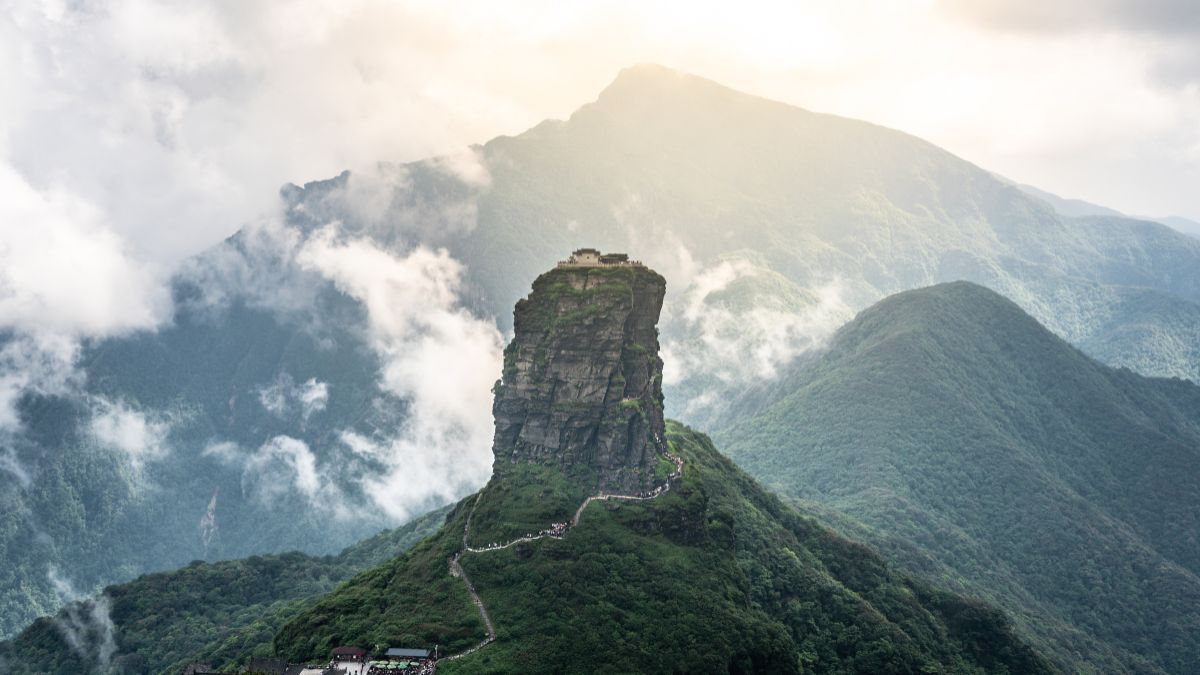
Tucked away in the Guizhou province of China, high above dense forest and almost always wrapped in a thick veil of mist, sits one of the most spiritually charged places on earth. Mount Fanjingshan is home to two ancient Buddhist temples perched on separate rocky peaks, joined by a stone bridge that carries far more meaning than any ordinary crossing. The mountain has been a UNESCO World Heritage Site since 2018, yet it remains surprisingly off the radar for most Western travelers. That quiet obscurity, if anything, makes it even more worth knowing about.
The name Fanjingshan loosely translates to “Mountain of Brahmic Pure Land,” and the title alone tells you a lot about what this place means to Chinese Buddhism. The mountain is believed to be the sacred site of enlightenment for Maitreya, known as the Future Buddha. Its spiritual importance really came into its own during the Ming dynasty, when devotion to the Maitreya cult flourished across the region. Despite going through periods of neglect and destruction over the centuries, Fanjingshan has endured and is now considered one of the most significant Buddhist pilgrimage destinations in all of China.
Getting to the temples is no casual afternoon stroll. The path to the summit involves climbing nearly 9,000 stone steps, and while a cable car handles a portion of the journey, the final stretch still demands about an hour of real effort on foot. Weather on the mountain shifts without warning, and the trail can go from clear to completely fog-drenched within minutes. Visitors pass through narrow passages lined with moss-covered walls, and the closer you get to the top, the stronger the scent of incense becomes. Inside the temples, thousands of red prayer cards cover the walls, left there by pilgrims who made the trek before you.
@gluttonyvoid Between Heaven and Earth: A Magical Place in China's Heights #ChinaTravel #ScenicViews #HeavenOnEarth ♬ original sound – Gluttonyvoid
At an elevation of roughly 7,660 feet, the summit is known as the Golden Summit of Red Clouds, and the two temples there each carry their own symbolic weight. The Temple of Buddha represents the present moment, while the Temple of Maitreya represents the future. The stone bridge connecting them is the heart of the whole experience, because crossing it is understood as a symbolic journey from now into what is yet to come. On clear days, a sea of clouds sits below the summit, making the temples look like they are floating in the sky. At sunrise, light filters between the two peaks in a way that visually drives home that sense of separation between the present and what lies ahead.
Beyond its spiritual significance, Fanjingshan is also a remarkable place from a natural science perspective. The mountain’s geographic isolation over thousands of years has allowed a truly unique ecosystem to take shape here. It is home to the Guizhou snub-nosed monkey, an endangered species found nowhere else in the world, as well as the endemic Fanjingshan fir tree. The area also contains some of the most pristine subtropical beech forests anywhere on the planet, which was a key reason UNESCO recognized it for its natural value alongside its cultural importance.
@ourhiddenearth Lost in the mystical allure of Guizhou, where every mountain holds secrets and every temple whispers ancient tales. Fanjingshan Temple nestled among the peaks, a sanctuary of tranquility amidst nature’s grandeur. 🎥 @mikechinavlog #travel #traveltiktok #traveltok #earth #china ♬ son original – Trendformusic🤍🇲🇺
Fanjingshan sits at an intersection that few places in the world can claim, where ancient spiritual tradition and untouched natural wilderness exist side by side in genuinely equal measure. Pilgrims come seeking clarity, and hikers come seeking a challenge, but most people who make it to that bridge end up pausing there longer than they expected. There is something quietly powerful about standing between two temples, one behind you and one ahead, knowing that the crossing itself is the point. If Fanjingshan is not already on your travel list, it probably deserves a spot near the top.
Have you ever visited a place where the journey itself felt like part of the spiritual experience, and would you make the climb to Fanjingshan? Share your thoughts in the comments.