
Meet the Most Isolated Nation on the Planet (And Why It’s a Total Hidden Gem)
Far from the crowded beaches and well-trodden tourist trails that dominate most travel bucket lists, there is a small island nation quietly sitting in the middle of the Pacific Ocean that almost nobody talks about. Kiribati attracts only around 9,500 visitors per year, making it one of the least-visited and most isolated countries on Earth. And yet, for those who do make the journey, it offers something increasingly rare in modern travel: genuine, unspoiled paradise. The question worth asking is why so few people actually go.
Part of the answer lies in Kiribati’s extraordinary geography. The country is made up of 32 atolls scattered across a vast stretch of ocean, with roughly 20 of them inhabited and a total population of around 140,000 people. What makes it especially fascinating is that Kiribati is the only country in the world that spans all four hemispheres simultaneously. Despite covering such an enormous area of ocean, its actual land territory amounts to just about 313 square miles, which makes it smaller than many major metropolitan areas, including Los Angeles.
Getting there is a serious undertaking in itself. There are no ferry connections to Kiribati whatsoever, meaning the only way in is by air through a series of long and complicated routes. Most travelers pass through major transit hubs like Los Angeles, Singapore, or Hawaii before reaching their final destination, and the total journey time typically runs well over 24 hours. Factor in the cost of those flights alongside the limited accommodation options once you arrive, and it quickly becomes clear why the average traveler tends to look elsewhere.
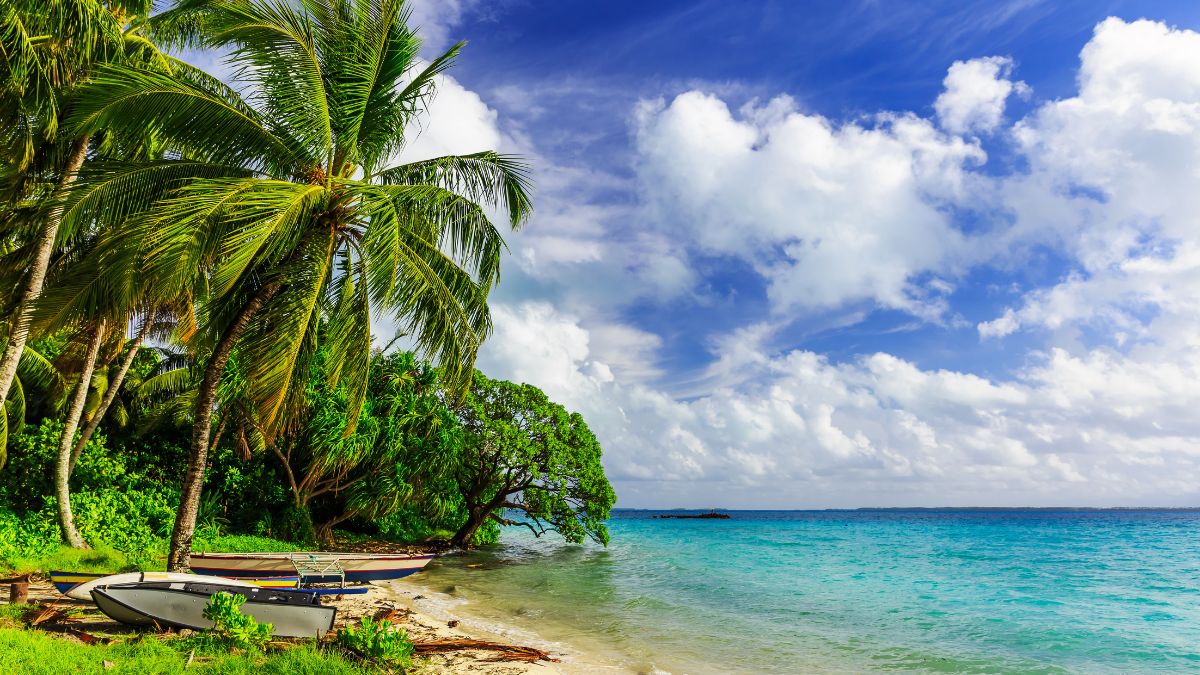
Here is the thing though, the Kiribati government is not exactly trying to change that. Authorities have made a conscious decision to embrace what many call “slow tourism,” prioritizing the protection of their natural environment over the kind of mass tourism that has transformed so many other destinations beyond recognition. The result is a place where white sand beaches, crystal-clear turquoise water, and pristine coral reefs remain largely intact and untouched by commercial development. It is the kind of destination that reminds you what travel used to feel like before crowds and over-tourism became the norm.
Kiribati also carries a significant historical weight that many visitors are unaware of. During World War II, the capital Tarawa was the site of one of the most brutal and costly battles fought across the entire Pacific theater. On the island of Betio specifically, thousands of soldiers lost their lives in fierce and relentless fighting before American forces ultimately secured the island. The remnants of that conflict are still visible today, adding a profound layer of historical depth to what is already a truly unique destination.
Climate change looms heavily over Kiribati as well. As one of the lowest-lying nations on the planet, it faces a very real existential threat from rising sea levels, and its long-term future remains deeply uncertain. That reality gives visiting Kiribati a sense of urgency that few other destinations can match, because you may be looking at one of the last places on Earth that still looks the way much of the Pacific once did. For travelers who care about authenticity and natural beauty, it is a destination that absolutely deserves more attention.
If Kiribati is a place you would ever consider visiting or if you have already been, share your thoughts in the comments.