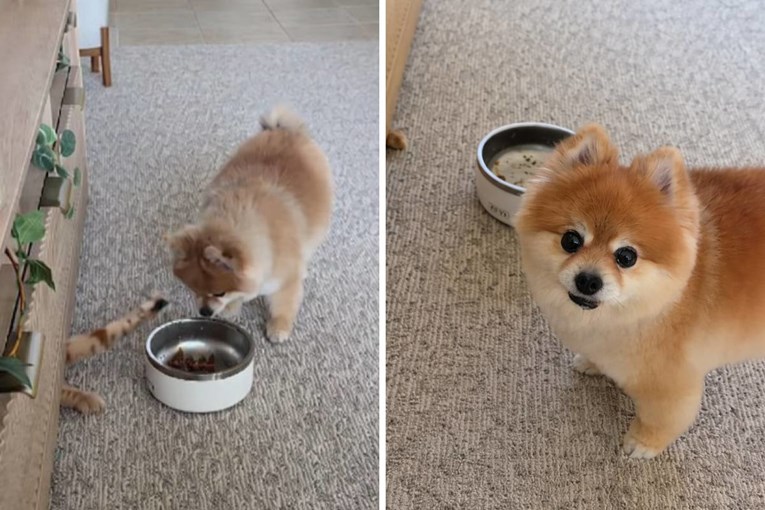
Screenshot: Instagram

Pomeranian Catches Cat Stealing Her Food and Her Reaction Delights Thousands

A tiny Pomeranian named Lola was happily eating her meal when her orange tabby housemate decided to sneak in for a quick snack. The cat hid under the nearby couch and reached out a sneaky paw to pull the food bowl closer. What happened next turned into an instant viral sensation on Instagram that left viewers laughing out loud.

Lola froze in place the moment she spotted the attempted theft. She turned her wide eyes straight toward her owner with a look of pure disbelief as if asking for backup right away. The little dog seemed completely shocked that her feline roommate would try such a bold move during dinner time. Many people who watched the clip described her expression as priceless and utterly hilarious.

The owner tried to calm Lola down by pointing out the cat’s paw and assuring her that no food would disappear. Yet the Pomeranian stayed locked in that stunned stare clearly unimpressed with the explanation. The video ends on that perfect moment of canine outrage which captures the eternal struggle between pets sharing a home. It is not the first time this pair has created such comedy according to their owner who simply noted that it is always the same story with the orange one.

Living with both a dog and a cat often brings these playful rivalries especially when meals are involved. Food can spark the funniest interactions as pets negotiate their space and treats in the most entertaining ways. Lola’s dramatic reaction highlights how even the smallest dogs can show big personalities when they feel their bowl is under threat. The orange tabby on the other hand played the part of the clever opportunist perfectly by staying mostly hidden during the attempt.

Social media users could not get enough of the scene flooding the comments with praise for the tiny dog’s over the top surprise. One viewer called the frozen look both adorable and side splitting while others cheered the cat for her mischievous charm. The clip quickly racked up thousands of views as pet lovers everywhere related to the daily dramas unfolding in their own households. It reminds everyone that sharing a home with animals means embracing the chaos and laughter that comes with it.

These kinds of moments show why pets bring so much joy into our lives even during the silliest conflicts. The bond between Lola and her cat friend shines through despite the food rivalry proving that love and laughs go hand in hand. Pet owners often find themselves mediating these little disputes while trying not to burst into giggles at the same time.

What do you think about Lola’s unforgettable reaction to the food heist. Share your thoughts in the comments.
Similar Posts

  • 5 ways Vacation Routines Stress your Pet: Psychology Science most owners Miss

    Vacations are exciting for humans, but for pets, they can feel confusing, stressful, and even scary. Many animals rely on routine to feel safe, so small travel changes can trigger anxiety in ways owners do not expect. The science is simple: pets read patterns, smells, and body language, not calendars. These five overlooked vacation habits can raise stress fast, even in calm pets, and knowing them helps you prevent problems before they start. A few small adjustments can make travel days easier for everyone.
    1. Packing Early Signals “Something Is Wrong” to Your Pet
    When you start pulling out suitcases, your pet often notices before you do. Many animals link luggage with separation, which can trigger anticipatory anxiety. Dogs and cats are experts at pattern recognition, so even quiet packing can create stress because it predicts a major change. Some pets respond by pacing, whining, hiding, or becoming clingy. Others may stop eating or start acting unusually alert. Psychology research on animal behavior shows that uncertainty is often more stressful than the event itself. Packing in smaller steps, keeping normal routines, and adding calm activities can reduce the buildup of anxiety.
    2. Your Mood and Body Language Change More Than You Realize
    Vacation prep usually comes with stress, rushing, and distraction. Pets notice that shift immediately because they rely heavily on your tone, facial expression, and energy. Even if you are excited, the fast movement, shorter patience, and unusual household noise can signal danger to an animal’s brain. This is especially true for anxious dogs and sensitive cats. Behavioral science shows that animals can mirror human stress through increased vigilance and restlessness. A pet may start shadowing you, refusing naps, or becoming reactive. Slowing down, using a calm voice, and keeping playtime normal can make a big difference.
    3. Skipped Walks, Late Meals, and Broken Timing Disrupt Safety Signals
    Many owners think pets will adjust easily to vacation timing changes, but routine is a major source of security for most animals. Meals, walks, and bedtime create predictable anchors that tell a pet their world is stable. When those anchors shift, stress rises, especially in dogs who depend on consistent potty breaks and activity. Cats can also become unsettled when feeding schedules change, which may lead to hiding, vocalizing, or litter box issues. Studies on animal stress show that predictable patterns lower cortisol over time. Even on travel days, keeping timing as close as possible helps pets stay calmer.
    4. New Smells and Spaces Can Trigger Overload, Not Curiosity
    People often assume pets will be excited by a new place, but unfamiliar environments can overwhelm them. Animals process the world through scent and sound, so hotels, rentals, or relatives’ homes can feel like sensory overload. New cleaning products, unfamiliar pets, strange floors, and different noises can raise stress quickly. Dogs may become hyper-alert, bark more, or refuse to settle. Cats may hide for hours or stop eating. Animal behavior research shows that novelty is not always enriching, especially when the pet has no control. Bringing familiar bedding, toys, and maintaining a quiet corner helps reduce that overload.
    5. Handing Them Off to a Sitter Without a Transition Creates Separation Shock
    Even if you trust your sitter, your pet may not. A sudden handoff can feel like abandonment to an animal that does not understand travel plans. Dogs may respond with barking, destructive behavior, or loss of appetite. Cats may become withdrawn, refuse interaction, or show stress through litter changes. Psychology studies on attachment show that animals form strong bonds and feel distress when those bonds are disrupted without a predictable transition. A short meet-and-greet, a trial visit, or a practice overnight can reduce stress dramatically. Familiar scents, written routines, and consistent feeding also help the sitter maintain stability.

  • Cute Puppy Marcy Refuses to Watch Cartoons Without Her Favorite Toy

    A delightful video making the rounds online captures the adorable habits of a little dog named Marcy who has developed quite the specific routine for her television time. This playful pup simply will not settle in to enjoy her favorite cartoons unless she has her beloved stuffed toy right beside her. The footage shows Marcy…

  • A Grumpy White Cat Named Jolene Is Going Viral for Looking Like a Cartoon Character Come to Life

    Cats have never been particularly subtle about their feelings, and Jolene is no exception. The blue-eyed white cat recently took over TikTok after her owner dressed her in a light green sweater and filmed the result, capturing what can only be described as a masterclass in feline disapproval. Sitting almost completely still against a backdrop…

  • This Dachshund’s Clever Strategy for Ending Walks Has Gone Viral

    A tiny dachshund with a very clear sense of his own limits has taken the internet by storm, racking up over two million views on TikTok with a clip that dog owners everywhere found instantly relatable. The video, posted on March 20 under the account @frankiethedox, captures the little pup trotting confidently off-leash toward a…