The World’s Most Dangerous Hiking Trail Was Once Crossed by a King
Tucked away in the heart of Andalusia, Spain, inside the dramatic Desfiladero de los Gaitanes gorge, lies El Caminito del Rey, a trail with a history that reads more like a legend than a hiking guide. For years, it carried the reputation of being the most dangerous footpath on the planet, drawing in thrill-seekers and mountaineers from around the world. Today, the trail tells a very different story, one of renewal, royal history, and remarkable engineering. But to understand what it has become, you first have to know what it once was.
The trail was originally built between 1901 and 1905 as a working access route for laborers constructing hydroelectric plants and dams along the Guadalhorce River. It was a genuine feat of engineering at the time, a narrow concrete walkway barely three feet wide, bolted directly onto sheer vertical rock faces at dizzying heights. Workers needed it to transport materials and carry out maintenance, and for a while it served its purpose well. As the decades passed, however, no one maintained it, and the structure slowly began to crumble.
By the late 1990s the trail had become genuinely life-threatening, and its deteriorated state earned it the grim nickname “Death Path.” Between 1999 and 2000 alone, five people lost their lives attempting to cross it. One of the most tragic incidents involved the snapping of a makeshift zip-line cable, which killed three hikers in a single accident. Authorities officially closed the trail in 2001 and threatened unauthorized visitors with fines of around $6,600, but people continued to sneak on anyway, and new deaths followed right up until 2013.
The name El Caminito del Rey, which translates to “The King’s Little Path,” actually dates back to 1921. That year, Spanish King Alfonso XIII walked the trail himself to mark the ceremonial opening of the nearby Conde del Guadalhorce dam. That royal visit gave the path its official name and cemented it firmly in local history. It is one of those small details that transforms a crumbling stretch of rock and concrete into something with genuine character.
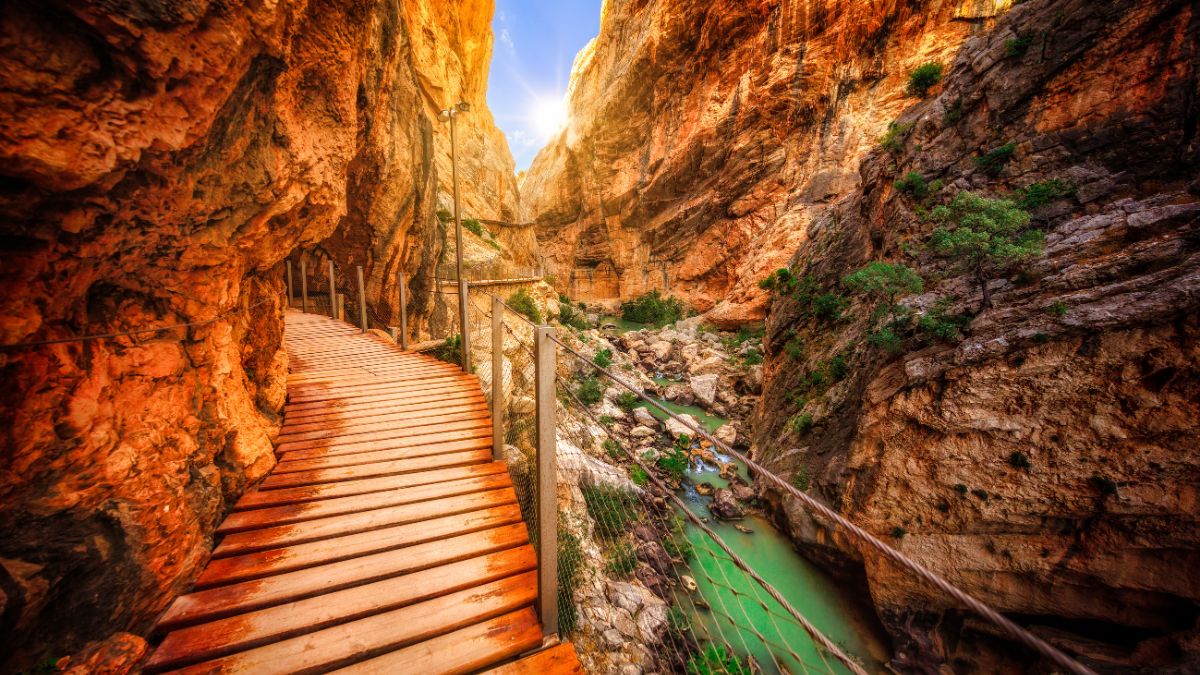
After years of closure, regional authorities decided the trail deserved a second life rather than to be left forgotten. They invested more than $10 million into a sweeping restoration, and in March 2015, El Caminito del Rey reopened to the public as a fully safe and regulated attraction. A wide new wooden walkway was constructed directly above the remains of the original path, which was deliberately left in place as a visible reminder of everything that came before. Those weathered remnants beneath your feet serve as a quiet, constant nod to the trail’s harrowing past.
Today the trail welcomes around 300,000 visitors every year, and tickets often need to be reserved weeks or even months in advance due to its enormous popularity. Helmets are mandatory for all visitors, and children under the age of eight are not permitted on the trail. While El Caminito del Rey no longer holds the title of the world’s most dangerous path, it has lost none of its appeal. It stands as a monument to bold engineering and the raw natural beauty of the region, offering an experience that few hikes anywhere can match.
If you have ever walked El Caminito del Rey or have it on your travel bucket list, share your thoughts in the comments.