The Wilderness Detectives With Noses That Can Outsmart Nature Itself
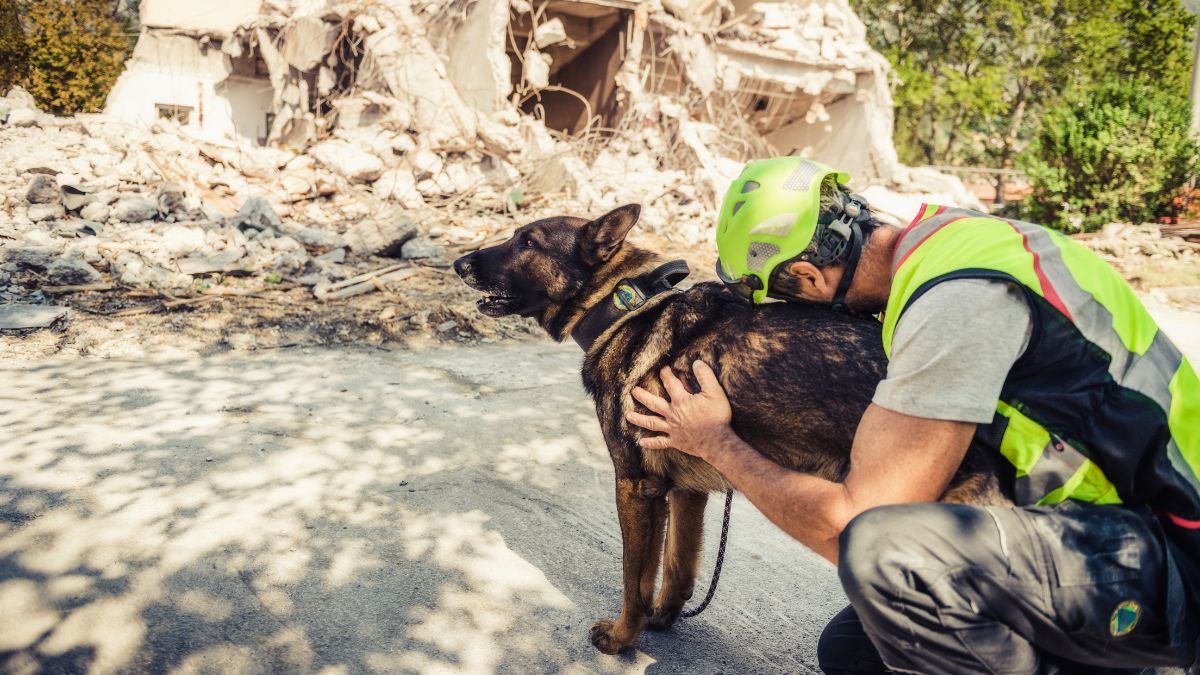
Few things in the natural world rival the quiet drama of a search and rescue dog moving through a dense forest. Nose lifted toward an invisible current of air, body taut with focus, the dog is reading a world that humans simply cannot perceive. These highly trained animals use their extraordinary scenting abilities, working side by side with human handlers, to locate missing people in wilderness areas, disaster zones, and other emergency situations. For anyone who has ever watched one work, the experience leaves a lasting impression.
The foundation of everything a search and rescue dog does lies in its anatomy. Dogs have more than 100 million sensory receptor sites in the nasal cavity, compared to just 6 million in people, and the area of the canine brain devoted to analyzing odors is roughly 40 times larger than the comparable part of the human brain. That is not merely an incremental advantage. It is a wholly different relationship with the world. Dogs also possess an additional olfactory organ called Jacobsen’s organ, located inside the nasal cavity, whose nerve cells respond to substances that often carry no detectable odor at all.
In wilderness operations specifically, this biology translates into something that can mean the difference between life and death. Search and rescue dogs can pick up a human scent from as far away as a half-mile, and sometimes farther, with dogs trained for water searches known to detect scent from up to a mile and a half away. Human scent is a distinct combination of skin flakes and water and oil secretions that is unique to each individual, giving trained dogs a kind of biological fingerprint to follow through terrain that would defeat any other search method.
Two main approaches define how these dogs work in the field. Trailing dogs follow the general path of a lost person with their noses close to the ground, while airscenting dogs work with noses raised, using wind currents to quarter back and forth until they narrow in on the scent source. Air scent dogs working off lead are particularly effective in rural and wilderness environments, able to cover vast amounts of ground quickly, making them a force multiplier on a search, as handler and trainer Éadaoin O’Gorman told Non-stop Dogwear. The two styles are often deployed together, with trailing dogs anchoring the search to a known starting point and air scent dogs sweeping the wider terrain.
Weather, which so often complicates wilderness rescues, poses far less of a barrier than one might expect. Wind helps rather than hinders a dog’s ability to detect scent, and light rain can actually rehydrate scent-emitting particles that dried out during the day. Night searches are also frequently preferred, because scent concentration is highest when the air is still, giving handlers the option to deploy their dogs while other resources are still being organized. SAR dogs must be capable of working four to eight hours straight without being distracted by other human rescue workers or wildlife present in the search area.
The breeds most commonly associated with this work reflect a long history of selective development for exactly these traits. Border Collies, Bloodhounds, German Shepherd Dogs, Golden Retrievers, and Labrador Retrievers all excel at SAR work, though handlers are quick to point out that temperament and drive matter far more than pedigree. Breed is far less important than people often think, O’Gorman notes, with successful teams built around Collies, Australian Shepherds, Spaniels, and more.
Dogs engaged in this work become more resilient, more focused, and more connected with their handlers, with their confidence growing because they are using their natural abilities and being celebrated for them. For the handlers, years of shared training build something equally profound, a partnership grounded in trust and wordless communication that functions at its best precisely when the stakes are highest. If you have ever followed a search and rescue story or witnessed one of these teams at work, we would love to hear what moved you most about the connection between these dogs and the people they find.