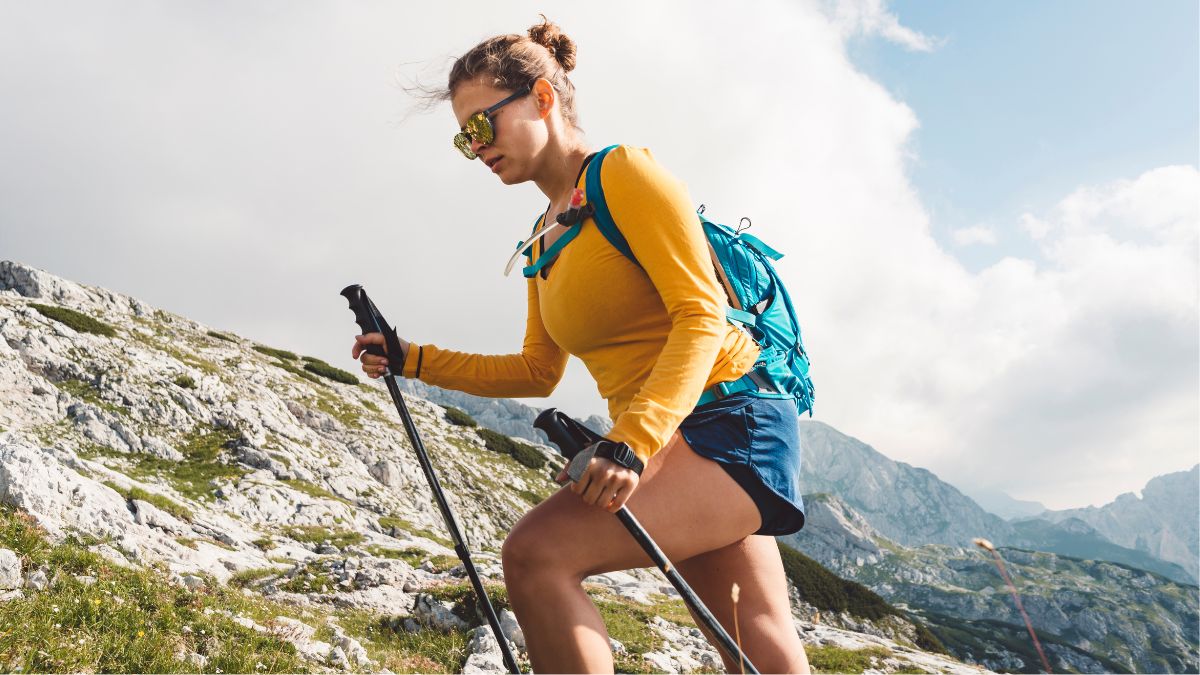
The Viral Phenomenon of Alpine Divorce and Why Women Are Being Left Behind on Hiking Trails
A woman named MJ thought she was heading to Utah for a romantic adventure. She and her partner had made the trip from Los Angeles to explore Zion National Park, excited about its sweeping sandstone canyons and scenic wading trails. But that morning, she was not feeling well. What followed became one of many stories now associated with a growing social media conversation around a term called “alpine divorce,” and it left her unable to hike for an entire year afterward.
On social media, women describe alpine divorce as going on a hike, climb, or other outdoor adventure with a male partner, only to be abandoned or left behind. Perhaps he went too fast and neglected to wait, or a fight on the trail resulted in him storming off, and a breakup quickly followed. In MJ’s case, her partner grew visibly irritated by her pace on Angel’s Landing, one of Zion’s most demanding trails. After briefly reuniting at the summit for a photo, he descended the mountain in the company of another woman he had met along the way, leaving MJ completely alone. “It brings up stuff in my body that maybe I have not cleared out yet,” she said of the experience.
In a TikTok with more than 4.2 million likes, a woman bawls as she takes shaky steps down a rock formation. “He left me by myself, I should have never come with him,” she sobs. The flood of responses in the comments revealed just how many others had lived through something similar. One woman described a 12-hour journey out of the Grand Canyon after her boyfriend ditched her, during which she was assisted by a “very nice man from Norway” who carried her backpack. Another described getting lost in the woods after a man left her behind, and immediately blocking his number once she got home.
The phrase gained global attention in February 2026 after Austrian climber Thomas Plamberger was convicted of gross negligent manslaughter for leaving his girlfriend, Kerstin Gurtner, on Austria’s tallest mountain in freezing conditions, where she later died of hypothermia. He received a five-month prison sentence, suspended for three years. A former girlfriend also testified in court that Plamberger had done the exact same thing to her on the same mountain in 2023. The case ignited widespread debate about the responsibilities partners owe each other in remote and dangerous environments.
Naomi, 46, an educator and member of the Wine Hiking Society, a community organization for women that promotes outdoor exploration and socialization, was not surprised when she saw discussion of alpine divorce on TikTok. “It feels like another version of a #MeToo story to me,” she said. Naomi had her own encounter with this behavior roughly two decades ago on Deseret Peak, an 11,036-foot mountain near Salt Lake City. She began to feel disoriented on the climb, possibly from altitude sickness, while hiking with a male friend who was chasing a goal of reaching the highest point in every Utah county. He pushed ahead anyway, and she feared she might pass out alone on the trail.
Experts say the behavior is rooted in deep cultural narratives around masculinity and outdoor endurance. “There’s this emphasis on strength, independence and stoicism that is really embedded in the way males are taught to prioritize character traits,” said Doriel Jacov, a New York-based therapist who specializes in relationship patterns. “Masculinity seems to play a role in how alpine divorce manifests in real life.” Outdoor culture has long celebrated the lone, rugged figure who pushes through regardless of the cost, and that mythology can bleed into how some men behave on a trail with a struggling partner.
“It’s such a common thing,” said Julie Ellison, an outdoor photographer who was the first female editor-in-chief of Climbing magazine. “There’s that male ego element to it that’s not necessarily evil or ill-intentioned, but it usually has a negative effect on the partner who’s being left behind.” Still, some researchers caution against overstating the trend. “This is social media chatter based on one anecdotal story of a woman who claims that she was left alone on a mountain hike, the video for which went viral. While a number of other women have made similar claims on social media, there is no verifiable data to support that the behavior is actually happening as a trend,” said Dr. Wendy Walsh, psychology professor and relationship expert at DatingAdvice.com.
Cheryl Groskopf, a licensed marriage and family therapist and professional clinical counselor based in Los Angeles, noted that if someone is capable of abandoning a partner in danger, smaller versions of that behavior usually appear earlier in the relationship. The advice from safety advocates is consistent: review trail maps in advance, share your plans with someone before heading out, and use navigation apps with offline capability in areas with no cell service.
The term “alpine divorce” actually has literary roots stretching back to the 19th century. It originates from an 1893 short story by writer Robert Barr about a man who plans to throw his wife off a cliff during a trip to the Swiss Alps. What was once a dark fictional premise has since become shorthand for a very real modern experience that thousands of women have recognized as their own. Whether the internet label fades or sticks, the conversation it has sparked about safety, care, and what partners owe each other on the trail is one that is unlikely to go away anytime soon.
The Grossglockner, the Austrian peak at the center of the Plamberger case, stands at over 12,460 feet and is considered one of the most technically demanding mountains in the Alps, yet it attracts thousands of recreational climbers each year who may underestimate its risks. Altitude sickness can affect even experienced hikers at elevations well below that, impairing judgment before a person realizes anything is wrong. The Wine Hiking Society, the women’s outdoor group Naomi belongs to, was founded partly in response to women feeling unwelcome or unsafe in mixed-gender outdoor spaces.
Have you or someone you know ever experienced something like this on a hike or outdoor trip? Share your thoughts in the comments.