
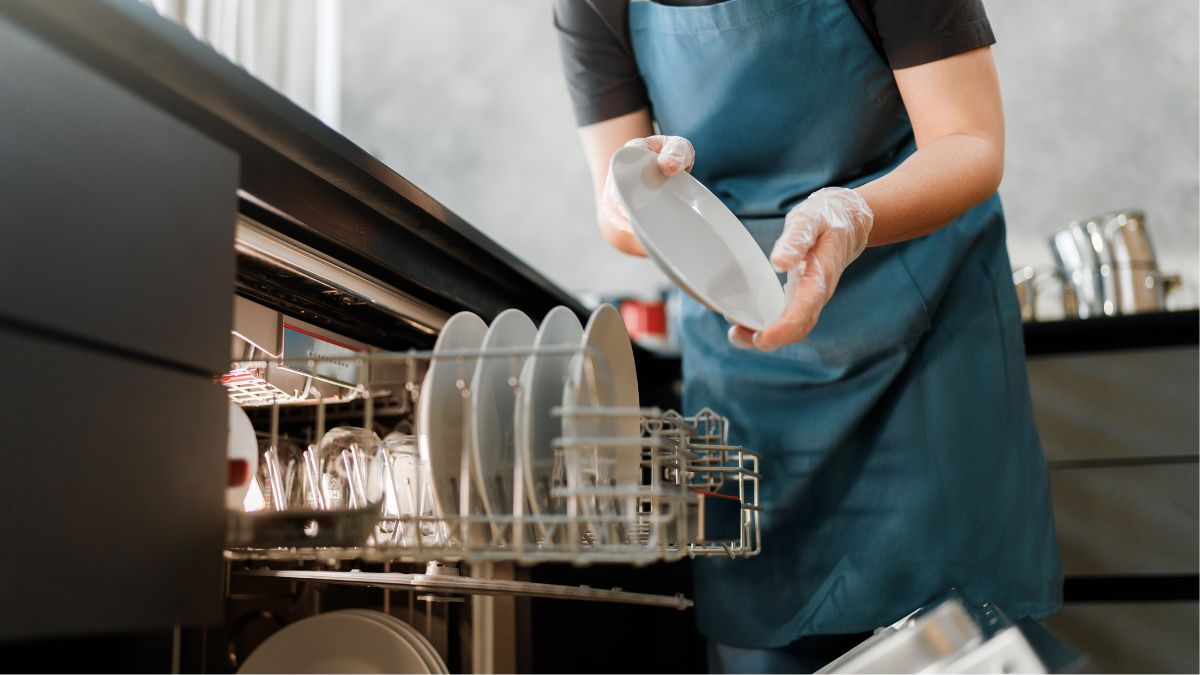
The Complete List of Items You Should Never Put in the Dishwasher
The dishwasher is one of the most beloved appliances in any kitchen, and it is easy to see why. It saves time, cuts down on water usage compared to hand washing, and takes a tedious chore off your hands entirely. When used correctly, a dishwasher can actually be more efficient and hygienic than washing dishes by hand. But the key phrase there is “when used correctly,” because not everything belongs inside it.
Some items are obvious candidates for hand washing, like delicate wine glasses or heirloom china. Others, however, tend to catch people off guard, and tossing them in the machine without a second thought can lead to warped handles, ruined finishes, and even serious damage to the appliance itself. Knowing which kitchen tools require a little extra care can save you money and extend the life of your cookware significantly.
Nonstick pans are one of the most commonly mishandled items when it comes to dishwasher use. Larry Ciufo, who leads dishwasher testing for Consumer Reports, puts it plainly: “If your nonstick pans don’t explicitly say they’re dishwasher-safe, you should be washing them by hand.” He warns that the harsh detergents and high heat inside a dishwasher will degrade the nonstick coating far faster than normal use would, meaning you will need to replace the pans much sooner than expected. Even pans labeled as dishwasher-safe may still suffer over time, so hand washing is the safer bet.
Wooden kitchen tools are another category that should stay far away from the dishwasher. This includes cutting boards, spoons, spatulas, and any other utensil made from wood. Richard Tarrant, a senior vice president at Bosch Home Appliances, explains the reasoning: “Not only can wood warp at high temperatures, but moisture can also cause it to swell and crack, creating an ideal environment for bacteria to multiply.” Once a wooden cutting board starts to crack, those tiny fissures become nearly impossible to sanitize properly, which defeats the whole purpose of cleaning it in the first place.
Cast iron cookware, often passed down through generations, is another victim of the dishwasher myth. Many home cooks assume that because cast iron is so heavy and durable, it can withstand anything. In reality, the opposite is true when it comes to machine washing. Ciufo warns that “the dishwasher can strip the seasoning, which is the layer of baked-in oil that prevents food from sticking and protects against rust.” Once that protective layer is gone, the pan becomes prone to corrosion and loses the naturally non-stick properties that make it so prized. Cast iron should be gently cleaned by hand, dried immediately, and lightly oiled to maintain its seasoning.
Crystal glassware is another category that deserves careful handling. Whether it is wine glasses, decorative bowls, or serving pieces, crystal should always be washed by hand. Tarrant notes that “dishwasher detergent and salt can etch the surface and cause the glass to corrode,” leading to a cloudy, dull appearance that cannot be reversed. The delicate nature of crystal also makes it susceptible to thermal shock from the dishwasher’s rapid temperature changes.
Sharp kitchen knives are a significant investment for most home cooks, and the dishwasher is their worst enemy. Ciufo is particularly emphatic on this point: “Sharp knives are an essential kitchen tool and people spend a lot of money on a quality set.” He cautions that even a single wash cycle can dull the blade, and the jostling of knives against other utensils in the cutlery basket accelerates that damage considerably. Tarrant adds that even one cycle can affect the edge and leave a blade noticeably less sharp. Hand washing and promptly drying knives after use is always the right approach, regardless of what any label might say.
Finally, glass jars with paper labels are worth a special mention. While rinsing jars before recycling or reusing them is a smart habit, any jar that still has a paper label should be washed by hand. The label will loosen in the dishwasher, and the soggy paper can clog the drain, stick to other dishes, and generally create a mess that takes longer to clean up than just washing the jar by hand in the first place.
The first automatic dishwasher intended for household use was patented in 1886 by Josephine Cochrane, who invented it not because she hated doing dishes herself, but because her servants kept chipping her fine china while washing it. Modern dishwashers use surprisingly little water, averaging around three to four gallons per cycle, while washing the same load by hand can use up to 27 gallons depending on your habits.
What about you — do you have any kitchen items you learned the hard way should never go in the dishwasher? Share your experiences in the comments.