The Bridge That Sends Chills Down Your Spine Is the World’s Most Dangerous Pedestrian Crossing
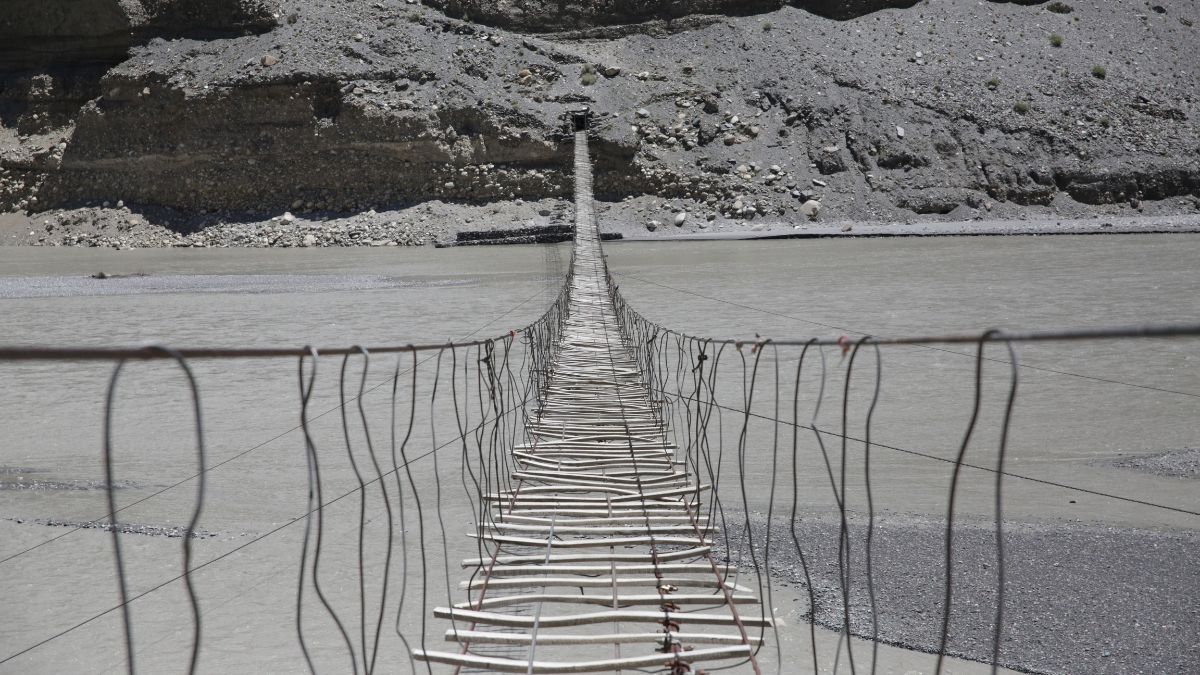
High above the rushing waters of the Hunza River in northern Pakistan, nestled among the towering peaks of the Karakoram mountain range, hangs a bridge that has earned a reputation unlike any other. The Hussaini suspension bridge is a weathered collection of wooden planks and steel cables that most people would hesitate to even look at, let alone walk across. Yet every single day, locals cross it without a second thought, while adventurous travelers from around the world make the journey just to test their nerves. It is widely considered the most dangerous pedestrian bridge on the planet, and once you learn the details, it is not hard to understand why.
Built back in the 1960s to connect the villages of Hussaini and Zarabad, the bridge stretches roughly 655 feet in length and sits about 50 feet above the river below. Its structure is about as basic as it gets, with more than 450 wooden planks laid across steel cables to form a walkway. The catch is that many of those planks are cracked, broken, or missing entirely, leaving gaping holes through which you can see the icy water rushing below. Every step demands your full attention, and a momentary lapse in focus could have serious consequences.
What makes the crossing even more nerve-wracking is the relentless wind that funnels through the canyon in the Upper Hunza region. The bridge does not just gently sway, it swings with enough force to throw off your balance entirely. Combine that with the uneven spacing between planks and the fact that you can see exactly how far you would fall, and it becomes clear why this crossing is not for the faint of heart. National Geographic has covered this remote landmark, noting how it sits at the intersection of human ingenuity and raw, unforgiving nature.
The dangers here are not just theoretical. The Hunza River below is fed by glacial melt, making it bitterly cold and extraordinarily powerful. A fall into those waters is, in most cases, fatal due to the combination of strong currents and near-freezing temperatures. While there are no official records tracking accidents on the bridge, local residents have confirmed that multiple deaths have occurred over the decades. The most recent documented tragedy happened in 2022, when a student lost his footing and fell. Adding to the eerie atmosphere is the fact that the ruins of an older, flood-destroyed version of the bridge are still visible right alongside the current one, serving as a constant reminder of what the environment is capable of.
For the people of the surrounding villages, though, this bridge is simply a part of life. They use it daily to transport food and livestock, crossing with a practiced ease that comes from years of experience. It is not a thrill for them; it is a necessity in a remote mountain environment where there are few alternatives. That quiet resilience is perhaps the most striking thing about the whole place.
In recent years, the Hussaini bridge has attracted a growing stream of tourists eager to experience the crossing for themselves. A small fee is collected from visitors, with the proceeds going toward maintenance of the structure. For those who want the view without the vertigo, a zipline has been set up nearby and offers a breathtaking perspective of the river and surrounding peaks without quite the same level of risk. Whether you walk across or zip over, the scenery alone makes the trip to this remote corner of Pakistan feel absolutely worth it.
If you had the chance to cross the Hussaini bridge, would you go for it, or would you stick to the zipline? Share your thoughts in the comments.