
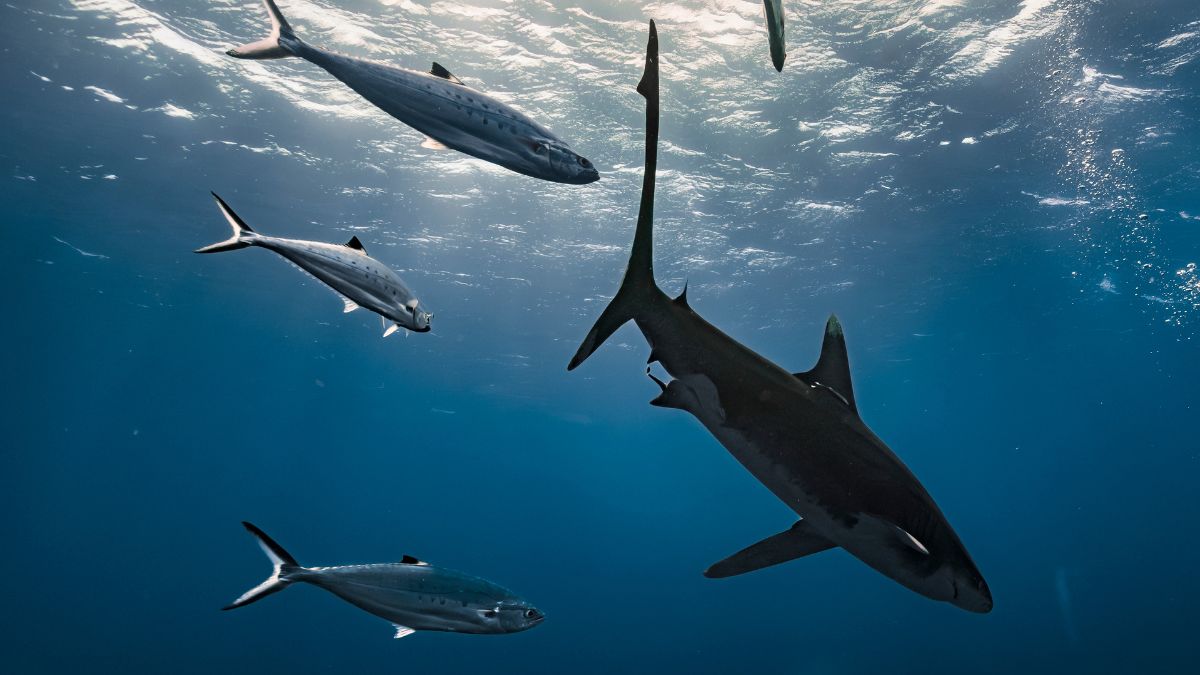
Sharks at a Popular Tourist Destination Have Tested Positive for Cocaine and Medications
A troubling new study has cast a shadow over one of the world’s most beloved vacation hotspots, revealing that sharks swimming near the Bahamas have tested positive for cocaine, painkillers, and caffeine. The findings, published last month in the journal Environmental Pollution, mark the first time researchers have documented this combination of substances in sharks from the region. Scientists warn that the contamination is likely driven by tourism-related waste and the disposal of pharmaceuticals directly into the ocean. The discovery adds a deeply unsettling dimension to the broader conversation about what humans are pumping into the world’s seas.
The study was conducted by researchers at the Federal University of Paraná, who collected blood samples from 85 sharks in the waters surrounding Eleuthera Island. What they found was staggering: roughly one in three of the animals showed traces of pharmaceutical substances in their bloodstream. The team classified medications and other drug-related compounds under the growing category of contaminants of emerging concern, a designation that reflects how little scientists still understand about their long-term effects on ocean ecosystems. The sheer scale of chemical exposure detected in wild sharks is raising urgent questions about what tourists and local populations are inadvertently releasing into the water.
Leading the project was researcher Natascha Wosnick, who emphasized that understanding the scope of this contamination is critical for reasons that go far beyond environmental concern. Sharks play a central ecological role in coastal ecosystems, and their health directly impacts the balance of marine life around them. The authors noted that beyond individual behavior, lost or discarded drug shipments could also be contributing to the contamination. As they put it in the study, “understanding the impacts of these contaminants on shark physiology and the long-term health of populations becomes of paramount importance, not only to protect a key ecological component of coastal ecosystems, but also to preserve the social and economic benefits they provide.”
The Bahamas findings don’t exist in isolation. A separate study conducted in Brazil arrived at strikingly similar conclusions, adding weight to what is becoming a genuinely alarming pattern. In that research, scientists tested 13 Brazilian sharpnose sharks caught by local fishermen and found high concentrations of cocaine in the majority of them. The Brazilian team raised concerns that drug exposure could be altering shark behavior in ways that are difficult to predict, though they stressed that further investigation is needed before firm conclusions can be drawn. Both studies point to a shared problem: the ocean is absorbing the chemical byproducts of human behavior on a massive scale.
Rachel Ann Hauser-Davis, a scientist with the Oswaldo Cruz Foundation and a member of the Brazilian research team, spoke publicly about the results in 2024. She explained that the sharks were likely experiencing “chronic exposure due to cocaine consumption in Rio de Janeiro and the discharge of human urine and feces through sewage drains, as well as from illegal laboratories.” Her comments underscored how deeply human infrastructure, from plumbing systems to illicit drug operations, is intertwined with what ends up in the bodies of marine animals. The contamination chain stretches from city streets and back alleys all the way to the open ocean.
Both research teams agree on one thing: this is not a problem that can be ignored. Sharks are apex predators that regulate entire marine food webs, and the introduction of psychoactive and pharmaceutical substances into their biology is uncharted scientific territory. Tourism, sewage, and drug trafficking all emerge as contributing factors, suggesting that no single policy solution will be sufficient. As more studies emerge from different ocean regions, it is becoming harder to dismiss pharmaceutical pollution as a peripheral environmental issue. What happens in the ocean does not stay in the ocean.
The Bahamas attract more than seven million visitors each year, making them one of the top tourism destinations in the Caribbean, which means the volume of human-generated waste entering those waters is enormous. Sharks have been swimming Earth’s oceans for roughly 450 million years, surviving five mass extinction events, yet they have never encountered anything quite like the chemical cocktail modern civilization is introducing into their habitat. And here is the part that tends to keep marine biologists up at night: cocaine is water-soluble, meaning it doesn’t just sink to the bottom but disperses through the water column where filter feeders, prey fish, and apex predators all encounter it at once.
What are your thoughts on pharmaceutical and drug pollution in the ocean? Share them in the comments.