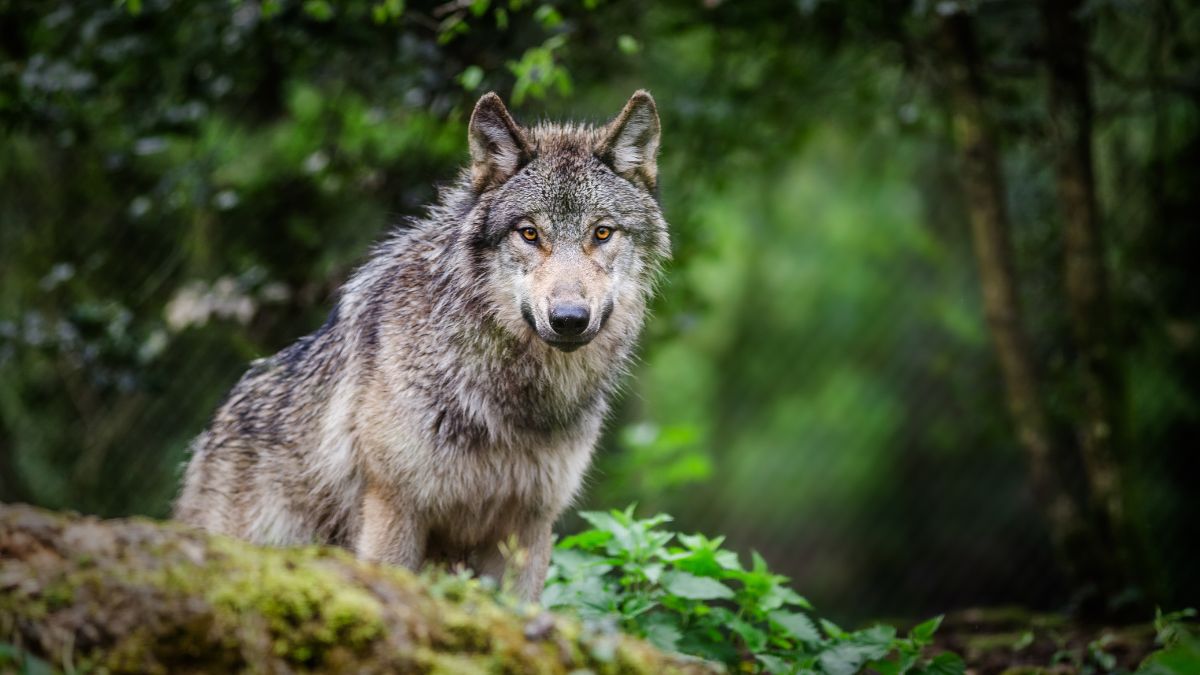
Scientists Find That Most Dog Breeds Carry Wolf DNA, Even One of the Smallest
That fluffy little dog trotting down the street might look like the most domesticated creature on the planet, but science says there’s a very good chance it’s carrying a piece of the wild inside it. A new study by American researchers has revealed something that genuinely surprised even the scientists behind it: nearly two-thirds of all modern dog breeds carry measurable wolf DNA. And the twist is that this isn’t simply a leftover trace from the time dogs first evolved from wolves around 20,000 years ago.
What makes this finding so fascinating is that the wolf DNA points to actual crossbreeding that happened far more recently, within the last few thousand years. Logan Kistler, a curator at the Smithsonian Museum of Natural History and co-author of the study, was quick to clarify what this does not mean. He told AFP that this is not a case of wolves wandering into people’s homes and mixing with their pets. The reality is a bit more nuanced and rooted in how wild and domestic animals have always shared overlapping spaces throughout history.
Before this research, the prevailing scientific thinking was pretty clear on the matter. Audrey Lin, the study’s lead author from the American Museum of Natural History, explained that previous science suggested a dog essentially couldn’t be a dog if it carried significant wolf DNA. To dig deeper, her team analyzed thousands of dog and wolf genomes pulled from publicly available databases, and the results flipped that assumption on its head. They found that over 64 percent of modern breeds carry wolf ancestry, and even the tiny Chihuahua clocks in at around 0.2 percent. Lin joked that this would make complete sense to anyone who has ever owned one.
At the top of the scale, Czechoslovakian and Saarloos wolfhounds carry up to 40 percent wolf DNA, which feels about right given their appearance. Among more common household pets, the Grand Anglo-Français Tricolore ranked highest at around five percent, with sighthound breeds like the Saluki and the Afghan Hound also sitting high on the list. Interestingly, the Saint Bernard, a breed you might expect to rank high given its size, has none at all. Meanwhile, a full 100 percent of village dogs, those that live among humans but belong to no one in particular, carry wolf ancestry. Kistler theorized that these free-roaming dogs likely serve as the bridge, with female wolves displaced by habitat destruction occasionally mating with straying dogs.
The wolf DNA also seems to have shaped more than just physical traits. Researchers compared their genetic findings against breed personality descriptions used by kennel clubs. Breeds with little to no wolf ancestry were more often described as friendly, easy to train, and eager to please. Those with higher wolf ancestry tended to be described as more independent, dignified, suspicious of strangers, and territorial. Kistler was careful to point out that breed descriptions are imperfect and can never predict the personality of an individual dog.
He also noted that wolves evolved for very specific environments, while dogs have been brought by humans into every corner of the inhabited world, adapting along the way. In some cases, wolf genes simply gave them an edge in those new settings. A perfect example is Tibetan breeds like the Lhasa Apso, which carry the EPAS1 gene for high-altitude adaptation, the very same gene found in Tibetan wolves. The study was published in the journal Proceedings of the National Academy of Sciences.
Drop your thoughts on this wild discovery in the comments and let us know if it changes the way you see your four-legged friend.