Ryanair Pulls All Flights to Europe’s Hawaii as Rising Fees Force the Budget Airline Out of the Azores
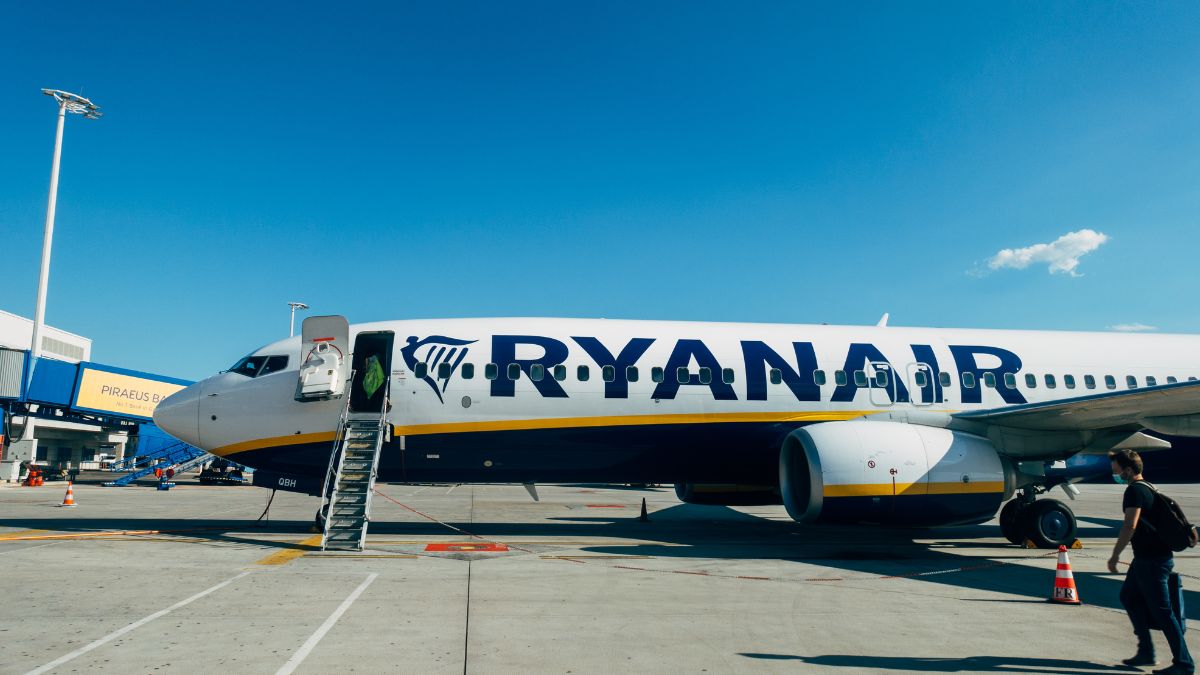
For travelers who have long relied on budget fares to reach one of the Atlantic’s most breathtaking destinations, the news comes as a real blow. Ryanair, Europe’s largest low-cost airline, has confirmed it will cancel every single one of its routes to and from the Azores, effective March 29, 2026. The Portuguese archipelago, often nicknamed the “Hawaii of Europe” for its dramatic volcanic scenery, lush greenery, and Jurassic Park-style waterfalls, will lose a crucial link to affordable air travel. After a decade of year-round service, the budget carrier is walking away from the islands entirely.
The airline has been direct about the reasons behind its decision, placing blame firmly on airport operator ANA, a company majority-owned by French infrastructure giant VINCI, and on what Ryanair describes as the Portuguese government’s failure to intervene. Air traffic control fees have surged by 120% since the pandemic, and Portugal has introduced a travel tax of roughly $2.20 per passenger at a time when other European nations are eliminating similar levies to stimulate travel demand. Ryanair’s Chief Commercial Officer Jason McGuinness did not mince words, stating: “After 10 years of year-round Ryanair operations, one of Europe’s most remote regions will now lose direct low-fare flights to London, Brussels, Lisbon, and Porto due to ANA’s high airport fees and Portuguese government’s inaction.” The airline says it has been left with no viable path forward under the current cost structure.
Overall airport charges across Portugal have risen by as much as 35% since the pandemic, and Ryanair argues that ANA faces no real competition in the country, which has allowed it to extract higher fees without consequence while competing airports across Europe are cutting costs to attract airlines. The airline has also taken aim at the European Union’s Emissions Trading System, pointing out that the environmental tax applies only to intra-European flights while long-haul services to the United States and the Middle East are exempt. Ryanair has called on European Commission President Ursula von der Leyen to bring EU environmental taxes in line with international standards, arguing the current system puts remote regions like the Azores at a disadvantage. The airline says it will redirect the freed capacity to lower-cost airports elsewhere across its network.
The impact on the Azores is significant. The cancellation affects six routes and roughly 400,000 passengers per year, and the airline’s exit leaves fewer nonstop options and likely higher average fares for travelers looking to visit the islands. João Pinheiro of the Azores Short-Term Rent Association expressed deep concern, saying: “We hope that this news is an attempt to put pressure on the government and not a clear action that will have a very serious impact on the economy of the Azores.” The short-term rental sector in particular is heavily dependent on Ryanair, with the vast majority of its guests arriving on the airline’s flights. Local officials and the Portuguese government have both described the announcement as a surprise, though Ryanair shows no sign of reversing course.
Not everyone is entirely without hope. Ponta Delgada will still have 22 routes to Europe and North America for the summer of 2026, and carriers including Azores Airlines, British Airways, Lufthansa, and United Airlines, which operates a seasonal service from Newark, continue to serve the destination. The Vinci Group, for its part, told reporters that talks with Ryanair had been aimed at increasing, not reducing, its presence in the Azores, and that airport costs there were the lowest in the company’s network. Whether those negotiations produce any result before the March deadline remains to be seen. Travelers with existing Ryanair bookings beyond that date are entitled to a refund or rebooking under EU passenger protection rules.
This is not an isolated move. Ryanair has also signaled its withdrawal from several regional French airports, including Brive, Bergerac, and Strasbourg, describing them as no longer financially viable, while plans for significant cuts in Belgium and Spain are also underway. The pattern reflects a broader strategy in which the airline is consolidating its network around airports where governments and operators are willing to offer more competitive terms. For budget travelers, the message is clear: the era of sub-$11 Ryanair fares to the Azores is over, at least for now.
The Azores were actually considered so remote and untouched that scientists have discovered species of plants and insects there found nowhere else on Earth, making them a kind of living laboratory for evolutionary biology. The islands sit directly on the Mid-Atlantic Ridge, meaning the ground beneath them is still actively shifting, and hot springs bubble up naturally across several of the nine islands. At their peak, the Azores were such a critical waypoint for transatlantic navigation that American naval forces maintained a base on Terceira Island through much of the Cold War.
Have you ever visited the Azores, or are you planning a trip there? Share your thoughts in the comments.