Screenshot: Instagram

Owner Pretends to Fall Down the Stairs and His Dogs Completely Ignore Him

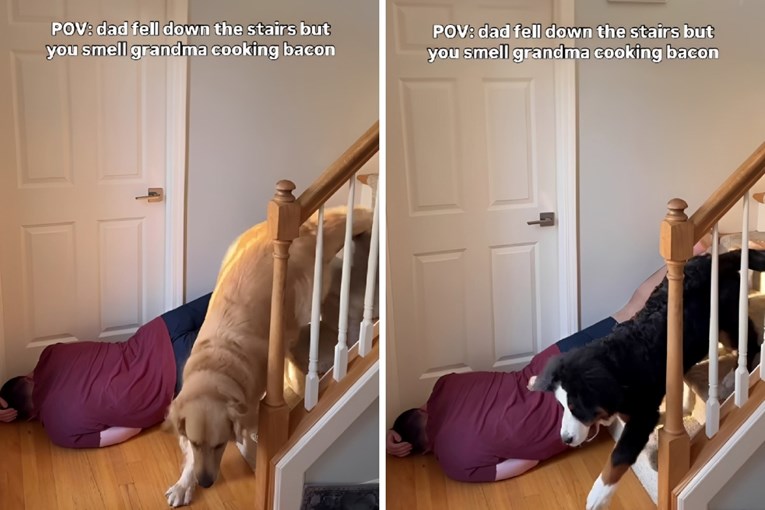
Living with several dogs often means food takes absolute priority over everything else, and one recent viral video captures that truth perfectly. In the clip, the owner dramatically pretends to tumble down the stairs and then lies motionless on the floor as if injured. Yet none of his four dogs show the slightest concern or rush to check on him. Instead, they all step right over or around his body without pausing, drawn irresistibly toward the kitchen.

The irresistible scent of freshly cooked bacon wafting from the stove explains their single-minded focus. First comes Louie, the Bernese mountain dog, who casually walks across the owner and heads straight for the source of the aroma. A golden retriever follows closely behind, paying no attention to the figure on the ground and making a beeline for the stove area. Next appears the second Bernese mountain dog named Fred, trailed by a small dog that joins the pack in the kitchen. Every one of them remains utterly indifferent to their owner sprawled out nearby.

This hilarious moment has sparked plenty of amused online reactions from viewers who noted the apparent lack of canine empathy. Some joked that the owner simply chose the wrong timing for his prank, right when the irresistible smell overpowered any other instinct. Others quipped that the dogs clearly prioritize protein intake above all, treating the situation as no big deal. A few even suggested the pets might have sensed it was all an act, figuring that if their human was truly in trouble they could not help much anyway.

Such videos remind us how food motivation can override typical loyal behaviors we expect from our pets in everyday scenarios. Dogs live very much in the moment, and a strong aroma from the kitchen can eclipse even dramatic events unfolding right under their paws. It highlights the honest, unfiltered nature of animal instincts that often bring us laughter rather than heroic rescues. Owners everywhere can probably relate to moments when their furry companions seem more interested in snacks than in human theatrics.

The clip serves as a lighthearted nudge about the realities of multi-dog households where mealtime rules supreme. While we might hope for concerned cuddles or worried barks in a real emergency, this prank shows how bacon can steal the spotlight instantly. It also underscores the joy these pets bring through their straightforward priorities and funny quirks that keep life entertaining.

What do you think your own dogs would do in the same situation. Share your thoughts in the comments.

Similar Posts

  • The Do’s and Don’ts of Meeting a New Dog

    Meeting a new dog can be one of the most rewarding experiences for animal lovers. Whether you’re visiting a friend, walking through your neighborhood, or spending time at a local park, chances are you’ll encounter dogs you’ve never met before. While many dogs are naturally friendly and curious, others may be shy, cautious, or unsure…

  • An 11-Week-Old Husky’s First “Home Renovation” Is Going Viral

    Puppies have a remarkable talent for turning the most ordinary moments into unforgettable chaos, and one tiny Husky named Nike has proven that talent starts early. At just 11 weeks old, this pint-sized furball decided that the walls of his home were in desperate need of some attention, and his owner was quick to document…

  • 5 ways Vacation Routines Stress your Pet: Psychology Science most owners Miss

    Vacations are exciting for humans, but for pets, they can feel confusing, stressful, and even scary. Many animals rely on routine to feel safe, so small travel changes can trigger anxiety in ways owners do not expect. The science is simple: pets read patterns, smells, and body language, not calendars. These five overlooked vacation habits can raise stress fast, even in calm pets, and knowing them helps you prevent problems before they start. A few small adjustments can make travel days easier for everyone.
    1. Packing Early Signals “Something Is Wrong” to Your Pet
    When you start pulling out suitcases, your pet often notices before you do. Many animals link luggage with separation, which can trigger anticipatory anxiety. Dogs and cats are experts at pattern recognition, so even quiet packing can create stress because it predicts a major change. Some pets respond by pacing, whining, hiding, or becoming clingy. Others may stop eating or start acting unusually alert. Psychology research on animal behavior shows that uncertainty is often more stressful than the event itself. Packing in smaller steps, keeping normal routines, and adding calm activities can reduce the buildup of anxiety.
    2. Your Mood and Body Language Change More Than You Realize
    Vacation prep usually comes with stress, rushing, and distraction. Pets notice that shift immediately because they rely heavily on your tone, facial expression, and energy. Even if you are excited, the fast movement, shorter patience, and unusual household noise can signal danger to an animal’s brain. This is especially true for anxious dogs and sensitive cats. Behavioral science shows that animals can mirror human stress through increased vigilance and restlessness. A pet may start shadowing you, refusing naps, or becoming reactive. Slowing down, using a calm voice, and keeping playtime normal can make a big difference.
    3. Skipped Walks, Late Meals, and Broken Timing Disrupt Safety Signals
    Many owners think pets will adjust easily to vacation timing changes, but routine is a major source of security for most animals. Meals, walks, and bedtime create predictable anchors that tell a pet their world is stable. When those anchors shift, stress rises, especially in dogs who depend on consistent potty breaks and activity. Cats can also become unsettled when feeding schedules change, which may lead to hiding, vocalizing, or litter box issues. Studies on animal stress show that predictable patterns lower cortisol over time. Even on travel days, keeping timing as close as possible helps pets stay calmer.
    4. New Smells and Spaces Can Trigger Overload, Not Curiosity
    People often assume pets will be excited by a new place, but unfamiliar environments can overwhelm them. Animals process the world through scent and sound, so hotels, rentals, or relatives’ homes can feel like sensory overload. New cleaning products, unfamiliar pets, strange floors, and different noises can raise stress quickly. Dogs may become hyper-alert, bark more, or refuse to settle. Cats may hide for hours or stop eating. Animal behavior research shows that novelty is not always enriching, especially when the pet has no control. Bringing familiar bedding, toys, and maintaining a quiet corner helps reduce that overload.
    5. Handing Them Off to a Sitter Without a Transition Creates Separation Shock
    Even if you trust your sitter, your pet may not. A sudden handoff can feel like abandonment to an animal that does not understand travel plans. Dogs may respond with barking, destructive behavior, or loss of appetite. Cats may become withdrawn, refuse interaction, or show stress through litter changes. Psychology studies on attachment show that animals form strong bonds and feel distress when those bonds are disrupted without a predictable transition. A short meet-and-greet, a trial visit, or a practice overnight can reduce stress dramatically. Familiar scents, written routines, and consistent feeding also help the sitter maintain stability.