
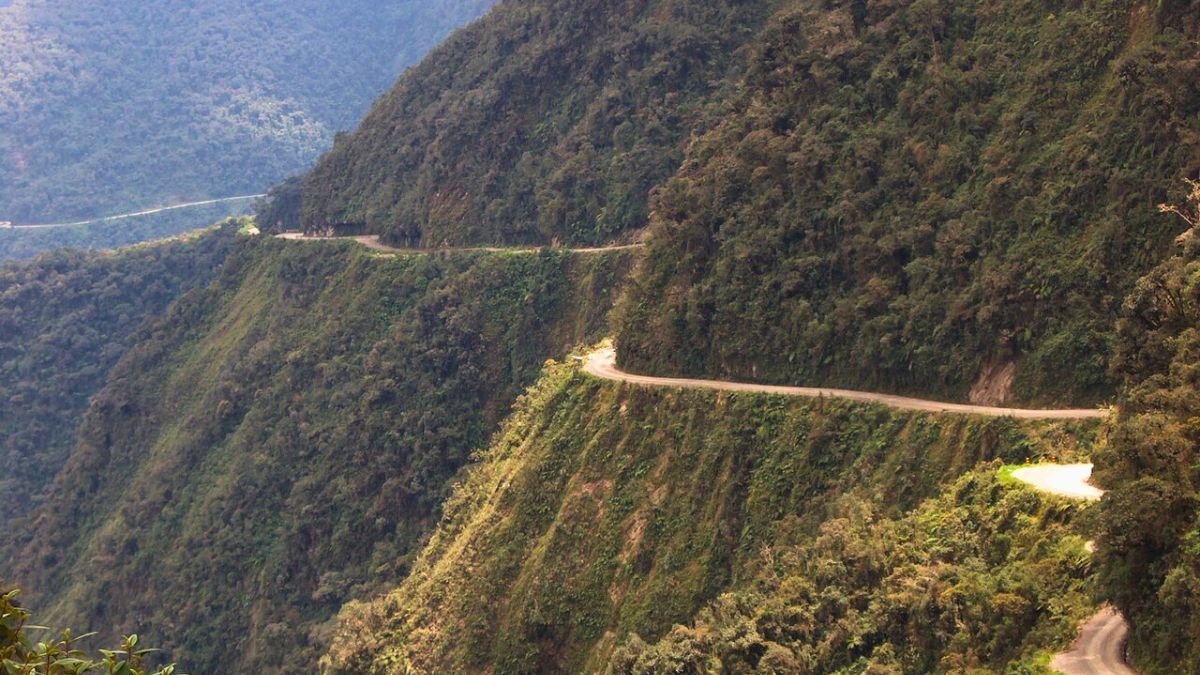
Meet the World’s Most Dangerous Road Where Hundreds of People Died During Its Construction
Tucked into the Andes Mountains of Bolivia, there is a stretch of road that earned a reputation so terrifying it was given a name that says it all. Locally known as El Camino de la Muerte, or the Death Road, this route officially called the Yungas Road became synonymous with tragedy long before most of the world had ever heard of it. Its story begins not with thrill-seekers or tourists, but with war and suffering.
Construction of the Yungas Road started in the 1930s during the Chaco War, and the labor fell almost entirely on Paraguayan prisoners of war. Working with nothing more than pickaxes, shovels, and dynamite under brutal conditions, the workers carved this narrow path into the mountain at an enormous human cost. Hundreds of lives were lost during the building process alone, which gave the road its grim character before a single vehicle ever drove across it. That violent origin story has stayed with the road ever since.
For decades, the Yungas Road was the only link connecting the Bolivian capital of La Paz, sitting high on the Andean plateau, with the tropical Yungas region deep in the Amazon basin. Farmers depended on it to transport their goods, and there was simply no other way through. But the road’s physical characteristics made every journey a gamble with fate. Spanning roughly 37 miles in length, it drops from an elevation of about 15,400 feet all the way down to around 3,900 feet, creating a dramatic shift in climate and landscape as drivers passed from alpine terrain into dense rainforest.
The road is just under 10 feet wide in most sections, which is barely enough for a single vehicle. On one side rises a sheer rock wall, and on the other, a vertical drop of up to 2,600 feet with no guardrail to stop a vehicle from going over. Dense fog, torrential rain, and frequent rockslides made conditions unpredictable at the best of times. It is estimated that between 200 and 300 people lost their lives on this road every single year before a safer alternative was built. The Inter-American Development Bank officially declared it the most dangerous road in the world in 1995, and Bolivia’s single worst road accident happened here on July 24, 1983, when a bus carrying over a hundred passengers plunged into the ravine below.
One of the more unusual features of the Death Road is that vehicles were required to drive on the left side, which is the opposite of everywhere else in Bolivia. This rule existed specifically to give drivers descending along the outer edge a better view of the road’s rim as they passed oncoming traffic. It was a practical solution to a terrifying problem, and it became one of the road’s defining quirks.
Everything changed in 2006 when a new, paved road was completed and took over as the main route between La Paz and the Yungas region. Most vehicles switched over almost immediately, and the old Death Road was left largely quiet. Rather than fading into obscurity, it found a second life as one of the world’s most famous destinations for mountain biking. Today thousands of adventurers make their way here each year to descend the trail on bikes, drawn by the combination of jaw-dropping scenery, raw history, and an undeniable adrenaline rush. The danger has not entirely disappeared, though, as more than twenty cyclists have died on the road since the late 1990s, most due to excessive speed or moments of distraction.
The Yungas Road is now a place of strange duality, at once a monument to human suffering and a bucket-list adventure destination. It is a reminder that some of the most haunting places on earth have a way of becoming oddly magnetic over time. Whether you would ever consider cycling it or simply appreciate the history from a safe distance, there is no denying the road holds a unique place in the world’s story.
Would you ever dare to ride down Bolivia’s Death Road, or does even reading about it make your palms sweat? Share your thoughts in the comments.