
Kraków Tops the List of Europe’s Best Cities for Digital Nomads in a New Study
A new study has crowned Kraków, Poland as the best city in Europe for digital nomads, beating out more familiar names like Lisbon, Madrid, and Budapest. The research, conducted by Playerstime, ranked ten European cities based on two key factors that matter most to location-independent workers: monthly living expenses and a safety index score. Kraków came out on top with monthly expenses of just €1,423.12 and a safety index of 75.08, striking a balance that few other cities on the continent can currently offer.
Poland has been quietly building a reputation as one of Europe’s most practical destinations for remote workers, and Kraków makes a strong case for why. The city is home to a thriving student population, a well-developed cafe culture, and an increasingly active coworking scene, all of which tend to create exactly the kind of social and professional infrastructure that digital nomads rely on. Its historic Old Town, a UNESCO World Heritage Site, gives the city a richness that makes long-term stays feel rewarding rather than monotonous. For remote workers who spend months rather than weeks in a place, that depth matters considerably.
Warsaw, Poland’s capital, came in second with monthly expenses of €1,265.26 and a safety score of 74.66. Interestingly, Warsaw is actually cheaper than Kraków on a monthly basis, but the study’s overall ranking factored in safety as an equally important variable, and Kraków edged ahead on that measure. Together, the two Polish cities claiming the top two spots sends a clear signal about where value and livability are converging in Europe right now. Poland has become increasingly attractive to remote workers from across the world, with fast internet infrastructure and a cost of living that leaves room in the budget for actual living.
Budapest, Hungary took third place, with monthly costs of €1,542.24 and a safety index of 75.30. The Hungarian capital has been a favorite in digital nomad circles for several years now, and the numbers confirm why. Hungary ranks in the global top ten for internet speeds, and the city’s cafe culture actively welcomes laptop workers rather than tolerating them. Budapest also offers a digital nomad visa known as the White Card, giving non-EU remote workers a clear legal pathway to base themselves there for an extended period. Prague, in the Czech Republic, followed in fourth with €1,276.65 in monthly expenses, though its safety index of 66.27 placed it lower overall.
Further down the list, Tallinn, Estonia ranked fifth with the highest monthly expenses of any city in the top ten at €2,627.12, offset by an impressive safety index of 78.42, the second highest on the list. Estonia has long been recognized for its digital infrastructure and was one of the first countries in the world to introduce a digital nomad visa, making it a pioneer in catering to remote workers at a policy level. Madrid came in sixth at €2,169.41 per month with a safety score of 70.91, followed by Seville at €1,912.62, making Spain the only country with two cities in the study’s top seven.
Lisbon, Portugal ranked eighth with monthly expenses of €1,745.27 and a safety score of 67.03. Once considered one of Europe’s top digital nomad hotspots, Lisbon has seen costs rise significantly in recent years as remote workers and foreign buyers pushed up rents across the city. Dubrovnik, Croatia claimed ninth place with the highest safety index of any city on the list at 82.23, though its monthly expenses of €2,270.09 reflect its status as one of Europe’s most in-demand coastal destinations. Porto rounded out the top ten at €1,569.29 per month and a safety score of 66.39, offering a more affordable alternative to Lisbon within Portugal.
What the Playerstime study ultimately reveals is that the most hyped European destinations are not always the smartest choices for people who need to make a budget work over months, not just a long weekend. Cities in Central and Eastern Europe, particularly in Poland and Hungary, are increasingly delivering on the fundamentals that remote workers actually need: low costs, safe streets, fast internet, and enough cultural richness to make everyday life feel worth showing up for. The data suggests that the next wave of digital nomad hotspots may already be hiding in plain sight, they just happen to be east of where most people have been looking.
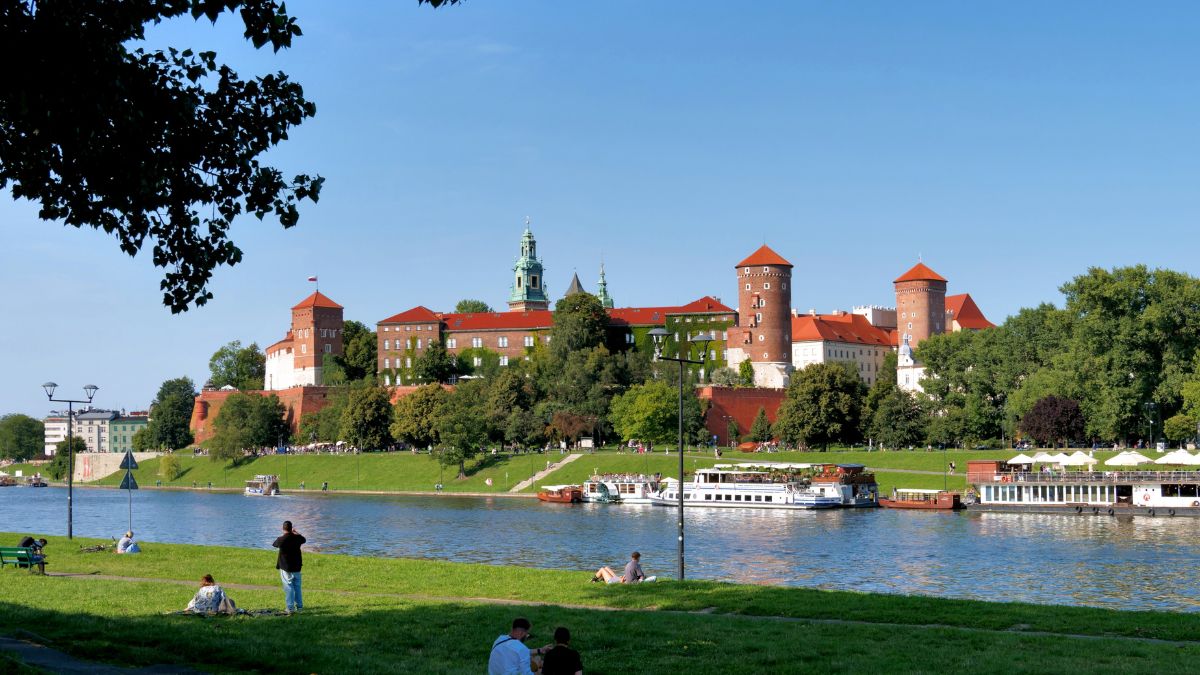
Kraków’s Wawel Castle sits on a limestone hill said to contain a chakra, one of only seven sacred energy centers on Earth according to Hindu and Buddhist tradition, and it draws spiritual pilgrims from around the world alongside its regular tourists. Poland also has the highest number of UNESCO World Heritage Sites in Central Europe, with Kraków’s Old Town being one of the original twelve sites inscribed back in 1978, the very first year the list was created. The country’s internet infrastructure consistently ranks among the fastest in the European Union, which is partly why tech companies and remote workers have been quietly relocating there for years.
Have you ever considered Kraków or another Central European city as your next remote work base? Share your thoughts in the comments.


