Europe’s Best-Kept Secret Islands Only Allow 500 Visitors a Day
Just off the coast of Portugal, a tiny archipelago sits quietly in the Atlantic, largely unknown to the wider tourist world. The Berlengas Islands are made up of three island groups: Berlenga Grande, Estelas, and Farilhões-Forcado. Because the area is a protected nature reserve, visitor numbers are strictly capped, making it one of the few places in Europe where you can genuinely escape the crowds. That hard limit sits at around 550 tourists per day, and access to the islands is only possible between March and October.
The islands are first and foremost a wildlife sanctuary. They are home to a remarkable variety of seabirds, including herring gulls and common murres, and the waters surrounding the archipelago are exceptionally rich for diving and snorkeling. The combination of protected status and small land area is precisely what keeps the ecosystem intact and the experience so extraordinary for those who do make the trip. The temperature during the open season typically ranges between 64 and 77 degrees Fahrenheit, making it genuinely pleasant for outdoor exploration and beach time.
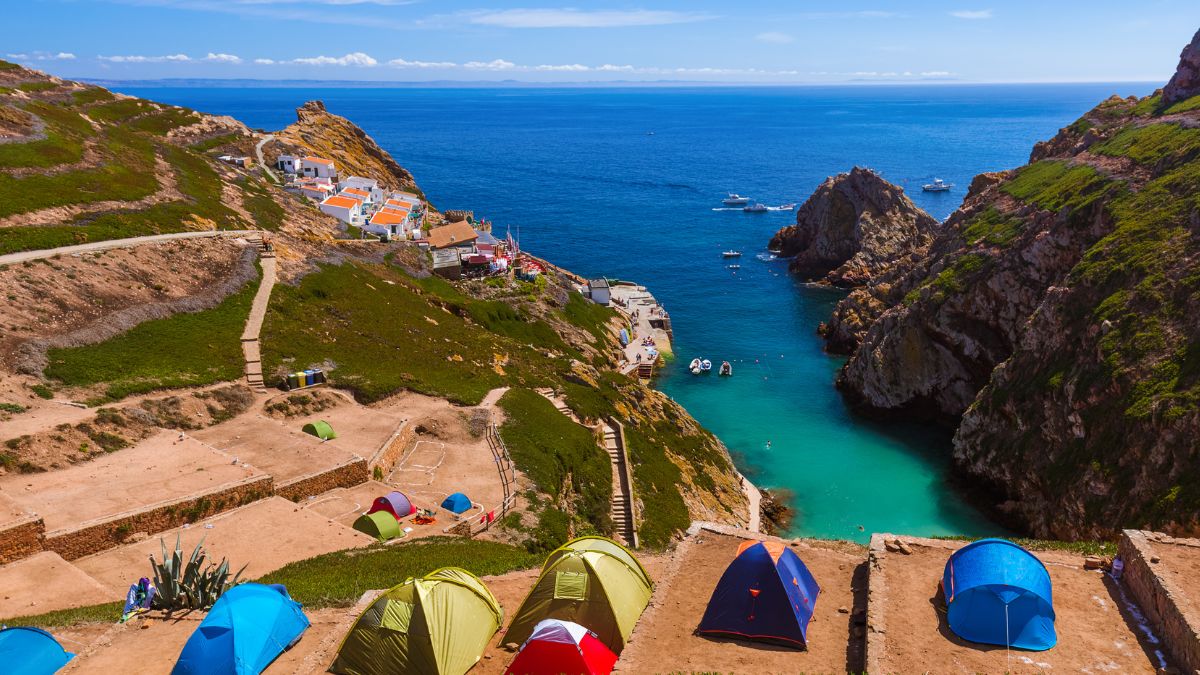
The most famous stretch of sand on the archipelago is Praia da Berlenga Grande, widely regarded as one of the most beautiful beaches in Europe. The water is so remarkably clear that one visitor described it as having “reminded me of the Caribbean.” National Geographic has named it one of Portugal’s finest beaches, calling it a spot with a “desert-like atmosphere” that feels worlds away from the mainland. For anyone hoping to avoid even the limited daily crowds, September tends to be the sweet spot. One traveler noted that arriving then meant “we had the entire beach to ourselves for an hour.”
Beyond the beach, one of the most popular ways to explore the islands is by boat tour, with excursions running throughout the day. These trips take visitors along the dramatic coastline, weaving past sea caves that have been naturally carved into the rock over centuries. Among the most photographed natural formations is a rock structure that resembles an elephant’s head with its trunk dipping into the ocean. There is also the Cave of Dreams, known locally as Cova do Sonho, a sea cave where fishermen once sheltered through the night while waiting for calmer Atlantic conditions.
@lisbonweekendtrips A hidden paradise just 30 min by boat from Peniche. Pink granite cliffs, turquoise waters, a 17th-century fortress, and untouched nature in the middle of the Atlantic. 📍Berlengas islands #berlengas #peniche #portugaltravel #portugalnature #berlengasisland ♬ Fairy Fountain – Super Guitar Bros
For those who want to experience the islands after the day-trippers have gone, overnight stays are possible through a handful of options. Perched on top of a cliff, the Berlenga Bed and Breakfast has just five rooms and offers sweeping ocean views from its restaurant and bar terrace. For the more adventurous, São João Baptista fortress allows camping within its ancient walls, where guests sleep in old cells and must bring their own sleeping bags or bedding. The experience has been described as “impressive and authentically immersive.” There is also a campsite where visitors can pitch their own tents, with nightly rates starting at around $9, though reservations must be made in advance through the local tourism authority.
Getting to the Berlengas is straightforward enough from the mainland. Ferries depart from the town of Peniche three times a day, with the crossing taking roughly 30 minutes and tickets priced between about $18 and $43. Peniche itself is just over an hour’s drive from Lisbon. Various tour operators also offer organized excursions, including cave exploration tours for around $44, catamaran trips with snorkeling included for approximately $45, and round-island boat rides for about $31.
The Berlengas were designated a UNESCO Biosphere Reserve back in 1984, which is part of why the visitor cap has been such a consistent priority for local authorities. The fortress of São João Baptista, which now doubles as that unusual camping spot, was originally built in the 17th century to defend against pirates and rival naval forces. The waters around the archipelago are so nutrient-rich that they support one of the most biodiverse marine ecosystems along the entire Portuguese coast, which is saying something for a country with over 1,100 miles of Atlantic shoreline.
Have you ever visited a place with strict visitor limits, and did it change how you experienced it? Share your thoughts in the comments.