
Airlines Slash Summer Fares as Middle East Conflict Triggers a Global Price War
The ongoing conflict in the Middle East has sent shockwaves far beyond the region itself, and nowhere is that turbulence felt more unexpectedly than in the world of air travel. Etihad Airways, headquartered in Abu Dhabi, took an unprecedented step by slashing fares up to 50% on its long-haul routes for travel in May and June 2026. The dramatic discounts come as a direct response to plummeting passenger demand caused by the escalating tensions involving the United States, Israel, and Iran, which have disrupted air travel across the region. For budget-conscious travelers, it is a rare and unexpected silver lining in an otherwise turbulent geopolitical moment.
The state-owned carrier is offering some of the lowest fares seen in recent years, with return economy tickets from London to Sydney via Abu Dhabi available from as low as £688, while business class returns start at £2,465. To put that in perspective, comparable London to Sydney economy returns on British Airways are listed around £1,850, and business class exceeds £10,000. The savings are staggering, and industry insiders have noted that the fares are even cheaper than what was seen during the height of the COVID-19 travel slowdown. That is a remarkable benchmark that underscores just how severe the demand collapse has become for Gulf carriers.
Similar deep cuts apply to destinations including Singapore, Hong Kong, Bangkok, the Maldives, and Tokyo, giving travelers far more affordable options than usual. Fares from continental European cities are approximately 10% lower than those from London, thanks to reduced airport charges. Etihad is also sweetening the deal further by promoting its Zayed International Airport hub and offering free stopover hotel packages in Abu Dhabi for eligible travelers. The airline is clearly banking on the idea that a traveler lured in by a bargain today could become a loyal customer once stability returns to the region.
The broader conflict has forced over 700 daily flight cancellations across the industry, and airspace over Iraq, Jordan, and parts of the UAE has become a high-risk zone, requiring airlines to fly longer, more expensive routes around the conflict area. For carriers based closer to the fighting, the situation has created a painful financial squeeze. Rigas Doganis, who once headed Olympic Airways in Greece and now chairs London-based consultancy firm Airline Management Group, told Reuters that “airlines face an existential challenge,” adding: “They will need to cut fares to stimulate weakening demand while higher fuel costs will be pushing them to increase fares. A perfect storm.” The contradiction at the heart of that assessment is exactly what makes this moment so difficult to navigate for airline executives worldwide.
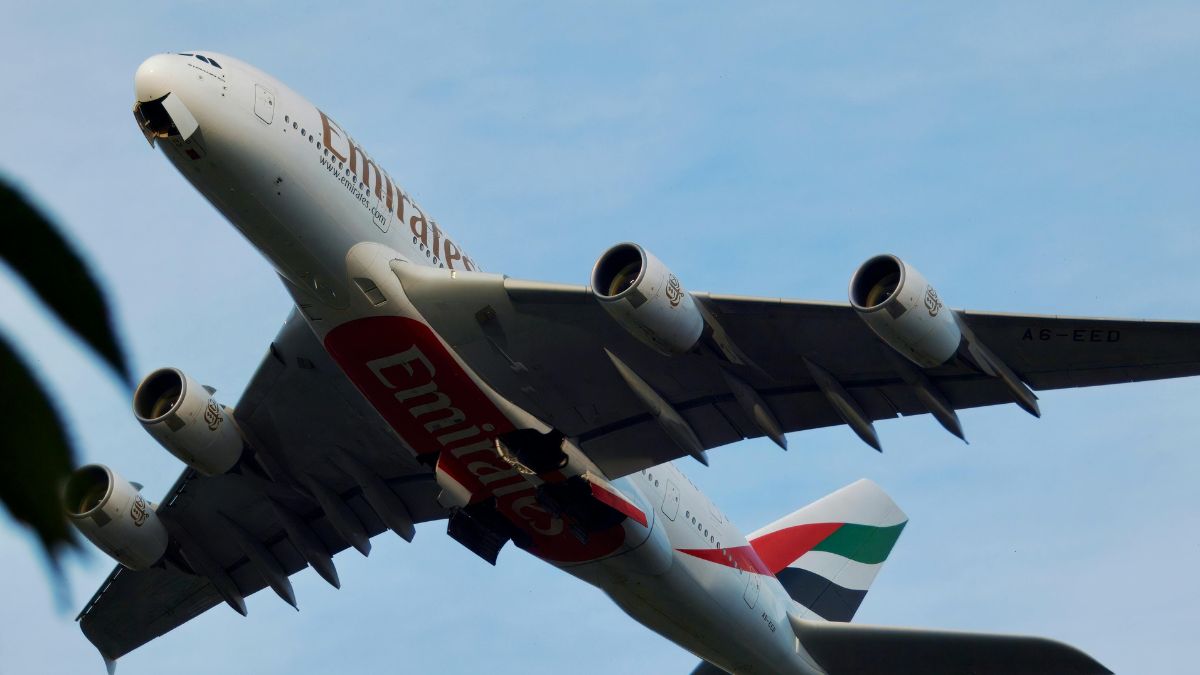
While Emirates and Qatar Airways have thus far refrained from implementing similar price reductions, they are instead offering flexible booking policies to accommodate uncertain travel plans. However, Etihad’s aggressive discounting could prompt these competitors to reconsider their strategies if demand continues to lag. Western carriers, meanwhile, have been quick to exploit the opening. Airlines such as Deutsche Lufthansa AG, British Airways, and Air France-KLM have been redeploying jets to destinations like India, Thailand, and Singapore in an effort to capture displaced passengers. The reshuffling of global aviation capacity is happening at a speed that few in the industry have ever witnessed.
United Airlines CEO Scott Kirby noted in a message to employees that the carrier will cancel about 5% of this year’s planned flights in the short term, writing: “The reality is, jet fuel prices have more than doubled in the last three weeks.” Travelers hoping to take advantage of the Etihad discounts would be wise to move quickly, as experts suggest booking for May and June 2026 to lock in the lowest available prices. Etihad has also introduced a “Middle East Situation” waiver, allowing guests with tickets issued before February 28, 2026, for travel through mid-April to rebook or request refunds free of charge. For new bookings under the discount promotion, policies tend to be more restrictive, making travel insurance a must for anyone considering these fares.
The ripple effects of this aviation upheaval are also washing up on the shores of Mediterranean tourist destinations. The Middle East conflict has placed mounting pressure on Greek and Cypriot tourism, with rising cancellations in both countries due to regional instability, higher fuel costs, and shifting travel patterns. What began as a geopolitical crisis has quietly evolved into a global travel reckoning, reshuffling routes, pricing strategies, and vacation plans on a massive scale.
Etihad Airways was founded in 2003 and grew to become one of the fastest-expanding airlines in history, adding dozens of new routes in its first decade of operation alone. Abu Dhabi’s Zayed International Airport, Etihad’s hub, opened its stunning new Terminal A in late 2023 and is currently one of the largest airport terminal buildings in the world by floor area. The airline’s name “Etihad” translates directly to “union” in Arabic, a somewhat ironic choice for a carrier now caught in the crossfire of one of the region’s most divisive conflicts.
What are your thoughts on booking a discounted long-haul flight through a conflict zone for the sake of a deal? Share your take in the comments.