Instagram Screenshot

A Swan Chased a Saint Bernard Out of the Lake and Went Viral

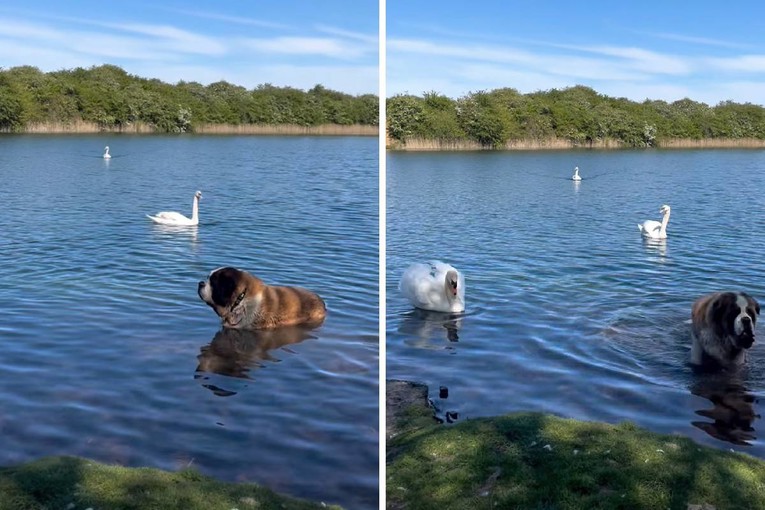
Not every clash between animals ends with drama, and this particular encounter proved that in the most charming way possible. A video that surfaced on Instagram showing a swan driving a Saint Bernard out of a lake has been winning hearts all over the internet. What started as a relaxed afternoon dip for a very large dog turned into something nobody quite expected. The unexpected outcome of this face-off is exactly what made it so irresistible to watch.

At the start of the clip, the Saint Bernard is seen happily splashing around in the shallows, completely unbothered and in his element. That peaceful moment did not last long, because a nearby swan quickly took notice and decided the dog had no business being there. The bird moved in with wings fully spread, making its intentions crystal clear without any room for misinterpretation. It was the kind of confident, no-nonsense energy that only a swan can pull off.

Despite being many times the size of his feathered opponent, the Saint Bernard chose diplomacy over confrontation. He turned around, waded back to shore, and gave himself a good shake before glancing back at the lake one last time. The swan, meanwhile, stayed right at the water’s edge keeping a watchful eye to make sure the message had been fully received. It was a masterclass in peaceful conflict resolution, dog-style.

The comments section lit up with all kinds of reactions from people who could not agree on whether to laugh or feel sorry for the dog. One viewer described the dog’s final backward glance as the look of someone thinking the swan had been incredibly rude, and pointed out just how sweet-natured the whole thing was. Others jumped in to note that swans are genuinely territorial birds and that the dog was probably better off backing down rather than testing his luck. A few commenters even gave the swan an unofficial title, affectionately dubbing it something along the lines of a lake guardian.

What everyone did seem to agree on, regardless of which side they were on, is that this Saint Bernard is the definition of a gentle giant. There is something genuinely refreshing about watching a massive dog decide that peace is simply the better option. Swans have a well-earned reputation for being surprisingly aggressive, and anyone who has crossed paths with one near the water knows they are not to be underestimated. This dog clearly had the right idea.

It is the kind of video that reminds you why animal content never gets old, and why the internet collectively loses its mind whenever a swan is involved. The combination of a dog that big backing down so gracefully and a bird that determined to hold its ground is just too good. There is a reason this clip spread so quickly and kept people talking long after the first watch. Sometimes the funniest, most wholesome stories come from the most unexpected encounters in nature.

Feel free to share your thoughts on this unlikely standoff in the comments!
Similar Posts

  • 5 ways Vacation Routines Stress your Pet: Psychology Science most owners Miss

    Vacations are exciting for humans, but for pets, they can feel confusing, stressful, and even scary. Many animals rely on routine to feel safe, so small travel changes can trigger anxiety in ways owners do not expect. The science is simple: pets read patterns, smells, and body language, not calendars. These five overlooked vacation habits can raise stress fast, even in calm pets, and knowing them helps you prevent problems before they start. A few small adjustments can make travel days easier for everyone.
    1. Packing Early Signals “Something Is Wrong” to Your Pet
    When you start pulling out suitcases, your pet often notices before you do. Many animals link luggage with separation, which can trigger anticipatory anxiety. Dogs and cats are experts at pattern recognition, so even quiet packing can create stress because it predicts a major change. Some pets respond by pacing, whining, hiding, or becoming clingy. Others may stop eating or start acting unusually alert. Psychology research on animal behavior shows that uncertainty is often more stressful than the event itself. Packing in smaller steps, keeping normal routines, and adding calm activities can reduce the buildup of anxiety.
    2. Your Mood and Body Language Change More Than You Realize
    Vacation prep usually comes with stress, rushing, and distraction. Pets notice that shift immediately because they rely heavily on your tone, facial expression, and energy. Even if you are excited, the fast movement, shorter patience, and unusual household noise can signal danger to an animal’s brain. This is especially true for anxious dogs and sensitive cats. Behavioral science shows that animals can mirror human stress through increased vigilance and restlessness. A pet may start shadowing you, refusing naps, or becoming reactive. Slowing down, using a calm voice, and keeping playtime normal can make a big difference.
    3. Skipped Walks, Late Meals, and Broken Timing Disrupt Safety Signals
    Many owners think pets will adjust easily to vacation timing changes, but routine is a major source of security for most animals. Meals, walks, and bedtime create predictable anchors that tell a pet their world is stable. When those anchors shift, stress rises, especially in dogs who depend on consistent potty breaks and activity. Cats can also become unsettled when feeding schedules change, which may lead to hiding, vocalizing, or litter box issues. Studies on animal stress show that predictable patterns lower cortisol over time. Even on travel days, keeping timing as close as possible helps pets stay calmer.
    4. New Smells and Spaces Can Trigger Overload, Not Curiosity
    People often assume pets will be excited by a new place, but unfamiliar environments can overwhelm them. Animals process the world through scent and sound, so hotels, rentals, or relatives’ homes can feel like sensory overload. New cleaning products, unfamiliar pets, strange floors, and different noises can raise stress quickly. Dogs may become hyper-alert, bark more, or refuse to settle. Cats may hide for hours or stop eating. Animal behavior research shows that novelty is not always enriching, especially when the pet has no control. Bringing familiar bedding, toys, and maintaining a quiet corner helps reduce that overload.
    5. Handing Them Off to a Sitter Without a Transition Creates Separation Shock
    Even if you trust your sitter, your pet may not. A sudden handoff can feel like abandonment to an animal that does not understand travel plans. Dogs may respond with barking, destructive behavior, or loss of appetite. Cats may become withdrawn, refuse interaction, or show stress through litter changes. Psychology studies on attachment show that animals form strong bonds and feel distress when those bonds are disrupted without a predictable transition. A short meet-and-greet, a trial visit, or a practice overnight can reduce stress dramatically. Familiar scents, written routines, and consistent feeding also help the sitter maintain stability.

  • A Mother Bear Gently Coaxing Her Cubs Into a Swimming Pool Has Melted Hearts Across the Internet

    There is something undeniably charming about watching a determined mama bear take on the very relatable role of swimming instructor. A security camera in a Southern California backyard captured exactly that, and the footage quickly spread across social media, winning over anyone who came across it. The clip shows a mother bear patiently working to…

  • The Fascinating Evolutionary Reason Dogs Tilt Their Heads When We Speak to Them

    Dogs have shaped their lives around humans for an extraordinary stretch of time. Scientists estimate that dogs have lived alongside people for somewhere between 20,000 and 30,000 years, long enough to develop behavioral and cognitive traits that reflect a deep sensitivity to human presence and communication. Among those traits, few have inspired more affection or…

  • This Great Pyrenees Dog Cracked the Internet Up with His Hilarious Post-Bath Ritual

    If you ever needed proof that dogs have better memories than we give them credit for, meet Ritchie, a fluffy Great Pyrenees who has been demanding a very specific royal treatment after every single bath for the past eight years. His owner made the mistake of laying towels on the bathtub steps just once back…