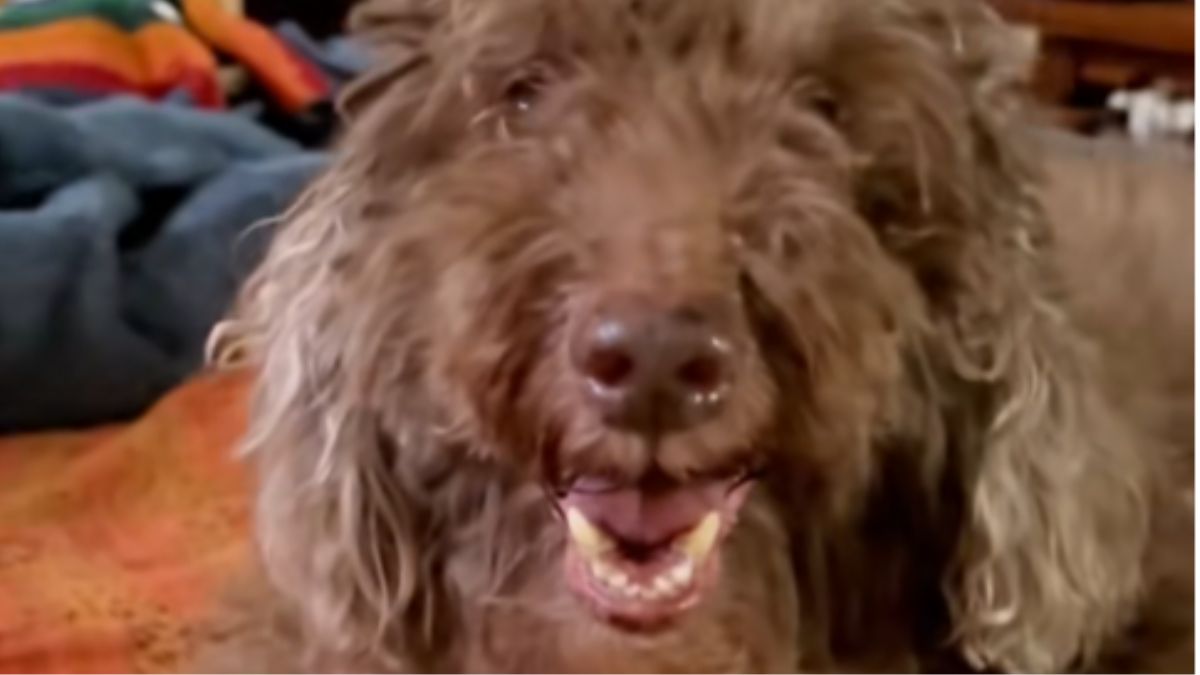
A Senior Dog Who Could No Longer Climb Stairs Inspired His Family to Take Turns Sleeping Downstairs with Him
There are pet owners who love their animals, and then there are people like the Morris family, who quietly rearranged their entire nightly routine without a second thought. Spike, a 14-year-old English springer spaniel, had spent years as the undisputed center of his family’s world. When age and illness stripped away his ability to climb the stairs, his humans did not simply adapt their expectations — they adapted their lives. What followed became one of those small, daily acts of devotion that says everything about the bond between people and their dogs.
Spike joined the Morris family nine years ago, and from the very first night, he made his intentions perfectly clear. Though his new family had designated him a downstairs dog, Spike leapt over the stair gate and found his way to their bedroom, settling into bed as though he had always belonged there. That bold move set the tone for everything that followed. He became a constant presence upstairs, burrowing under the covers each night, sleeping close to his people, and weaving himself into the daily rhythm of the household. His affectionate, determined personality made him impossible not to love.
As Spike aged, his body began to slow. At 14, he suffered two strokes that left him temporarily unable to stand on his own. His family carried him from room to room, refusing to give up on him, and Spike, with remarkable stubbornness, slowly relearned how to walk. His recovery was a testament to both his own spirit and the care surrounding him. But despite that progress, the stairs remained out of reach, and his family made the difficult decision to block off the upper floor entirely to keep him safe.
The Morris family knew Spike well enough to know he would attempt the climb anyway if given the chance. He had spent years sleeping close to them, and that comfort mattered deeply to him. Rather than leave him alone downstairs, they came up with a solution rooted entirely in love. They set up the pull-out couch on the ground floor and began taking turns sleeping beside him. What started as a practical arrangement quickly became a meaningful nightly ritual. As Catherine Morris explained, while she was away at university, her parents alternated nights downstairs, and when she returned home, she joined the rotation so that everyone could share the responsibility and no one had to carry it alone.
Spike’s father has grown especially close to him through this arrangement. Catherine described the two as “absolutely inseparable,” and noted that her father has developed a habit of quietly chatting with Spike during their evenings together, calling him “old bean” with the kind of easy affection that only comes from years of shared life. These quiet nights have become their own form of companionship, two old friends keeping each other company in the low light of a living room. As Catherine put it, “We love our old boy so much and are so glad to have him in our lives.” Her hope is that the love they have poured into Spike has helped make up for whatever hardships he may have faced before he found them.
@cool_cats_h8_lasers Support group for people who sleep on floor mattresses for their pets meets on Tuesdays #fyp #dog #dogmom #seniordog #dogtok ♬ Stuff We Did (from 'Up') – Piano Version – your movie soundtrack
Spike’s story is a gentle reminder that caring for a senior pet often means meeting them exactly where they are. Whether it means modifying sleeping arrangements, adjusting daily routines, or simply offering more patience and presence, the Morris family has shown that even the smallest changes can have an enormous impact on an aging dog’s sense of security and joy.
English springer spaniels were originally bred to “spring” game birds out of hiding for hunters, which is where the name comes from — making Spike’s early habit of leaping over stair gates an almost poetic callback to his breed’s roots. Dogs who survive strokes often show remarkable neurological recovery thanks to the brain’s ability to form new pathways, which is why consistent, gentle stimulation from a loving family can genuinely speed healing in ways medication alone cannot achieve. The average lifespan of an English springer spaniel is 12 to 14 years, which means Spike, at 14, has already beaten the odds — and is doing it surrounded by people who sleep on pull-out couches just to be near him.
Have you ever rearranged your life to make things easier for an aging pet? Share your story in the comments.