
The Woman Who Spent 500 Days in a Cave Reveals Why Leaving Was the Hardest Part
Most of us struggle to get through a long weekend without our phones, let alone spend a year and a half completely cut off from the world. But that is exactly what Beatriz Flamini, a Spanish extreme athlete and mountaineer, chose to do. She descended into a cave near Granada, Spain, in November 2021 at the age of 48 and did not emerge until April 2023, setting a world record for the longest time spent alone underground. Her story captivated people around the globe when it first broke, and it continues to fascinate anyone who hears it.
The cave sat roughly 230 feet below the earth’s surface, and Flamini’s stay there was part of a scientific project designed to study what prolonged isolation and the total loss of time orientation does to the human mind and body. She had absolutely no human contact throughout the entire experience, and there was no cell signal to offer even a sliver of connection to the outside world. Scientists monitored her from above, but they did not interact with her directly. She also instructed her team not to share any news from the surface, even in the event of a family member’s death.
You might expect that living underground for nearly two years would come with all sorts of unbearable hardships, and there were certainly challenges along the way. An invasion of flies tested her patience at various points. However, what Flamini herself identified as the single most difficult moment of the whole ordeal was something far more unexpected. It was not the darkness, the silence, or the isolation that broke her spirit even slightly. It was being told it was time to leave.
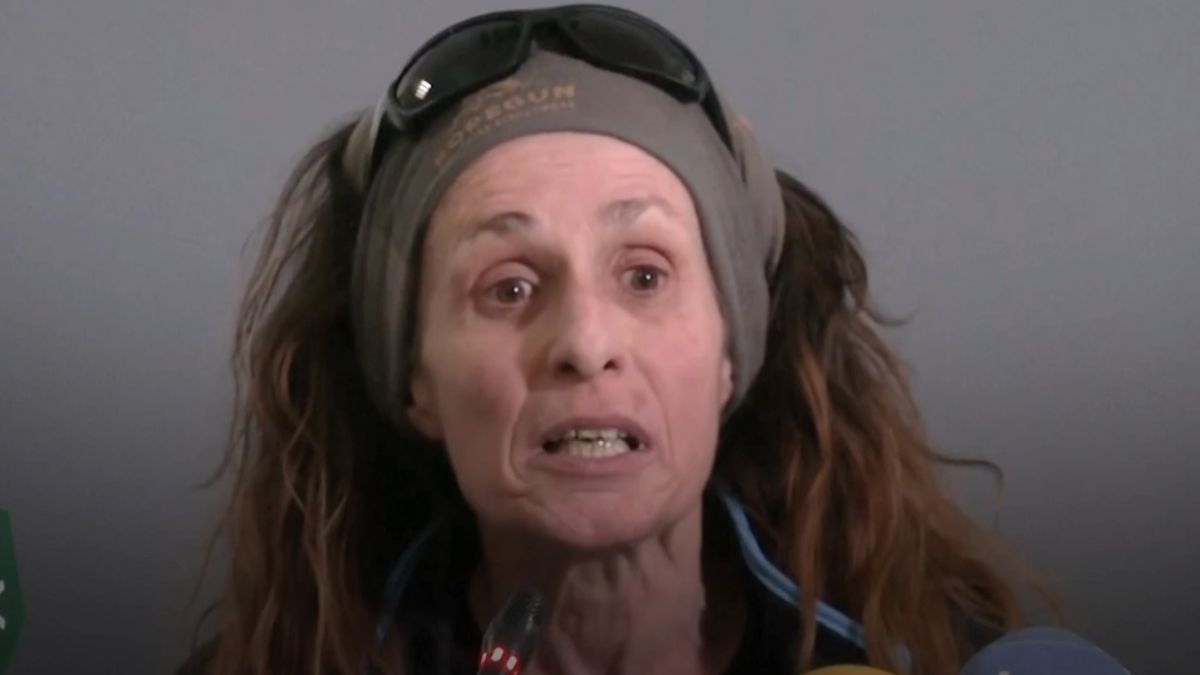
When the scientists finally descended to bring her back to the surface, she was half asleep and genuinely believed something must have gone terribly wrong. She told media gathered at her emergence that she said to them, “Already? No way. I haven’t finished the book.” The idea that 500 days had passed felt completely impossible to her, which speaks to just how profoundly her sense of time had shifted during her time underground. In fact, by around day 65, she had already lost all track of what day it was or how much time had gone by.
What made the return to the surface especially jarring was not just the light or the noise, but what happened immediately after she came out. She expected a shower and a quiet moment to readjust. Instead, after a brief medical and psychological check, she was brought straight to a press conference that lasted close to an hour. She admitted she had not anticipated the level of public interest in her story, and that sudden plunge back into the social world was genuinely overwhelming for someone who had spent so long in total solitude.
As for how she actually managed to get through all those days without losing her mind, Flamini offered a wonderfully simple explanation. She said she got along with herself very well. She filled her time reading a total of 60 books, writing, drawing, and knitting. Her years of experience as an extreme athlete and mountaineer had already trained her to endure discomfort and push through mental walls that most people never encounter. That discipline and self-reliance clearly carried her through moments that would have broken almost anyone else.
Flamini’s story is a rare and fascinating window into what the human mind is actually capable of when stripped of every distraction, every social cue, and every external source of time. She emerged not as someone who had survived something terrible, but as someone who had genuinely thrived in conditions that most of us cannot even imagine. It raises some genuinely big questions about solitude, resilience, and what we actually need to feel okay. Share your thoughts on Beatriz Flamini’s remarkable experience in the comments.