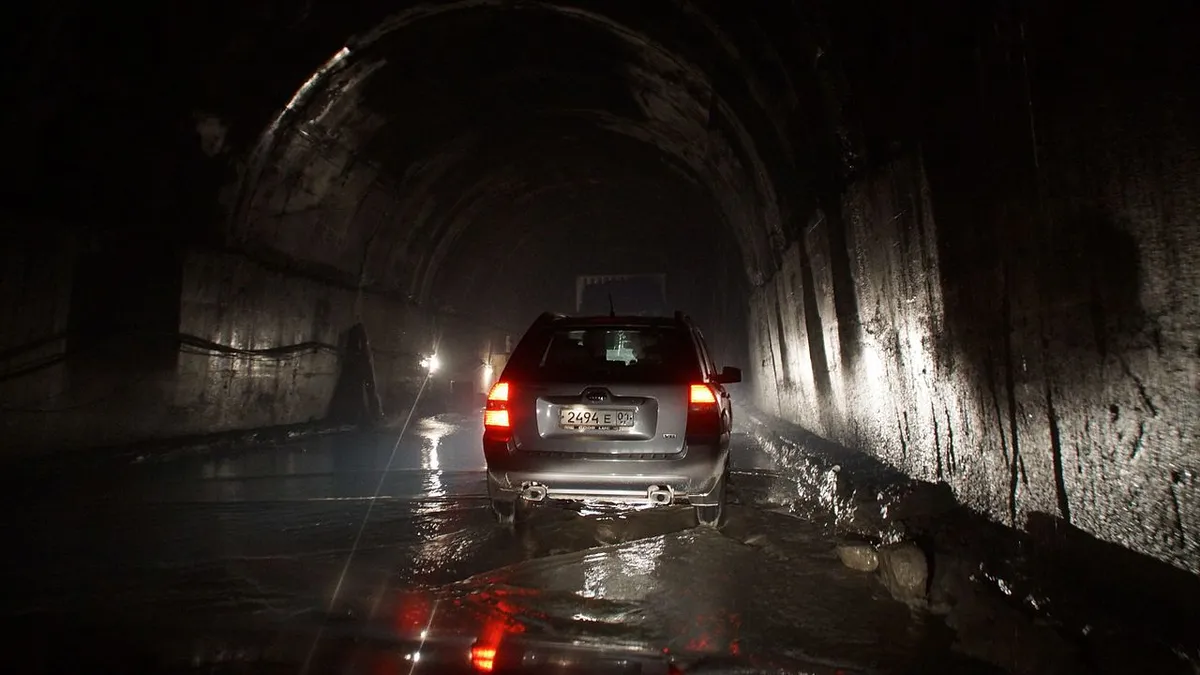
The Darkest and Most Dangerous Tunnel in the World Connects Two Cities: “Even Breathing Here Is Painful”
Tucked away in the mountains of Tajikistan, the Anzob Tunnel sits at an elevation of roughly 8,860 feet along the M34 highway and stretches about 3 miles from one end to the other. It has earned a nickname that tells you everything you need to know before you even enter it. People call it the “Tunnel of Death,” and once you learn the details, it is hard to argue with that label. This is not some forgotten relic of ancient infrastructure but an active road that thousands of vehicles pass through every single day.
The tunnel was officially opened in 2006 under enormous pressure to get the route up and running as quickly as possible, despite the fact that it was nowhere near finished. When drivers first started using it, there was no lighting installed, no ventilation system, and no drainage. Experts from Dangerous Roads have described the conditions plainly, noting that the tunnel fills with thick exhaust smoke that makes breathing both difficult and genuinely painful. The toxic air alone would be enough to classify it as one of the most hazardous roads on the planet.
What makes the experience even more alarming is the state of the road surface itself. Potholes can reach up to roughly 1.6 feet in depth, and because the drainage system was so poorly designed, water constantly seeps through the ceiling and collects in those holes. This creates what people have started calling “tunnel lakes,” murky pools of water that can completely hide sharp rocks or swallow a tire whole. According to Dangerous Roads, an entire SUV can become submerged if the driver picks the wrong side of the road, which is easy to do when there are zero lane markings to guide you.
Traffic control inside the tunnel is essentially nonexistent. There are no traffic lights, no road signs, and no painted lines on the ground, meaning drivers heading in opposite directions are essentially playing a slow-motion guessing game in complete darkness. Headlights from oncoming vehicles appear suddenly out of the black like something from a nightmare, giving other motorists just seconds to react and get out of the way. Collisions and vehicle damage happen regularly, and any breakdown means prolonged exposure to the dangerous fumes building up around you.
People have died inside the Anzob Tunnel, and that is not an exaggeration. There have been documented cases of drivers and passengers succumbing to carbon monoxide poisoning during traffic backups when vehicles were trapped inside with nowhere to go. Those who make it through often report dizziness, nausea, and intense feelings of panic by the time they see the other end. The tunnel is also periodically shut down entirely for emergency repair work, which at least signals that someone is aware of its ongoing problems.
A partial renovation took place in 2018, which brought some drainage improvements and addressed a portion of the worst potholes. But experts are clear that the work done so far does not come close to making the tunnel safe by any reasonable standard, and further major improvements are still urgently needed. The tunnel connects Dushanbe, the capital of Tajikistan, to Khujand, the country’s second largest city, meaning it serves a genuinely important transportation purpose for the region. Closing it entirely is not a realistic option for the people who depend on it.
Not everyone who travels through comes away traumatized, though. One traveler who shared their experience on TripAdvisor mentioned passing through twice without serious incident, describing the darkness and lack of ventilation as frightening but ultimately survivable. They called the surrounding drive beautiful and said they felt it was worth the risk. That kind of firsthand perspective is a reminder that millions of people in Tajikistan live with this infrastructure reality not as a curiosity but as an everyday necessity.
Would you ever dare to drive through a tunnel like this, and what do you think should be done about roads this dangerous? Share your thoughts in the comments.