Instagram Screenshot

Little Dachshund Tini Is Winning the Internet Over With Her Love of Carrots

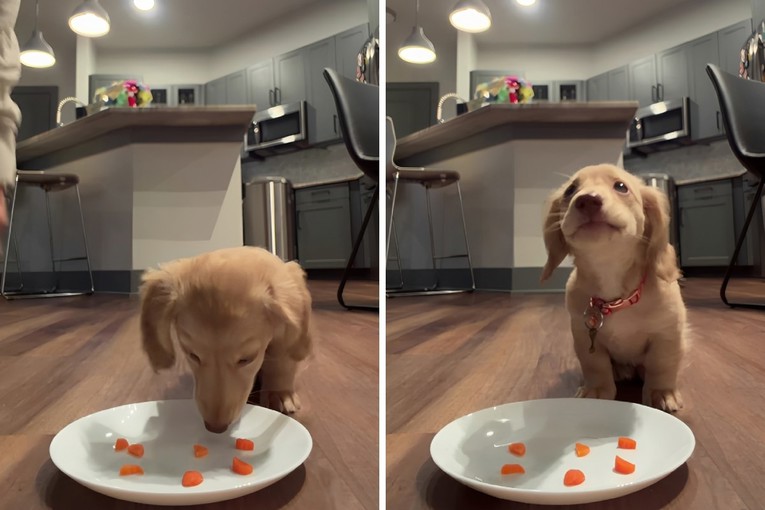
If you ever needed proof that dogs have an incredible talent for turning the most ordinary moments into something completely magical, meet Tini. This tiny miniature dachshund, whose full name is Martini, has been taking social media by storm after her owner posted a video of her happily munching away on finely chopped carrot pieces. The clip spread quickly across Instagram, and it is not hard to see why people everywhere fell head over heels for this little girl.

What made the video so endearing was not just Tini herself, but the pure enthusiasm she brought to something as simple as snack time. The caption her owner wrote perfectly captured the dog’s perspective, reading “Mom says they’re good for eyesight or something???? But I only see a new snack in them.” That playful, first-person voice resonated with viewers immediately, giving Tini a personality that felt larger than her tiny frame. People in the comments could not get enough of it.

And then there was the sound. Many viewers specifically pointed out that the crunching noise Tini made while eating was almost hypnotically satisfying to listen to. It is the kind of sound that makes you hit replay without even thinking about it. One commenter summed it up perfectly, writing that there might not be anything cuter than a dachshund puppy, while another simply typed “THE CUTEST THING EVER” in full caps, which honestly feels like the only appropriate response.

Tini was born in January 2026, which makes her just a few months old and very much in full puppy mode. Dachshunds at that age are known for being curious, energetic, and full of personality, and Tini seems to be checking every single one of those boxes with ease. The breed itself has always had a devoted fanbase thanks to their long bodies, expressive eyes, and surprisingly big attitudes packed into a very small package. Watching a young one discover a new favorite food is basically internet gold.

What is worth noting is that carrots are actually a fantastic snack choice for dogs. They are low in calories, high in fiber, and contain plenty of vitamins that support overall health, including eye health, which makes the caption all the more amusing. Many vets recommend them as a crunchy treat that also helps with dental hygiene. So while Tini may have stumbled into her carrot obsession by chance, her owner is genuinely doing her a favor by offering them. That is a win for everyone involved.

Pet content has an undeniable power on social media, and videos like Tini’s remind us exactly why. In a scroll full of news and noise, a tiny dog excitedly crunching on a vegetable feels like a deep breath of fresh air. There is something universally comforting about watching an animal experience pure, uncomplicated joy. It asks nothing of you and gives you an instant mood lift in return, which is probably why millions of people seek out this kind of content every single day.

At just a few months old, Tini has already gathered thousands of followers and shows no signs of slowing down her rise to fame. Her owner has clearly found a winning formula by letting Tini’s natural personality lead the way rather than staging anything overly elaborate. Authentic moments with real animals tend to connect with people far more deeply than anything overly produced, and this little dachshund is living proof of that. The internet has a new favorite, and she happens to be very passionate about her vegetables.

If Tini’s carrot adventure made you smile, share your thoughts about your own pet’s funniest food moments in the comments.
Similar Posts

  • |

    2 Women Rescue Abandoned Kittens and Turn Them Into Hiking Companions

    When Kayleen VanderRee tossed out some garbage at a local park last July, she never expected to walk away with two kittens in tow. She froze the moment she heard a faint meowing coming from behind a bush, and a tiny kitten soon crept reluctantly toward her. She coaxed him out, picked him up, and…

  • This Little Dog Is Terrified of the Vacuum but Refuses to Leave Her Owner’s Side

    Most dogs have a well-documented nemesis, and for a great many of them, that enemy comes in the form of a loud, rumbling vacuum cleaner. Holly, however, decided that fleeing was simply not an option. Despite being visibly terrified every time the machine roared to life, this little pup made a choice that melted hearts…

  • 5 ways Vacation Routines Stress your Pet: Psychology Science most owners Miss

    Vacations are exciting for humans, but for pets, they can feel confusing, stressful, and even scary. Many animals rely on routine to feel safe, so small travel changes can trigger anxiety in ways owners do not expect. The science is simple: pets read patterns, smells, and body language, not calendars. These five overlooked vacation habits can raise stress fast, even in calm pets, and knowing them helps you prevent problems before they start. A few small adjustments can make travel days easier for everyone.
    1. Packing Early Signals “Something Is Wrong” to Your Pet
    When you start pulling out suitcases, your pet often notices before you do. Many animals link luggage with separation, which can trigger anticipatory anxiety. Dogs and cats are experts at pattern recognition, so even quiet packing can create stress because it predicts a major change. Some pets respond by pacing, whining, hiding, or becoming clingy. Others may stop eating or start acting unusually alert. Psychology research on animal behavior shows that uncertainty is often more stressful than the event itself. Packing in smaller steps, keeping normal routines, and adding calm activities can reduce the buildup of anxiety.
    2. Your Mood and Body Language Change More Than You Realize
    Vacation prep usually comes with stress, rushing, and distraction. Pets notice that shift immediately because they rely heavily on your tone, facial expression, and energy. Even if you are excited, the fast movement, shorter patience, and unusual household noise can signal danger to an animal’s brain. This is especially true for anxious dogs and sensitive cats. Behavioral science shows that animals can mirror human stress through increased vigilance and restlessness. A pet may start shadowing you, refusing naps, or becoming reactive. Slowing down, using a calm voice, and keeping playtime normal can make a big difference.
    3. Skipped Walks, Late Meals, and Broken Timing Disrupt Safety Signals
    Many owners think pets will adjust easily to vacation timing changes, but routine is a major source of security for most animals. Meals, walks, and bedtime create predictable anchors that tell a pet their world is stable. When those anchors shift, stress rises, especially in dogs who depend on consistent potty breaks and activity. Cats can also become unsettled when feeding schedules change, which may lead to hiding, vocalizing, or litter box issues. Studies on animal stress show that predictable patterns lower cortisol over time. Even on travel days, keeping timing as close as possible helps pets stay calmer.
    4. New Smells and Spaces Can Trigger Overload, Not Curiosity
    People often assume pets will be excited by a new place, but unfamiliar environments can overwhelm them. Animals process the world through scent and sound, so hotels, rentals, or relatives’ homes can feel like sensory overload. New cleaning products, unfamiliar pets, strange floors, and different noises can raise stress quickly. Dogs may become hyper-alert, bark more, or refuse to settle. Cats may hide for hours or stop eating. Animal behavior research shows that novelty is not always enriching, especially when the pet has no control. Bringing familiar bedding, toys, and maintaining a quiet corner helps reduce that overload.
    5. Handing Them Off to a Sitter Without a Transition Creates Separation Shock
    Even if you trust your sitter, your pet may not. A sudden handoff can feel like abandonment to an animal that does not understand travel plans. Dogs may respond with barking, destructive behavior, or loss of appetite. Cats may become withdrawn, refuse interaction, or show stress through litter changes. Psychology studies on attachment show that animals form strong bonds and feel distress when those bonds are disrupted without a predictable transition. A short meet-and-greet, a trial visit, or a practice overnight can reduce stress dramatically. Familiar scents, written routines, and consistent feeding also help the sitter maintain stability.