
The World’s Longest Nonstop Flight Will Let Passengers Watch the Sunrise Twice
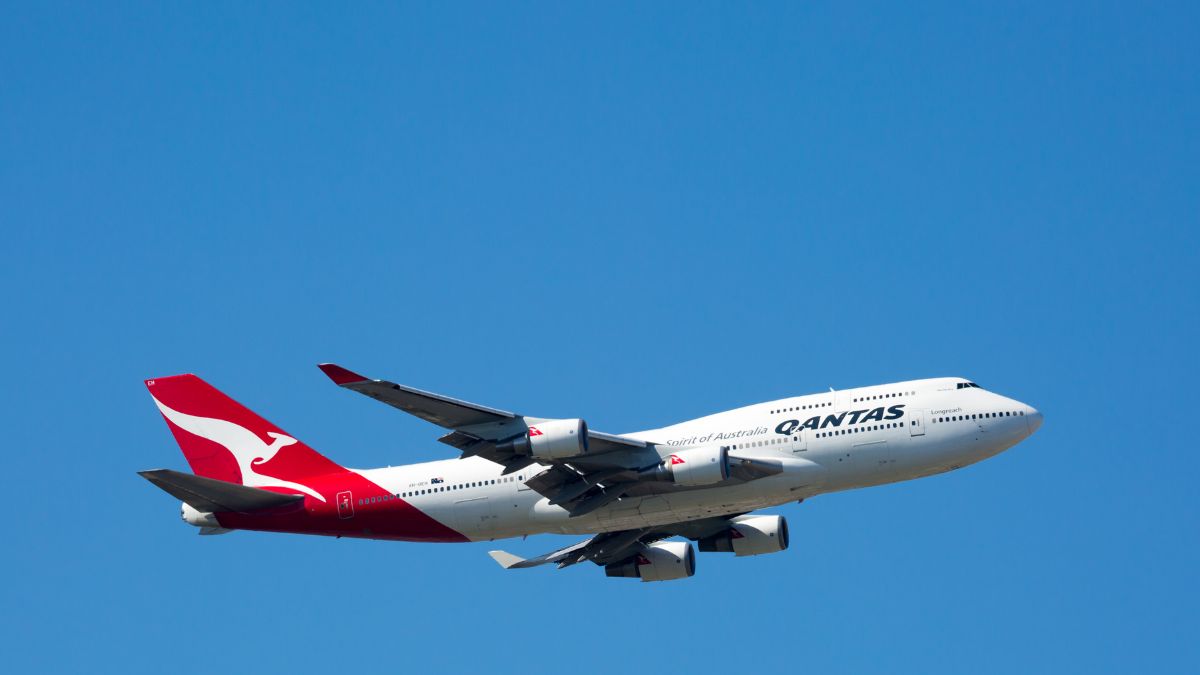
Aviation history is about to be made, and it comes with a side of breathtaking scenery. Qantas, Australia’s national airline, is preparing to launch what will become the longest nonstop direct flight in the world, connecting Sydney and London without a single stopover. The route, part of an ambitious initiative called Project Sunrise, will keep passengers in the air for more than 20 hours and cover over 10,000 miles in under a day. A companion route from Sydney to New York is also in the works, making both journeys remarkable feats of modern aviation.
The aircraft set to pull off this extraordinary feat is the Airbus A350-1000ULR, where “ULR” stands for Ultra Long Range. Designed specifically for marathons of the sky, the plane will carry a total of 238 passengers per flight. To put the distance into perspective, the current record holder for the world’s longest direct flight is the Singapore to New York route, which clocks in at just over 19 hours. Project Sunrise will surpass it, claiming the top spot once passenger services begin.
It is worth clarifying one distinction that often causes confusion. The world’s longest flight route by total distance goes from Shanghai, China to Buenos Aires, Argentina, a journey of around 29 hours. However, that route requires a stopover in New Zealand for refueling, meaning it is not a true nonstop flight. What Qantas is offering is something genuinely different: a continuous, uninterrupted journey from one side of the planet to the other, no stops, no layovers, just open sky from takeoff to landing.
The name Project Sunrise is not just clever branding. It is a direct tribute to a remarkable chapter in aviation history tied to World War II. After Japan captured Singapore in 1942, Australia risked being cut off from international air travel entirely. To maintain a vital lifeline, Qantas pilots flew modified PBY Catalina seaplanes nonstop between Perth, Australia and what was then called Ceylon, now known as Sri Lanka. These flights lasted up to 30 hours, operated with skeleton crews and stripped-down cabins loaded with extra fuel, and were completed a total of 271 times. Because of the direction of travel and the sheer length of those missions, passengers on those wartime flights would witness the sunrise twice in a single journey. That haunting detail is exactly where the project gets its name.
When Qantas conducted a test run of the modern Sydney to London route a few years ago, history quietly repeated itself. Passengers on that trial flight also watched the sun rise twice, a poetic echo of those wartime endurance missions. It was the kind of moment that reminds travelers just how vast and strange the planet really is.
According to Forbes, test flights using the newly built Airbus A350-1000ULR are expected to begin later in 2026, with the first commercial passenger journeys planned for the first half of 2027. If the testing phase goes smoothly, the route could become a regular offering for travelers looking to get between Australia and Europe without the hassle of a connecting flight. For those who have ever suffered through long layovers in unfamiliar airports, the appeal of stepping on a plane in Sydney and stepping off in London without any interruption is hard to overstate.
Of course, more than 20 hours is a long time to spend in any enclosed space, and passengers will need to make peace with the rhythms of a very long journey. The challenge will be balancing rest, meals, entertainment and the occasional glance out the window at whatever corner of the world is passing below.
The PBY Catalina seaplanes used in those wartime “Double Sunrise” flights were so stripped down to save weight that passengers sat on mailbags and were served cold meals, with no proper sleeping arrangements at all. The cruising speed of those aircraft was around 130 miles per hour, a far cry from the modern jet speeds that make Project Sunrise possible today. Also, the Airbus A350-1000ULR uses fuel-efficient engines and composite materials so advanced that the plane is roughly 25 percent lighter than older wide-body aircraft, which is a large part of what makes a nonstop flight of this distance even technically feasible.
Have you ever taken an ultra-long flight, and would you try a nonstop journey from Sydney to London? Share your thoughts in the comments.