
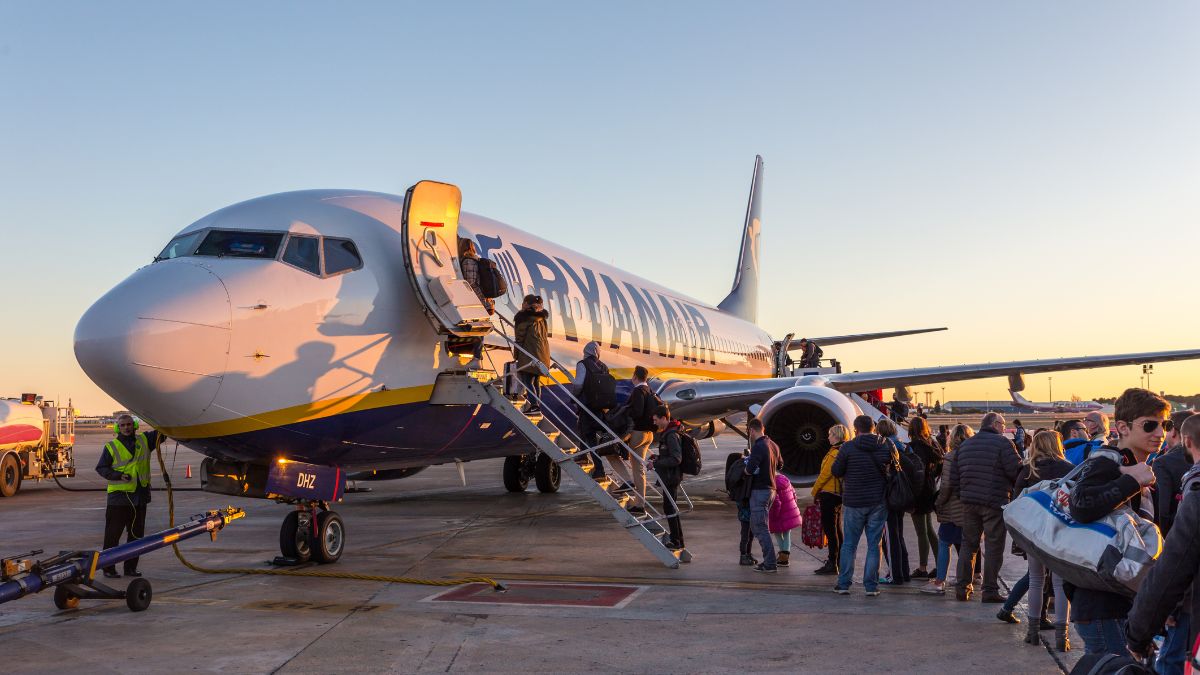
Ryanair Calls Which?’s Budget Flight Booking Tip “Fake News”
Budget airline Ryanair has fired back at consumer advocacy group Which? after the organization published a travel tip claiming that passengers could save significant money by ignoring the airline’s own fare recommendations. The dispute has drawn attention to the often confusing world of budget airline pricing, where the cheapest-looking option at first glance is not always the one the airline steers you toward. For families planning their next European getaway, the difference between clicking “yes” and “no” on an upsell prompt could apparently add up to a surprisingly large sum.
The controversy stems from an article written by travel writer Trevor Baker for Which? in February. Baker described booking flights for his family of four from London to Alicante and noticing that the airline’s own website nudged him toward a pricier option. “A banner popped up saying that regular fare is ideal for your trip,” he wrote. However, after doing the math, he found that following that advice would have cost his family considerably more than necessary. “But if we’d followed Ryanair’s advice, choosing the ‘Regular’ fare instead of ‘Basic,’ we’d have ended up paying £59 more for exactly the same luggage and selection of the cheapest seats,” Baker claimed.
To understand the dispute, it helps to know how Ryanair structures its fares. The airline’s basic fare is the most stripped-down option, covering only a small personal item that fits under the seat in front of you, with seats randomly assigned unless you pay extra. The regular fare, by contrast, includes standard seat selection, priority boarding, and the ability to bring two cabin bags on board. The issue, according to Which?, is that travelers are frequently pushed toward the regular fare even when the basic fare, with a few add-ons selected separately, would cost them far less overall.
Which? says the pattern held up across extensive testing. “We looked at 15 flights to a range of locations in February 2026 and only once was the regular ticket cheaper, even if we wanted all those extras,” the organization stated. After conducting checks roughly 30 times over the past two years, Which? found the regular fare to be cheaper on only one occasion. On seven occasions it was actually more expensive, sometimes just marginally but sometimes by a much more meaningful amount. Baker put it plainly: “With the ‘Basic’ fare you can add bags and seat selection later in the booking process, for a lower price.” He estimated that a family of four willing to travel with fewer bags could potentially reduce the fare from Ryanair’s recommendation by around £163, calling it “just one of the ways you can save money on Ryanair’s notoriously complicated website.”
Ryanair was not pleased. In a statement shared with Sky News, a spokesperson for the airline responded sharply: “This is more fake news from Which? Thankfully no one reads, or takes any notice of Which’s fake recycled news articles or your spurious ‘advice,’ as our traffic growth from 200 million to 208 million passengers in 2025 proves.” The airline leaned on its passenger growth figures as evidence that travelers are not being deterred or misled by its pricing structure, though critics might argue that low prices overall and confusing upsells are not mutually exclusive.
The broader implication of the Which? findings is a practical reminder that budget airline pricing is rarely as simple as it appears. The fare displayed at the start of a booking journey is often just a starting point, and the final cost depends heavily on which extras you add, when you add them, and whether you follow the airline’s own prompts or forge your own path through the booking process. Which? specifically noted that the regular fare assumes every passenger wants both a large overhead locker bag and an underseat bag, which may not reflect the actual needs of families traveling with young children who pack light.
For savvy travelers, the takeaway is straightforward: always do the math yourself before accepting an airline’s “recommendation,” and consider whether the bundled fare genuinely serves your travel needs or simply makes the upsell feel inevitable.
Budget airline fare bundles have been a regulatory flashpoint across Europe for years, with aviation watchdogs in several countries investigating whether automatic ticket upgrades and prominently displayed “recommended” fares constitute misleading commercial practices. Ryanair, which carries more international passengers than any other airline in the world, has historically generated some of the most passenger complaints of any European carrier, yet consistently ranks among the top choices for price-sensitive travelers. The airline’s famously combative public communications style, including calling out journalists and consumer groups directly, has itself become something of a brand identity.
Have you ever noticed an airline pushing you toward a pricier fare than you actually needed, and what did you do about it? Share your experience in the comments.