
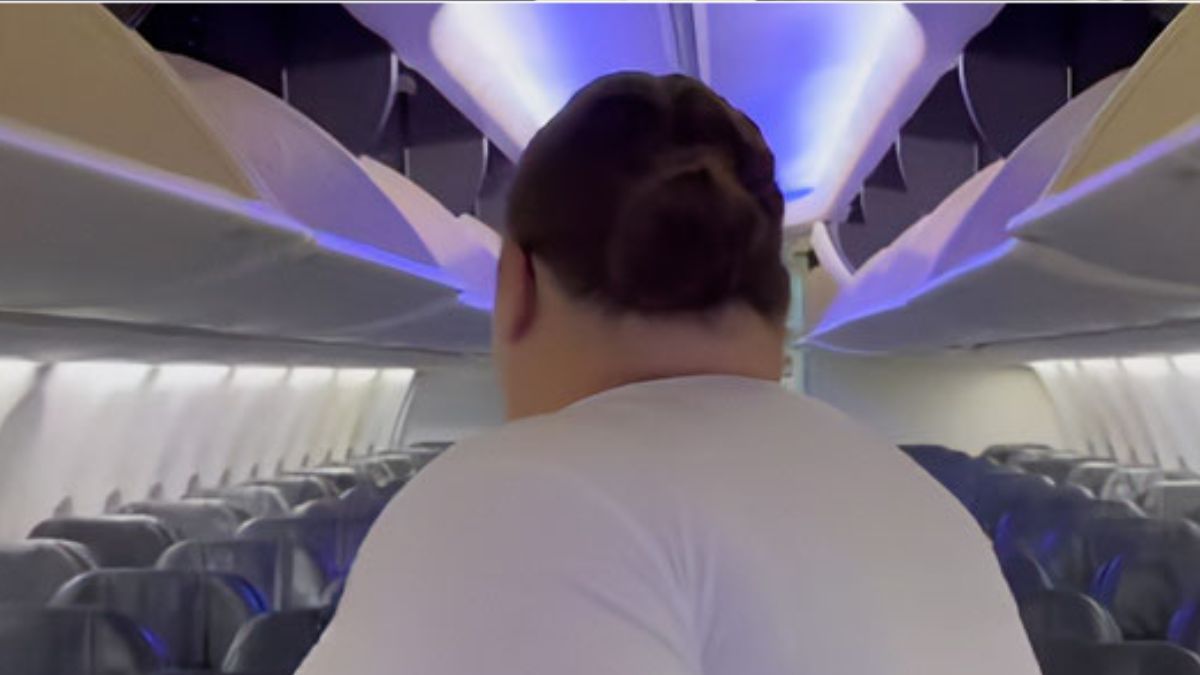
Southwest Airlines’ New “Customer of Size” Policy Is Drawing Heavy Criticism
Southwest Airlines is facing a wave of public anger after rolling out a revamped seating policy that requires larger passengers to purchase an additional seat. The updated rule, which took effect in January, eliminates the long-standing practice of offering complimentary extra seats to plus-sized travelers at the gate. For more than 30 years, the airline had allowed passengers who needed more space to either request a free second seat upon arrival or receive a refund after booking one in advance. That era has now come to an end, and the backlash has been swift.
Under the new policy, passengers who may qualify as a “customer of size” are asked to proactively buy an extra ticket before arriving at the airport. Southwest defines the boundary between seats as the armrest, and any traveler who encroaches on the neighboring seat is expected to purchase the additional space. The airline also reserves the right to make that call on the spot, stating that it “may determine, in its sole discretion, that an additional seat is necessary for safety purposes.” Critics have zeroed in on this vague language, arguing that it places an unfair amount of power in the hands of individual gate agents with no clear, standardized criteria.
Several passengers have come forward with accounts of what they describe as embarrassing and inconsistent enforcement. Jessica Skinner was stopped at the Tampa airport on March 6 before a flight to Austin, despite having lost 200 pounds and not extending beyond her seat. She recalled an agent telling her, “You’re going to need an extra seat because you’re wide at the bottom and you’re going to spill into the other seat, and it’s for the comfort of our other customers.” Skinner, who did not purchase the extra ticket on the spot, said the confrontation caused her to miss the deadline to check her bag.
Erika DeBoer had a similar experience, being told at the gate that she would need to spend $176 on an additional ticket for the safety and comfort of fellow travelers. The only passenger seated beside her was her best friend, who had no objection to sitting next to Erika. DeBoer later posted about the incident and described how hollow the justification felt. “The part that lingers the most is the words used,” she told People. “‘Safety and comfort’ of other passengers. They just kept repeating it like robots without any care for the actual situation.” Erika ultimately received a refund and a $150 voucher after contacting the airline following her flight.
Grace Simpson described being flagged as a “customer of size” before a connecting flight in San Diego, despite having traveled from Norfolk to Baltimore on the same airline without any issue just earlier that month. “I told him that I had already flown from Norfolk to Baltimore without issue, so I was not going to buy another ticket,” she said in a video that circulated widely online. She added that the supervisor who enforced the policy appeared visibly uncomfortable with the interaction. “In many ways, it felt unfair to both of us,” she said, noting that the agent was put in a difficult position enforcing a rule he did not create. Grace was ultimately seated in the back of the plane next to an empty seat.
Kari McCaw also spoke out after being stopped and told to buy an additional ticket. “I guess I was a bit embarrassed. I was upset more than anything,” she told SFGATE. “You just made this arbitrary look at my body. I don’t have any hips, so I sit in seats just fine all the time.” Influencer Samyra Miller dubbed the policy a “fat tax” and took aim at how subjectively it was being applied. “It is discrimination that is at the discretion and fatphobia of whoever is at work that day,” she said. On social media, critics have accused Southwest of “profiling and discriminating against customers just to make more money,” a particularly pointed critique given the airline’s historically welcoming reputation.
@jaebaeofficial Replying to @sidneygriggs123 Last time my partner and I flew, we had four seats for the two of us. We have NEVER not paid for our extra seats ahead of time, but that doesn’t change the fact that not every plus size individual who needs extra seats to be safe and comfortable can afford to buy them. Since they are one person and going one place, they should only have to pay one fare—that’s what the One Person, One Fare policy suggests and what more airlines are recognizing. This has been going on and what affect has it had on ticket costs for others? None. I’ve never said other passengers should foot an 'extra' bill that doesn’t exist. News outlets pushing that narrative—when did I say that? Oh that’s right, NEVER. • • • #BodyEqualityInTravel #PlusSizeTravel #Travel #PlusSizeTravelPetition #FlyingWhileFat #FlyingWhilePlusSize #TravelingWhilePlusSize #TravelingWhileFat #TravelForAll #OnePersonOneFare ♬ Not Like Us – Kendrick Lamar
A Southwest spokesperson told The Independent that passengers who think they may need additional space should reach out before travel day. “We ask Customers who may need an extra seat to let us know in advance of their day of travel so we can do our best to accommodate their needs,” the spokesperson said. Under the revised policy, a refund for the second seat is only guaranteed if the flight departs with at least one open seat in the same fare class. Passengers who show up without having booked in advance can be required to purchase an additional ticket at the airport at whatever fare is available that day, with no guarantee of reimbursement.
The average width of an economy seat on a domestic American flight has shrunk from about 18.5 inches in the 1970s to as little as 16.5 inches on some carriers today, even as the average American has gotten broader in the shoulders and hips. Southwest’s open-seating model, which it operated for decades, was itself a rarity in the industry and had been phased out in favor of assigned seating, making the current policy debate even more of a cultural shift for loyal flyers. The airline industry as a whole has faced repeated calls from advocacy groups and some members of Congress to establish minimum seat-width and legroom standards, a push that has so far not resulted in federal regulation.
What do you think about Southwest’s approach to seating, and where should airlines draw the line? Share your thoughts in the comments.


