
7 Huskies Rescued From China’s Dog Meat Trade Are Finally Learning to Trust Again
For a decade, the rescuers at Harbin Slaughterhouse Survivors Animal Rescue, known as Harbin SHS, have been doing some of the most quietly heroic work imaginable. Saving thousands of dogs from China’s illegal dog meat trade, the organization has built its entire mission around one promise: every animal they pull from danger deserves a second chance at a real life. Each story is different, but the destination is always the same, a warm future filled with comfort and love. The road to get there, however, is never simple.
Earlier this year, Harbin SHS shared the story of seven huskies who had spent their working lives pulling tourists on sleds in China. When dog sledding became illegal, their owner had no further use for them and planned to sell them to a dog meat dealer. The dogs arrived in the care of rescuers deeply shaken, having known nothing of human kindness or gentle handling. “Since dog sledding has become illegal in China, [their owner] has no more use for them,” Harbin SHS wrote. “So he planned to sell them to a dog meat dealer. They are scared and deeply traumatized.”
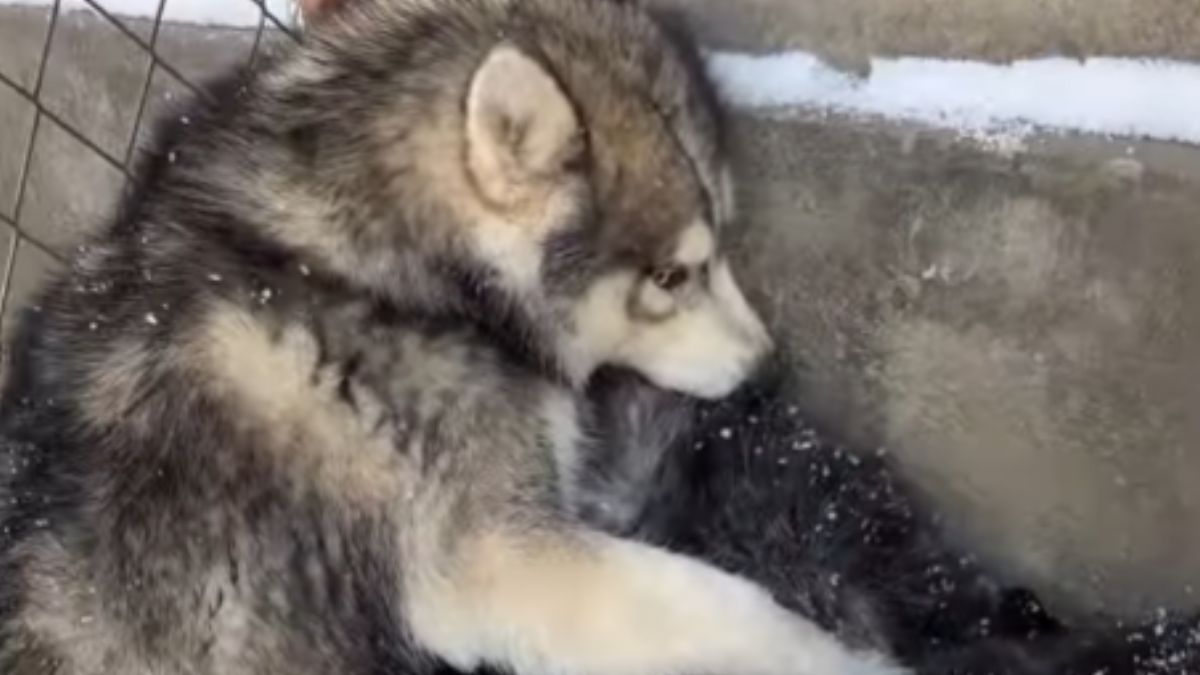
The images of the huskies in those first days told a story that words could barely capture. The dogs pressed themselves together in a tight, trembling cluster, seeking comfort only from one another, unable to understand that the danger had finally passed. They had lived their entire lives as working animals, treated as tools rather than living beings deserving of care. The concept of safety, of a human hand offered without pain or demand, was entirely foreign to them. Their huddle was both heartbreaking and quietly defiant, a group of animals choosing solidarity in the only way they knew how.
Once the dogs were in safe hands, Harbin SHS made clear that the rescue itself was just the beginning. “Right now, our job is simple: Keep them alive, stabilize them medically and help them feel safe again,” the organization wrote. “Rehabilitation takes time.” That honest, patient approach defines everything about how the group operates. There is no rushing a traumatized animal back to trust. It unfolds slowly, in the soft repetition of daily kindness, in meals offered gently, in a caretaker who shows up again and again without asking anything in return.
That caretaker, a woman named Emma, took on the seven huskies and devoted herself to their recovery over the months that followed. Slowly, the fear began to lift. The rigid, huddled postures softened. Eyes that had been wide with panic started to carry something closer to curiosity. “Remember the petrified huskies?” Harbin SHS wrote more recently. “Emma has been working her socks off with them, and by the looks of things, their playful side is finally coming to light.” The transformation, captured in video shared by the rescue, moved thousands of people who had followed the dogs’ story from the beginning.
The next chapter for the seven huskies is already being planned. Harbin SHS has arranged for the dogs to be transferred to a rescue organization in the United Kingdom once they are ready. “When they are ready, they will be transferred to an excellent rescue in the UK, where they will continue their recovery and eventually be placed in carefully vetted homes,” Harbin SHS wrote. It is a journey that will carry them from one of the most vulnerable positions imaginable to a life chosen with intention and care, in homes where their needs will be understood and their personalities celebrated.
For Harbin SHS, the work continues far beyond these seven dogs. The organization’s mission is simply stated and endlessly demanding: rescue, rehabilitate, rehome, and repeat. Each animal that comes through their care represents a life interrupted and then reclaimed, a story that might have ended in tragedy but instead becomes something worth telling.
China’s dog meat industry remains one of the largest in the world, with estimates suggesting that millions of dogs are affected each year, including many former pets and working animals. The Siberian Husky breed, originally developed by the Chukchi people of northeastern Siberia, was engineered over thousands of years specifically for endurance sledding in extreme cold, which makes their use in Chinese tourist sled operations a direct extension of the breed’s working history, even if the conditions were far from ideal. Despite their reputation for being stubborn or aloof, Siberian Huskies are deeply social animals who form strong bonds with their groups, which may explain exactly why these seven clung so tightly to one another when the world outside felt impossible to trust.
Have you ever followed a rescue story that stayed with you long after the happy ending? Share your thoughts in the comments.


