

7 Hidden Travel Toxins: What Every Pet Owner Misses When Booking a Rental
Vacation rentals may look pet-friendly in photos, yet common household products can still pose risks. Dogs and cats explore with their noses, paws, and tongues, especially in a new space, so residue and spills matter more than you’d expect.
Before you unpack, do a quick “toxin sweep” of floors, low cabinets, patios, and laundry areas. Ask the host what cleaners and pest treatments were used and when.
This guide covers seven hazards that travelers most often miss and the simple checks that reduce exposure. You don’t need a laboratory kit, just a few questions, a flashlight, and a plan to block access fast.
1. Disinfectants and concentrated cleaners
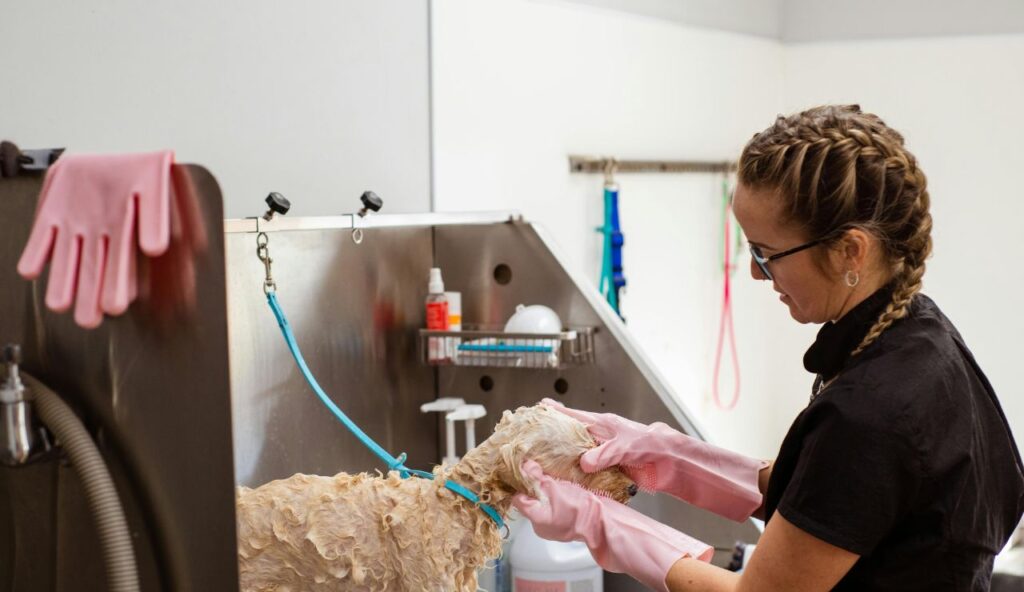
Many rentals use strong disinfectants between guests, including bleach, ammonia-based sprays, and quaternary ammonium cleaners. Pets can react to fumes or lick residue off floors and baseboards after a “deep clean.”
On arrival, open windows, run fans, and wipe high-touch areas like counters, doorknobs, and pet-accessible surfaces with plain water. Pay attention to slick, freshly mopped tiles where paws track chemicals onto fur.
If you see dishwasher pods, toilet gels, or drain liquids stored low, move them to a locked cabinet and rinse food surfaces before use. Bringing a small bottle of pet-safe cleaner and paper towels is an easy backup.
2. Essential oils, plug-ins, and scented products
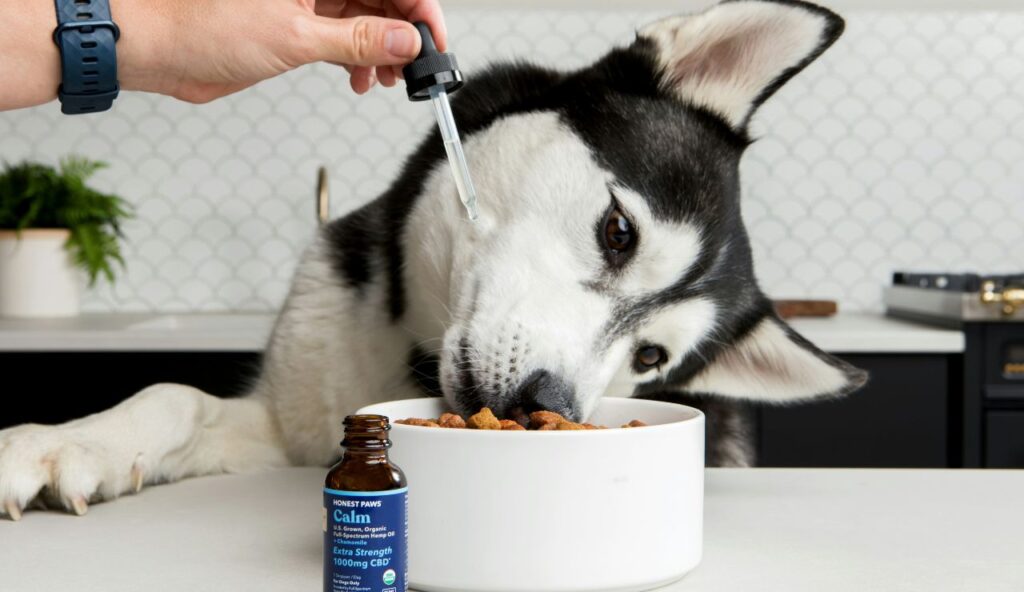
Diffusers, wax melts, and plug-in air fresheners are common in rentals, but many scents contain essential oils that irritate pets. Cats are especially sensitive, and dogs can get sick if they lick spills or chew bottles.
If the place smells strongly “fresh,” look for diffusers near outlets, reed sticks on shelves, and spray cans in bathrooms. Unplug or remove them, then air out the space for an hour. Ask the host what was used during turnover.
Avoid running scented candles while pets are inside, and keep any oil bottles high and sealed. If you want odor control, use ventilation and a small trash bag.
3. Rodent bait, insect traps, and pesticides
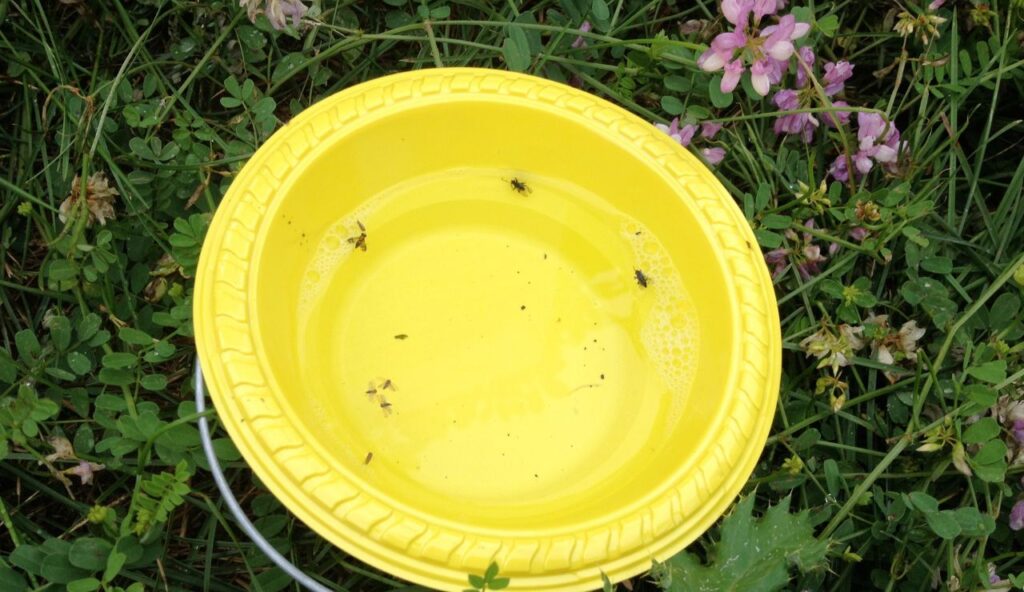
Short-term rentals often use bait stations, ant gels, and sticky traps to prevent infestations between guests. The problem is placement: under sinks, behind the fridge, in garages, or along baseboards, exactly where curious pets sniff.
Do a low-level scan with your phone flashlight. Look for small plastic bait boxes, paper bait cards, or glue boards. If you find anything accessible, ask the host to remove it or move it to a truly sealed-off area.
Also, ask whether the yard was sprayed recently for mosquitoes, fleas, or weeds. Keep pets on leash outside until you know what was applied and when, and keep paws off treated grass.
4. Toxic plants and landscaping surprises
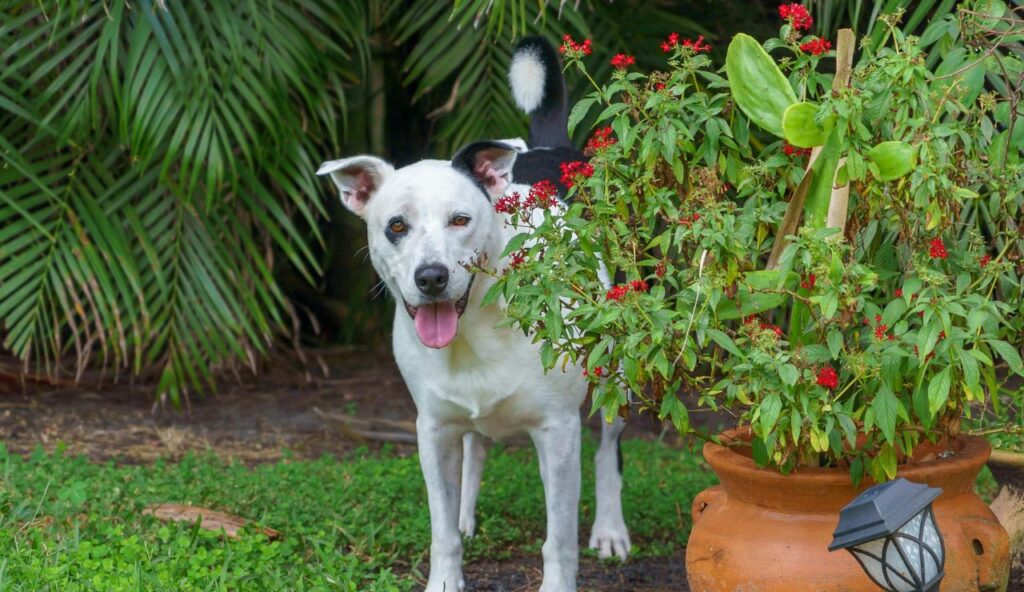
Plants can make a rental feel homey, but popular varieties can be unsafe for pets. Indoors, lilies, pothos, aloe, and some palms can cause vomiting or worse if chewed. Outdoors, decorative plants and mushrooms pop up in shaded yards.
Before booking, zoom in on listing photos for plant corners, patios, and balcony planters. On arrival, do a quick perimeter walk and look at what’s within nose height. If you can’t identify a plant, assume it’s a “no snack” zone.
Move planters out of reach, block off garden beds, and supervise potty breaks, especially after rain when fungi appear, particularly for dogs that graze.
5. Mold, mildew, and “musty” rooms
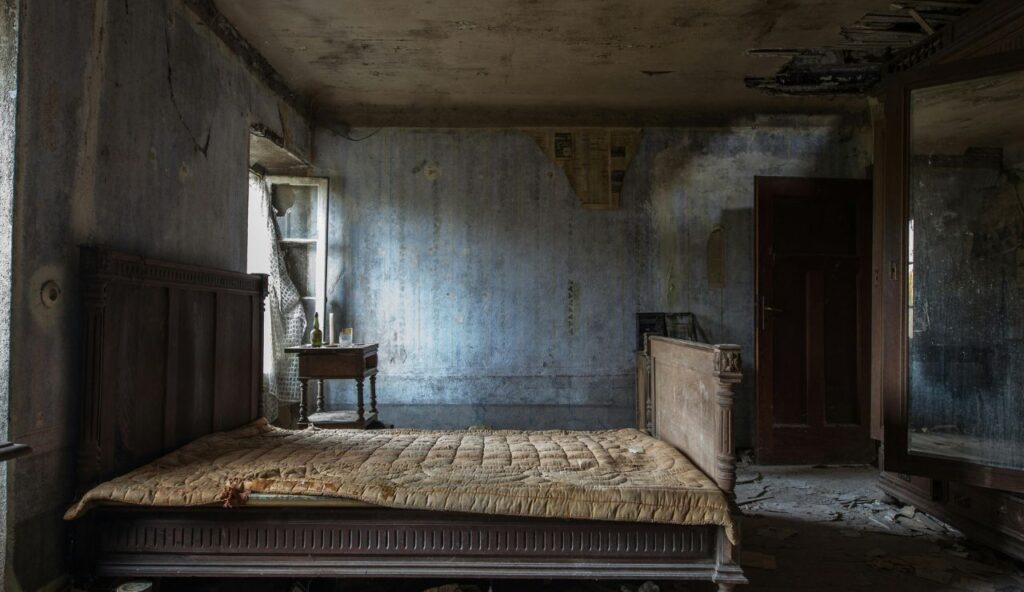
A musty smell isn’t just annoying; it can signal mold or mildew that bothers pets’ lungs and skin. Rentals with basements, beach humidity, or poor ventilation may have damp carpets, dusty vents, or water-stained drywall.
Check bathrooms, under sinks, and around AC units for visible discolorations or peeling paint. If you see standing water in a drip pan or feel damp upholstery, keep pets out of that room and message the host immediately.
Don’t mask odors with sprays. Ventilate, run the fan, and ask for a dehumidifier or a unit change. For sensitive pets, bring their own clean bedding to reduce exposure.
6. Maintenance chemicals in garages, sheds, and patios
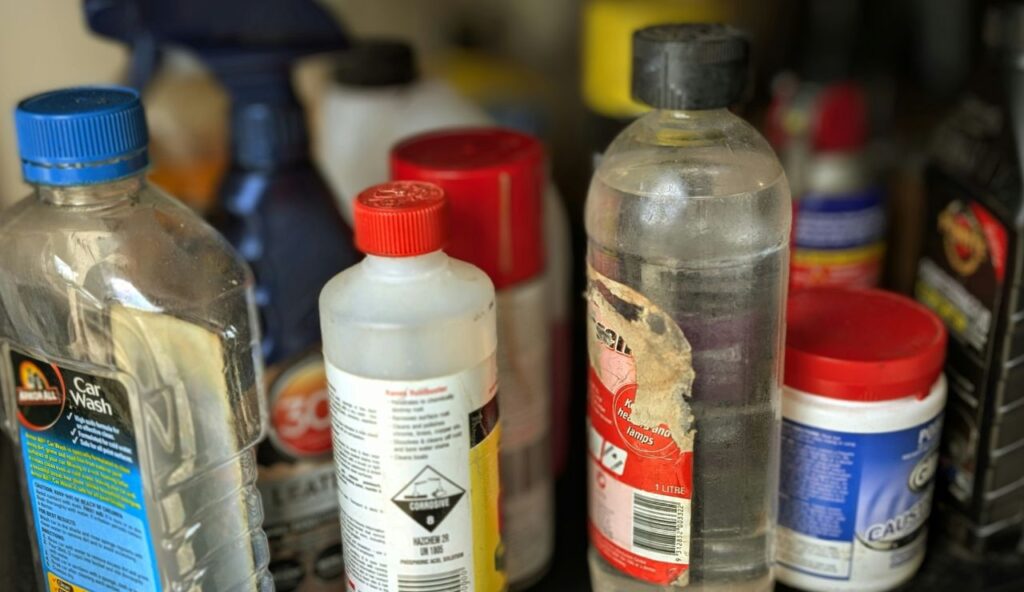
Utility closets and garages are the “junk drawer” of many rentals, and that’s where serious toxins hide. Antifreeze, windshield washer fluid, paint thinners, and pool or hot-tub chemicals can be dangerous even in small amounts.
If your rental includes a garage, shed, or patio storage box, check it before letting pets roam. Look for open containers, spills, or powdery residue around bags. Keep those spaces closed, and use a baby gate if the door won’t latch.
Outside, watch for blue-green puddles near driveways or grills. Wipe paws after exploring, rinse if they smell chemicals, and keep water bowls away from cleaning areas.
7. Left-behind meds, edibles, and sweeteners
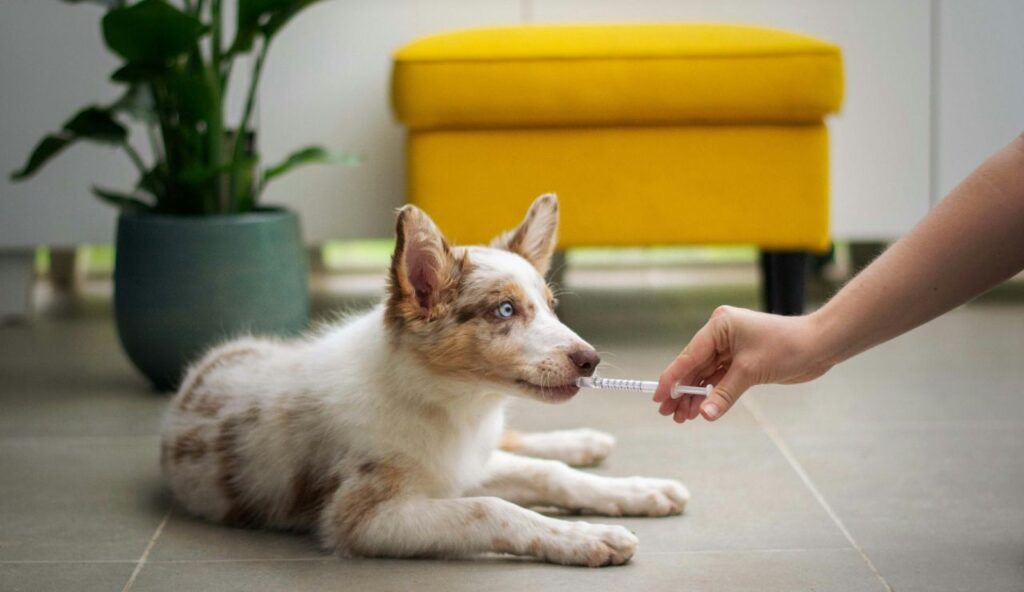
The sneakiest “toxin” is sometimes another guest. Rentals turn over quickly, and small items get missed: pain pills, nicotine pouches, vape liquid, cannabis edibles, or sugar-free gum with xylitol. For pets, even a minuscule dose can be a big problem.
Do a floor-level sweep under beds, couches, and nightstands before your pet starts exploring. Empty bathroom trash into a lidded bin, and don’t leave bags or jackets on the floor where snacks might be hiding.
If you find any loose pills or wrappers, photograph them and alert the host. It’s also worth asking for an extra trash can with a secure lid.


